The mini-WASP array roars!

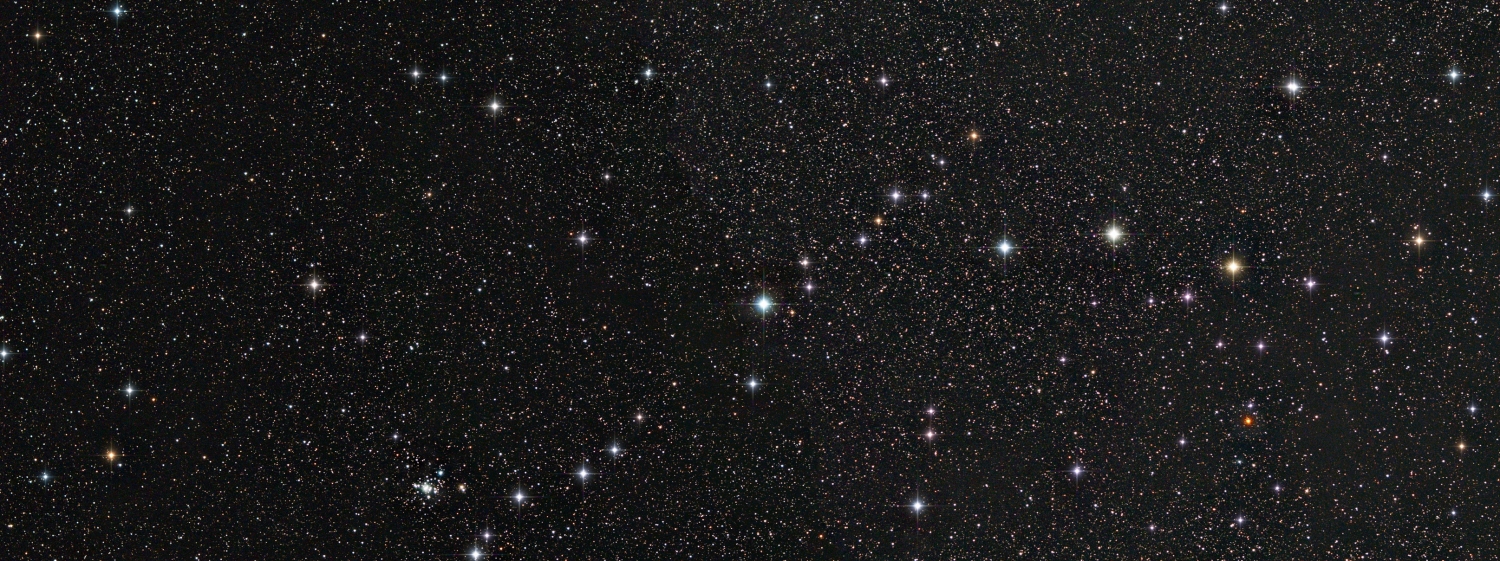
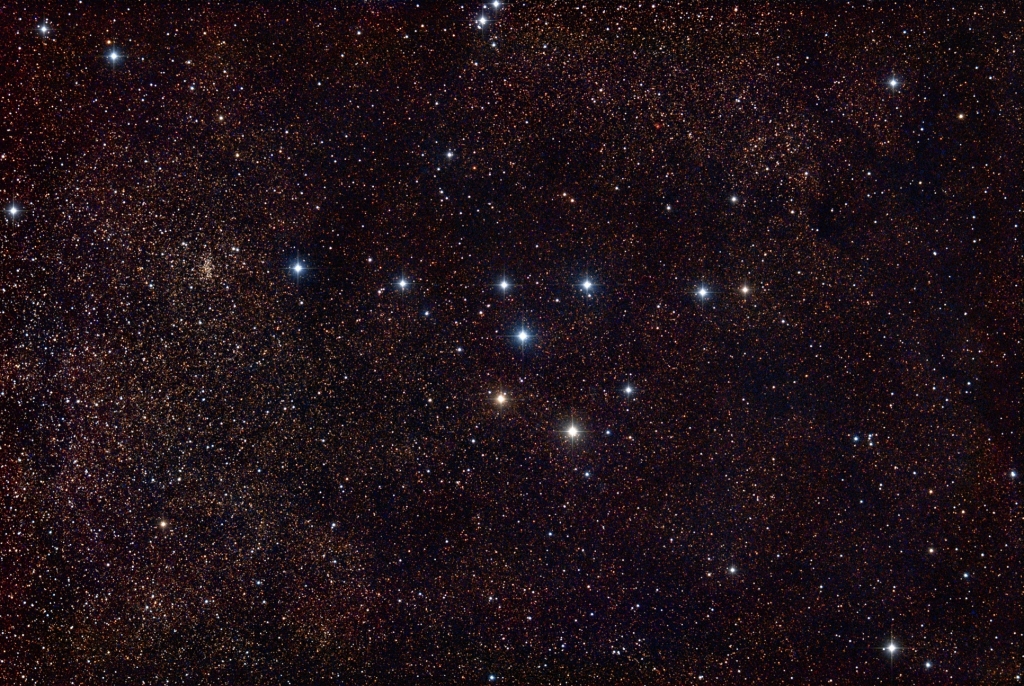
Beautiful clear Moonless sky last night until just after midnight.  Started imaging at 5:55 p.m. one of my earliest starts, so ended up with 7 hours of total imaging time on the mini-WASP array (which equates to 21 hours of total integration time) – bliss 🙂  Here is a 2-framer of the Kemble’s Cascade region taken with the Sky 90 and processed just a few minutes ago.  I have data from the other two scopes/cameras to add to this.  Got to say I am pretty pleased with the result and can’t wait to see what adding further data to this one gives.

Posted in mini-WASP Array | Leave a comment

Noel Carboni process of the Mu Cephei mini-WASP dataset

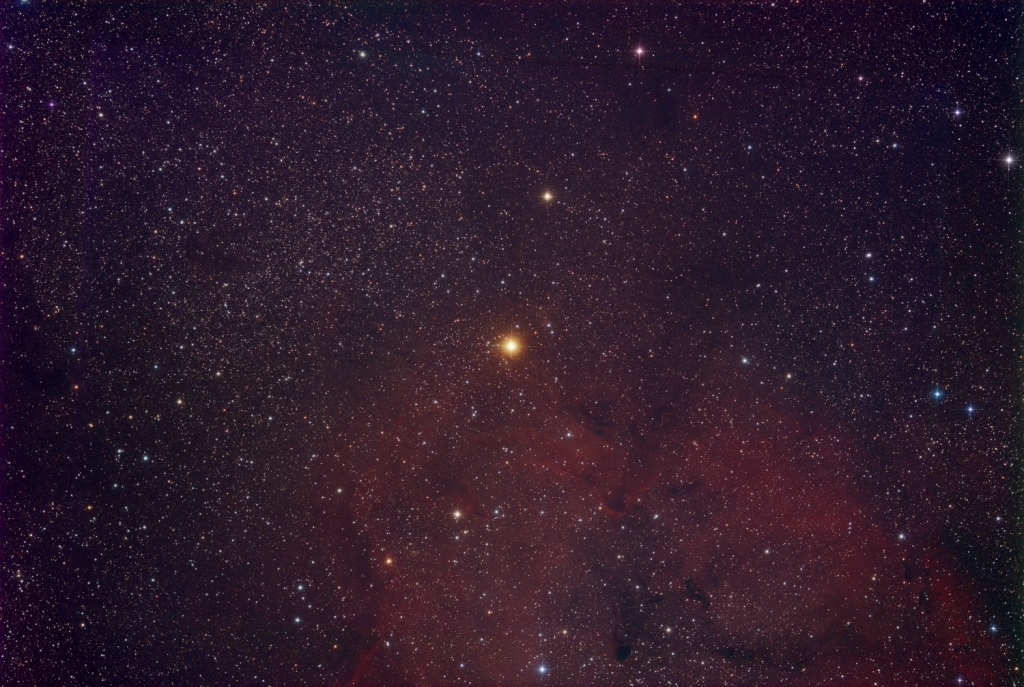
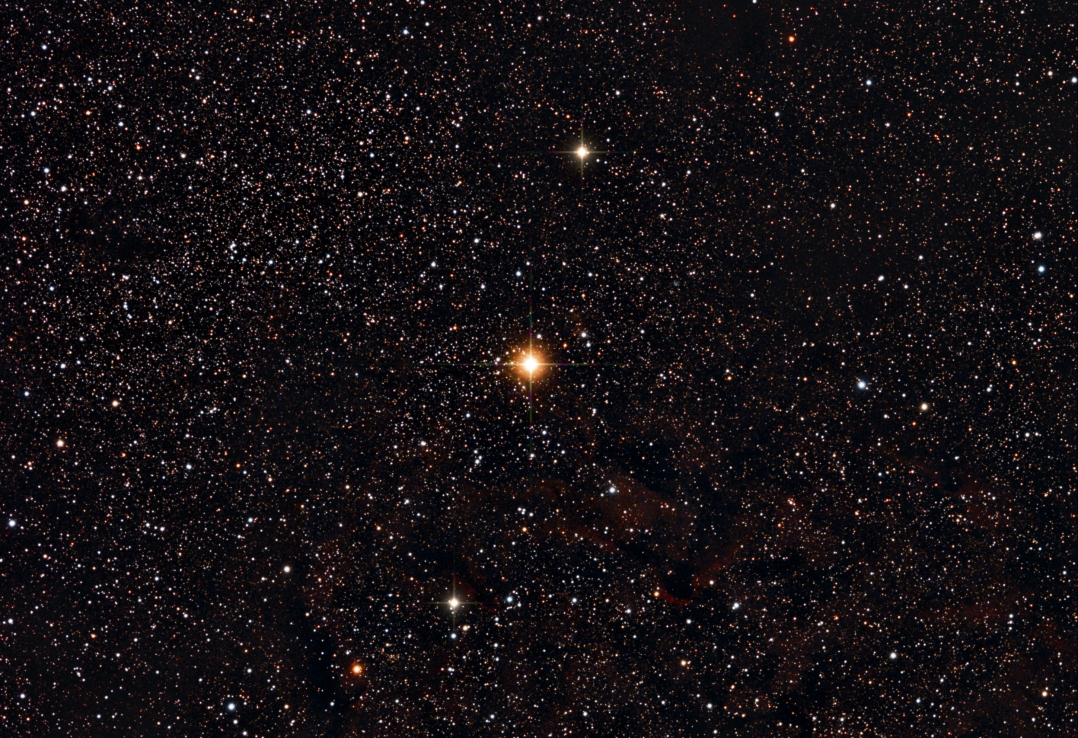
Noel applied his talents to last night’s Mu Cephei data taken using 3 scopes + cameras on the mini-WASP array.  Unfortunately, as I hadn’t taken any flats Noel was not able to properly flatten this data, but even so, he did a much better job of it than I did 🙂

Posted in mini-WASP Array | Leave a comment

Mu Cephei – the Garnet star in Cepheus.

Managed to grab a quick hour and a half between the clouds tonight on the mini-WASP array using all 3 imagers.  Got the Garnet star in Cepheus which lies on the edge of the huge emission nebula IC1396.  If you move out from the Garnet star in the 2 O’Clock direction then just before you reach a pair of dim stars you will see a fuzzy nebulous patch which Guide 9.0 tells me is GN 21.39.5 🙂

Posted in mini-WASP Array | Leave a comment

Aliens? I don’t think so.

There was a programme the other night, I think on Channel 4 about possible alien creatures being found on Earth.  I love this stuff so I watched the programme.  Highly disappointing right from the off.

These “alien” creatures weren’t very alien at all.  Bilateral symmetry, a skull, a pair of eyes, nasal cavity, pair of ears, four limbs – just as you would expect from any mammal on Earth.  How could such an obviously DNA-based life form be an alien??

I remember as a kid, maybe 8 or 9 years old having a fundamental disagreement with my parents.  My parents were always going on about how diverse the life on Earth was and how different we were from everything else.  I guess I looked at things on a different scale and they didn’t seem to understand my argument that far from being different – I was amazed at how very similar everything was.  As I said above, horses, sheep, pigs, humans, cats and dogs, all have two eyes, two ears, four limbs and a nose and teeth and ……………. on a large scale, we’re near as dammit identical.  Fifty years on of course I now know that this is because we all share the same building block of life.  So don’t show me ANYTHING which has these basic features and say it’s an alien cos that simply ain’t gonna be true is it?  Why not?  Here things get a bit difficult and you can see where I first thought about this in a past post where I had my world view turned upside down after the Starmus (Tenerife 2011) Festival.

Until Starmus my belief had always been that the Universe was teeming with life – no question.  I even stated this on Chris Packham’s “Inside Out” programme on BBC1.  When he asked me about life “out there” I said “definitely, no question”.  What changed at Starmus?  Well there was a fair bit on Seti and the possibilities of alien life and I asked one of the experts about looking for non-DNA based life here on Earth.  The consensus was that this was a pointless exercise as all life was DNA based right back to the very beginnings of life and the stromatolites in Shark Bay.  This I didn’t like the sound of – at all.  What about all the precursors to DNA?  Where are they?  Consensus opinion was there aren’t any precursors.  Now things are looking really grim for alien life.  If there are no precursors and the only basis of life here on Earth is the incredibly complex DNA molecule and that seems to have come along as a fait accompli – then in my opinion there’s no chance for any life “out there” at all 🙁  So from my original belief of the Universe teeming with life I now believe I know why we have the Fermi paradox.  There is no paradox.  There is no other life out there in the whole Universe.  Better start looking after this planet a little better than you have done guys!!

Posted in News | Leave a comment

Image of the Month – December 2012

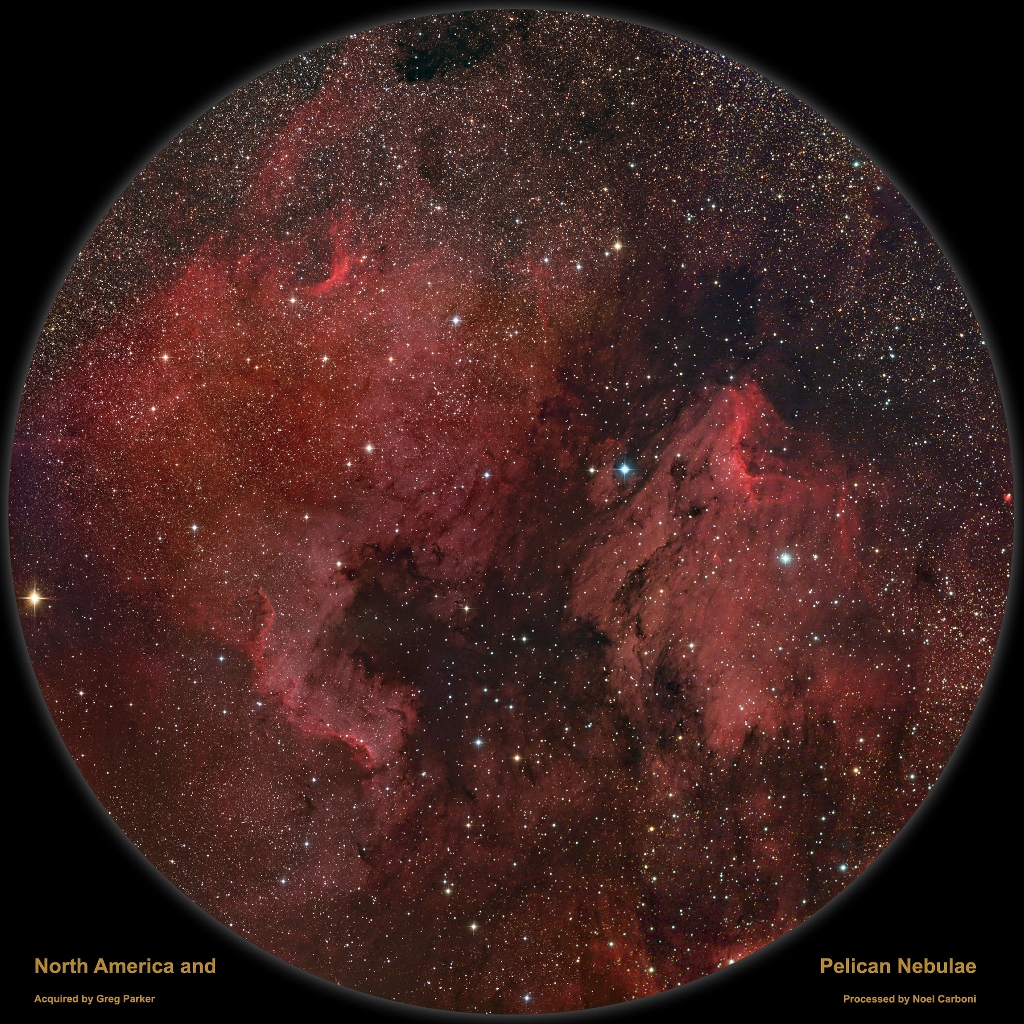
One of my favourite regions of sky, I have to return time and time again to all that bright Cygnus nebulosity, I find it amazing.  This image of the North America/Pelican region is a composite using both Sky 90/M25C and Hyperstar III/M25C data.  It comprises around 6-frames and it is circular as that was the shape that gave the biggest FOV for the jaggedy edge image.  Now disappearing from view for another year, I wasn’t set up in time to do a proper job on this region with the mini-WASP array – hopefully I’ll be ready to catch it next year.  Weather permitting I will be going for a mini-WASP 4-framer of the region (6 x 4 degrees) including H-alpha, OIII and SII narrow band data.

Posted in IOM | Leave a comment

The mini-WASP array is fully functional :)

Last night (29/11/2012) I managed to get all 3 scopes and cameras working as one system on the mini-WASP array for the first time 🙂  Up until last night there was always (at least) one scope and camera not playing ball.  As you might expect, there was also a blazing Moon playing havoc with any serious imaging – but it was a nice clear sky until just after midnight which allowed me to focus train and flatten the chip on the final TS 80/M26C imager.

So – the current state of play for the New Forest observatory mini-WASP array is:

1)  Megrez 80mm guide scope with SXV guide camera.

2)  Imaging Scope 1 – Sky 90 imaging scope with Robofocus, f#4.5 reducer/corrector, camera angle adjuster, filter-wheel with Hutech IDAS filter, H-alpha, H-beta, OIII and SII filters, and an M26C 10-Megapixel one-shot colour camera.

3)  Imaging Scope 2 – TS 80mm triplet APO with Robofocus, 2″ TS flattener, Hutech IDAS LP filter and 10-Megapixel M26C OSC camera.

4)  Imaging Scope 3 – TS 80mm triplet APO with Robofocus, 2″ TS flattener, Hutech IDAS 48mm LP filter and 10-Megapixel M26C OSC camera.

The whole imaging array sits in a massive all Aluminium framework which in turn is mounted on a Paramount ME.

Sorted just in time for this winter’s goodies.  I know it’s too much to hope for clear Moonless skies as well 🙂
Posted in mini-WASP Array, News | Leave a comment

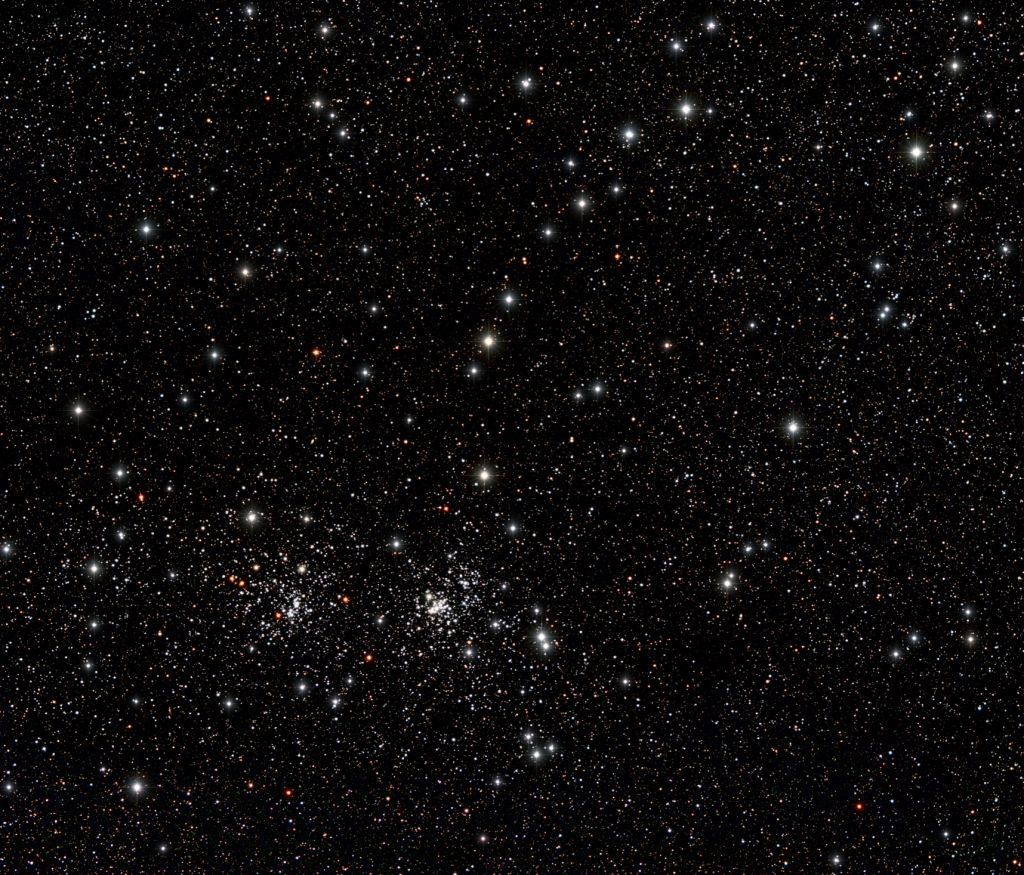
EPOD for today – Double Cluster and Greg’s Charm Bracelet

The Earth Science Picture of the Day (EPOD) image for today is the recent shot of the Double Cluster and Greg’s Charm Bracelet taken at the New Forest Observatory on the mini-WASP array and processed by Noel Carboni in Florida U.S.A.

Many thanks Jim for continuing to publish our work 🙂

Posted in EPOD, News | Leave a comment

The Coathanger cluster in Vulpecula courtesy of the mini-WASP array

While I was tuning one of the scope/cameras on the mini-WASP array I used the other 2 scopes/cameras to do a quick capture of the Coathanger cluster in Vulpecula.  24 subs at 5-minutes per sub gave this nice result.

Posted in mini-WASP Array | Leave a comment

Total solar eclipse tonight

Well in Cairns Australia anyway.  Sunrise is 5:30 a.m. their time which is 7:30 p.m. our time and the action starts shortly afterwards.  Log into a webstream showing you all the action – just wish I was there in person, Cairns is great 🙂

Posted in News | Leave a comment

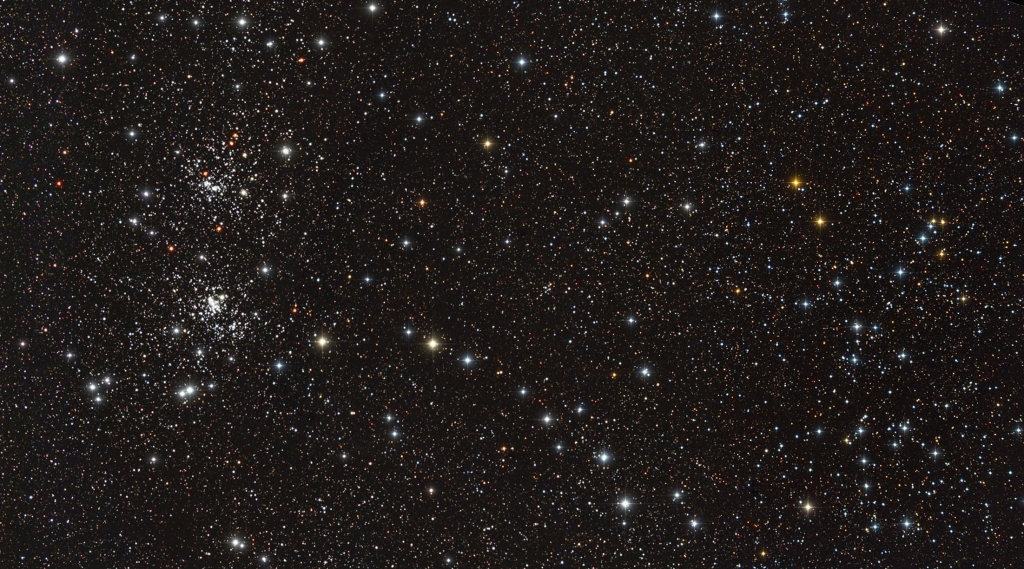
The Double Cluster and the Stock 2 open cluster in Perseus

I added the recent Double Cluster data to older Stock 2 data using the magic program Registar 🙂

Posted in mini-WASP Array | Leave a comment