The Golden Solid Angle – has anyone seen this, anywhere?

It will not have been mentioned before in this blog, but I like certain aspects of pure mathematics as much as I like deep-sky imaging.  I think most people will have heard of the Golden-Section, or the Golden-Ratio, and how it can be obtained by dividing a straight line up into two sections one of length unity, and the other of length tau or 1.61803398…  What is less well-known is that if you wrap the line round into a circle, so the cir cle perimeter is divided into lengths of unity and 1.618, then then angle subtended by the unity length of the perimeter at the centre of the circle is 137.507 degrees – or the Golden Angle.

That’s where the story seems to have been left, for a very long time, but I have to wonder, why?  We started with a line (one-dimension), then moved to a circle (two-dimensions), where’s the spherical case (3-dimensions)?  I did a long search a couple of years back and couldn’t find anything on this.  So I wrote a paper on “The Golden Solid Angle” for the Mathematical Gazette, which was in fact turned down as “although the result was new, just having a new result is not necessarily having something worthy of publication” – well that’s a new one for me!  So wishing to stake my claim as the discoverer of the Golden Solid Angle (sent to the Mathematical Gazette on Thursday 14th June 2007) here’s the thing explained for the first time below.

Divide the surface of a sphere into two regions, one of surface area unity, and the other of surface area 1.618…  The surface area of unity will subtend a solid angle gamma at the centre of the sphere.  By noting the total solid angle about a point is 4Pi Steradians, we can derive the following equation for gamma:

(4Pi – gamma)/gamma = 4Pi/(4Pi – gamma)

Giving a quadratic in gamma which can be solved in the usual way to give:

gamma = 1.52786Pi Steradians or 15757.2 square degrees.

Question is, does anyone out there know where the Golden Solid Angle, gamma, makes an appearance in the Natural world (or basically, anywhere)?  If you do then please let me know ASAP 🙂

The Golden Solid Angle is also equal to 4 Pi/Phi2 and the Golden Planar Angle is 2 Pi/Phi2 it all hangs together rather nicely.
Posted in Articles, News | Leave a comment

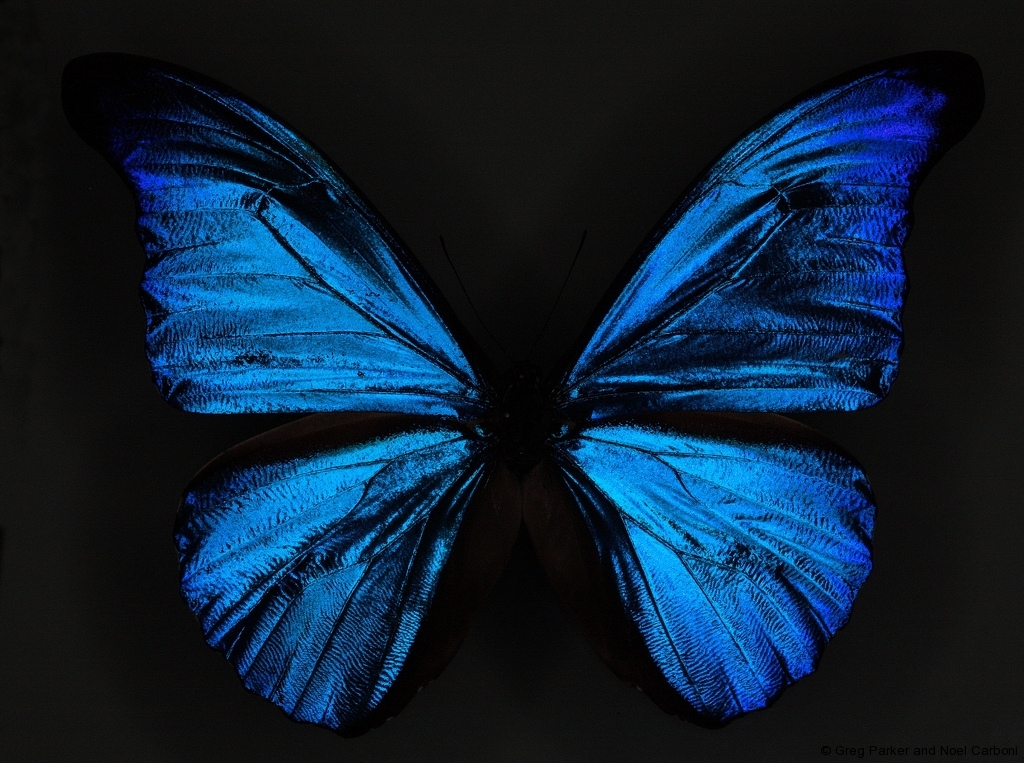
The Butterfly nebula in Orion

Clear last night (although with a nearly full Moon) and managed to get a very seldom imaged iridescent reflection nebula appropriately named “The Butterfly nebula” in Orion.

O.K. it’s a picture of the Morpho Rhetenor butterfly wing (structural colour) but I can pretend I was actually out imaging for the first time in over a month.  It was certainly clear last night – but there was plenty of thin high cloud and the biggest light polluter in the sky made it pointless to set up 🙁

Posted in Articles | Leave a comment

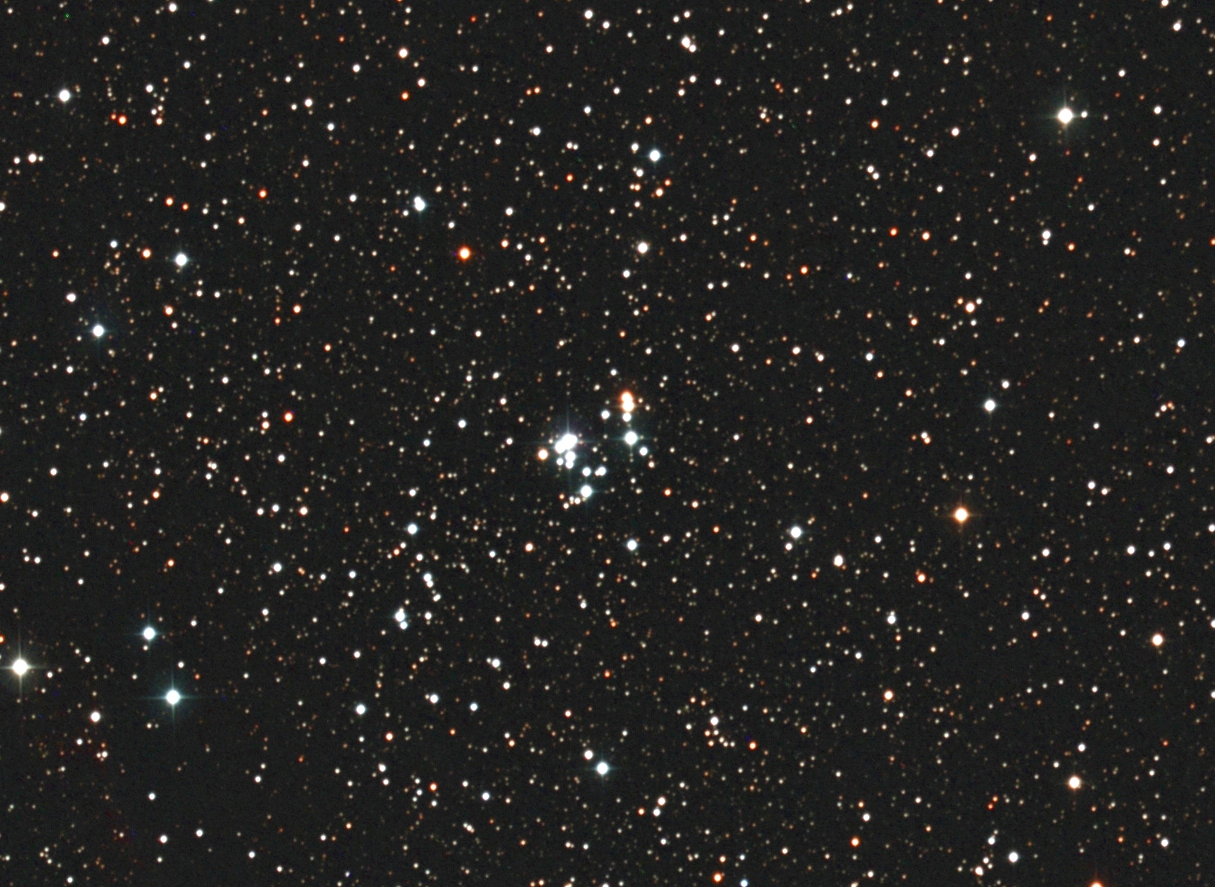
IOM December 2009 – the Douglas Adam’s cluster

Well, not exactly the Douglas Adam’s cluster as that would look like the number  “42” – whereas this open cluster in Orion bears a striking resemblance to the number “37” and is therefore known as the 37-cluster.

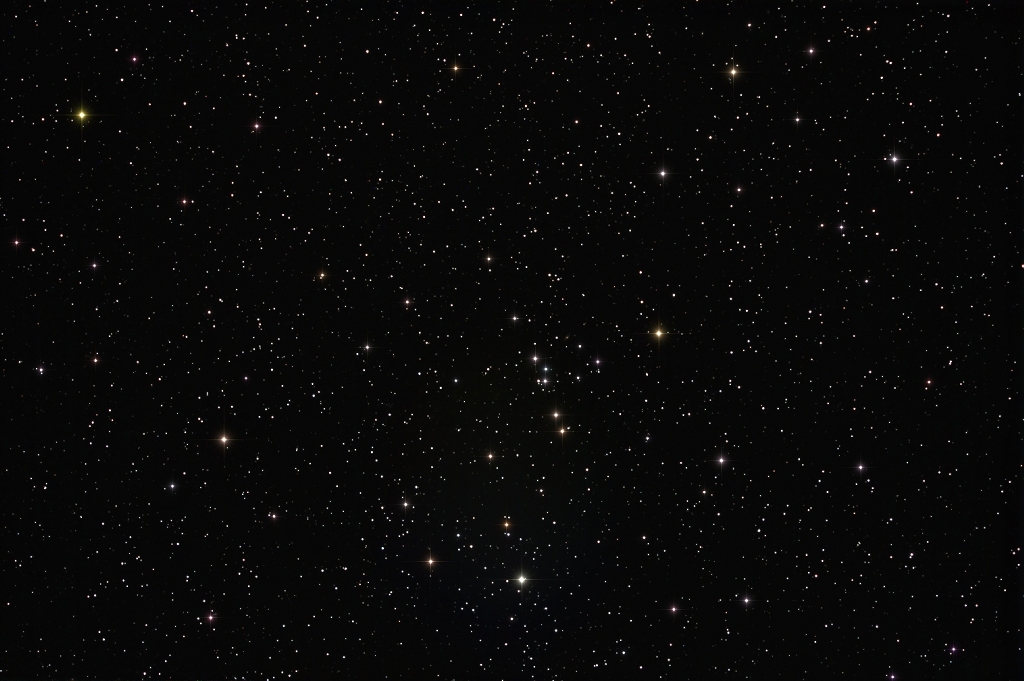
The 37 cluster, NGC2169 lies around 3,000 light-years away in the constellation Orion.  Being a fairly bright open cluster we can get away with short 2-3 minute subs, and we can also get away with a short total imaging time of just a couple of hours.  You get a lot more back for your short investment in time than with many other deep-sky objects.  A little digital processing on your data (Noel’s enhance star colours helps a lot here) and you will end up with an incredible figure  “37” appearing like a Neon display in an otherwise unimpressive star background.

Just a short amount of time needed to bag this one – so you can move onto the many other gems of Orion in the same evening and grab some more data 🙂

See you again in the New Year, have a good Christmas, and let’s hope that 2010 brings us some better imaging weather than we got dished up in 2009!!

Posted in IOM | Leave a comment

mini-WASP array and Brian May’s new book

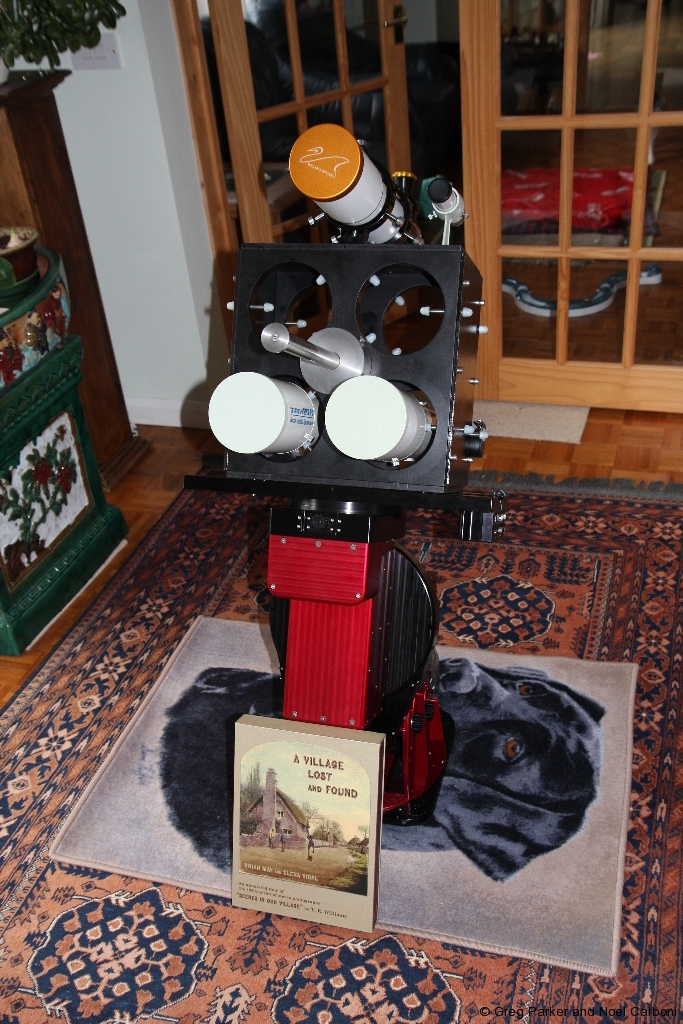
Great day today (no – not the weather!) – put the side panels on the mini-WASP array, and Brian May sent me a copy of his new book “A Village Lost & Found”.  This is a beautiful publication and you can see the attention to detail that has gone into every part of creating this book.  Wonderful job Brian – well done – would make the Thesis look like an almost trivial exercise by comparison 🙂

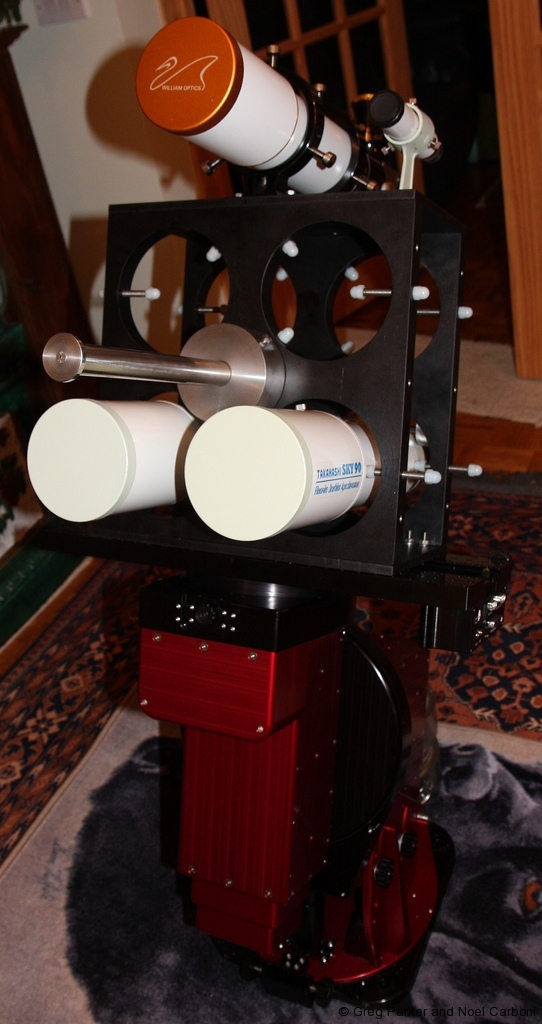
With the side panels now on, it’s a matter of getting the second observatory built and buying the cameras for the two Sky 90s and the guide scope.

Posted in Equipment, mini-WASP Array, Projects | Leave a comment

A3 sized prints are now available:

I have just introduced a new print size for the deep-sky images.  You can now purchase A3 sized full-colour prints of any object you see on the NFO site.  Go to “Image Gallery”, “Purchase Images” for details.

Posted in House and home, News | Leave a comment

O.K. so I couldn’t wait until tomorrow:

To load up the Sky 90s 🙂

Posted in mini-WASP Array, Projects | Leave a comment

Current status of the mini-WASP array November 2009

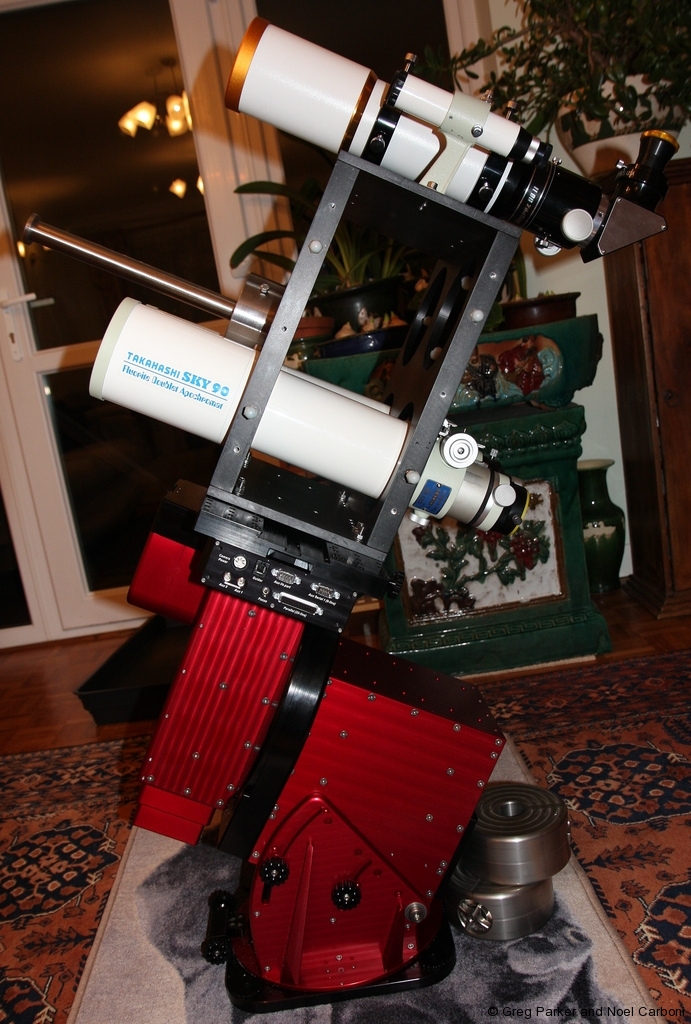
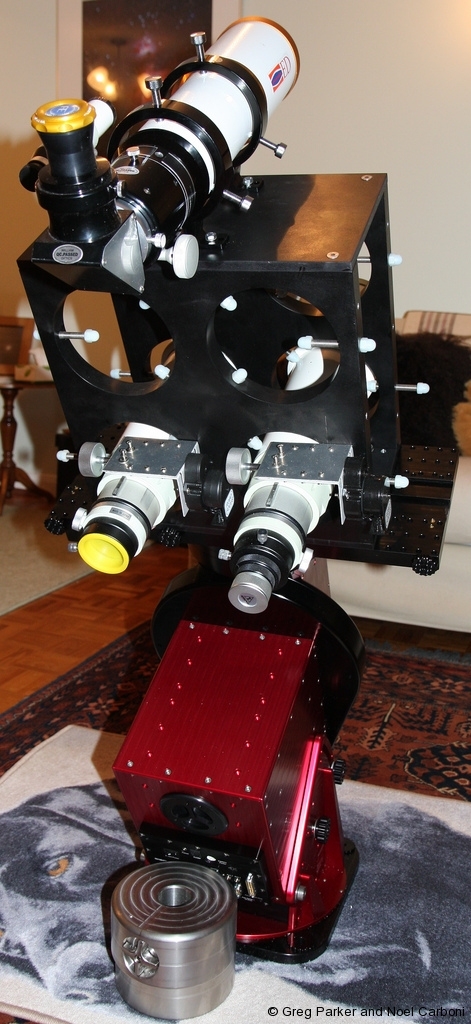
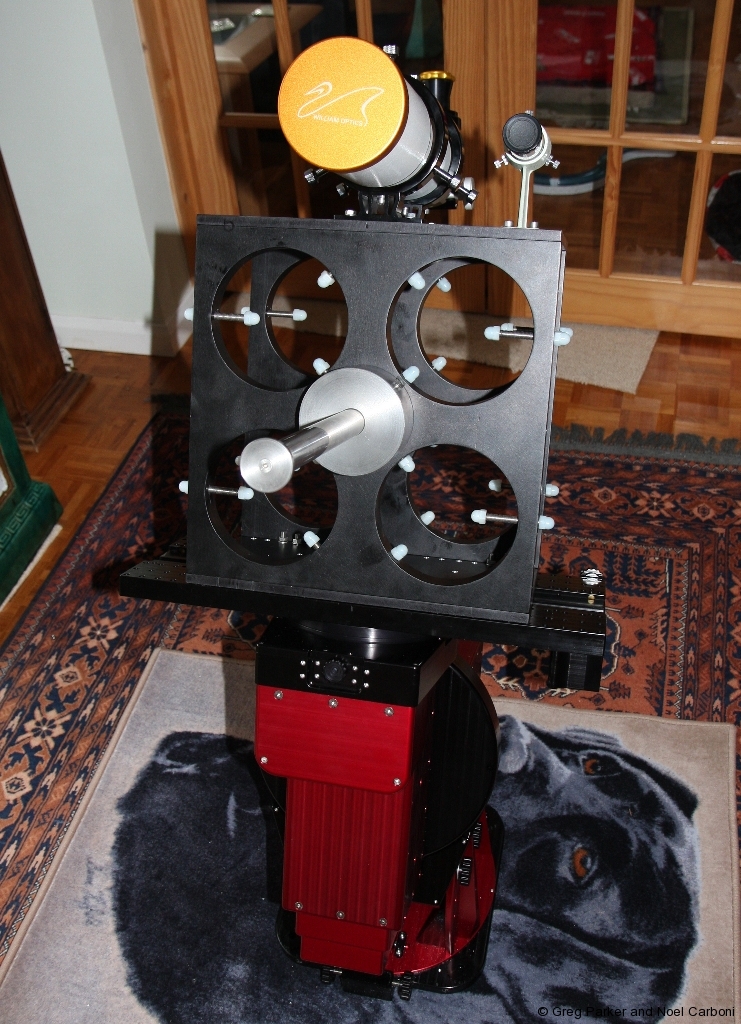
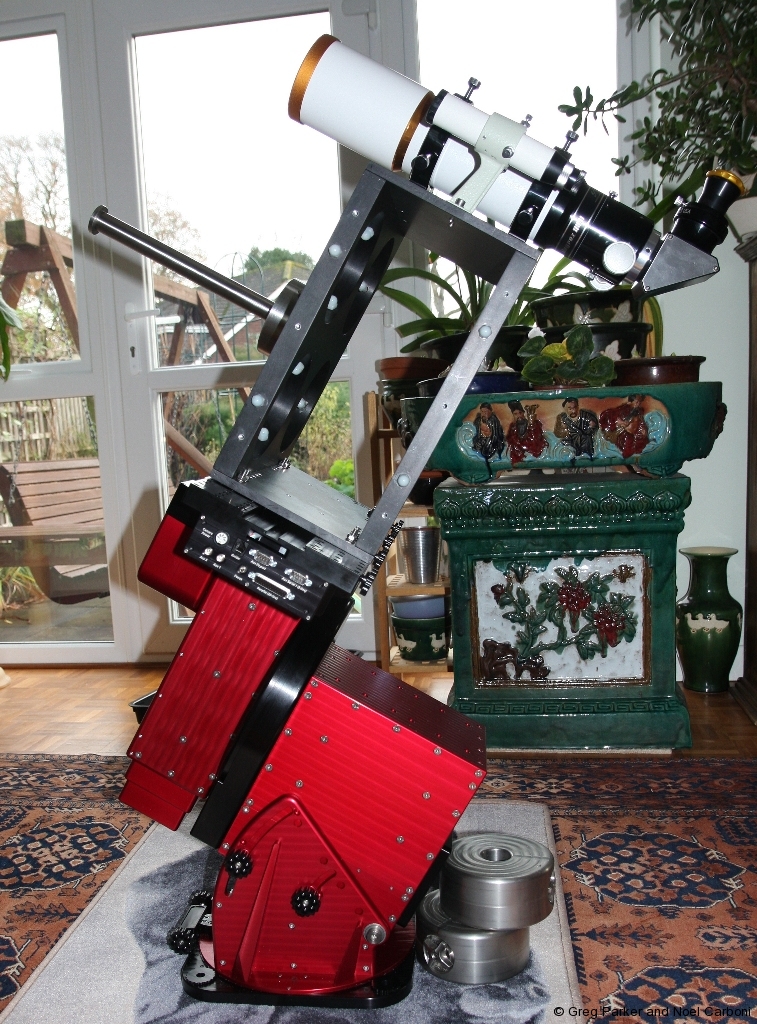
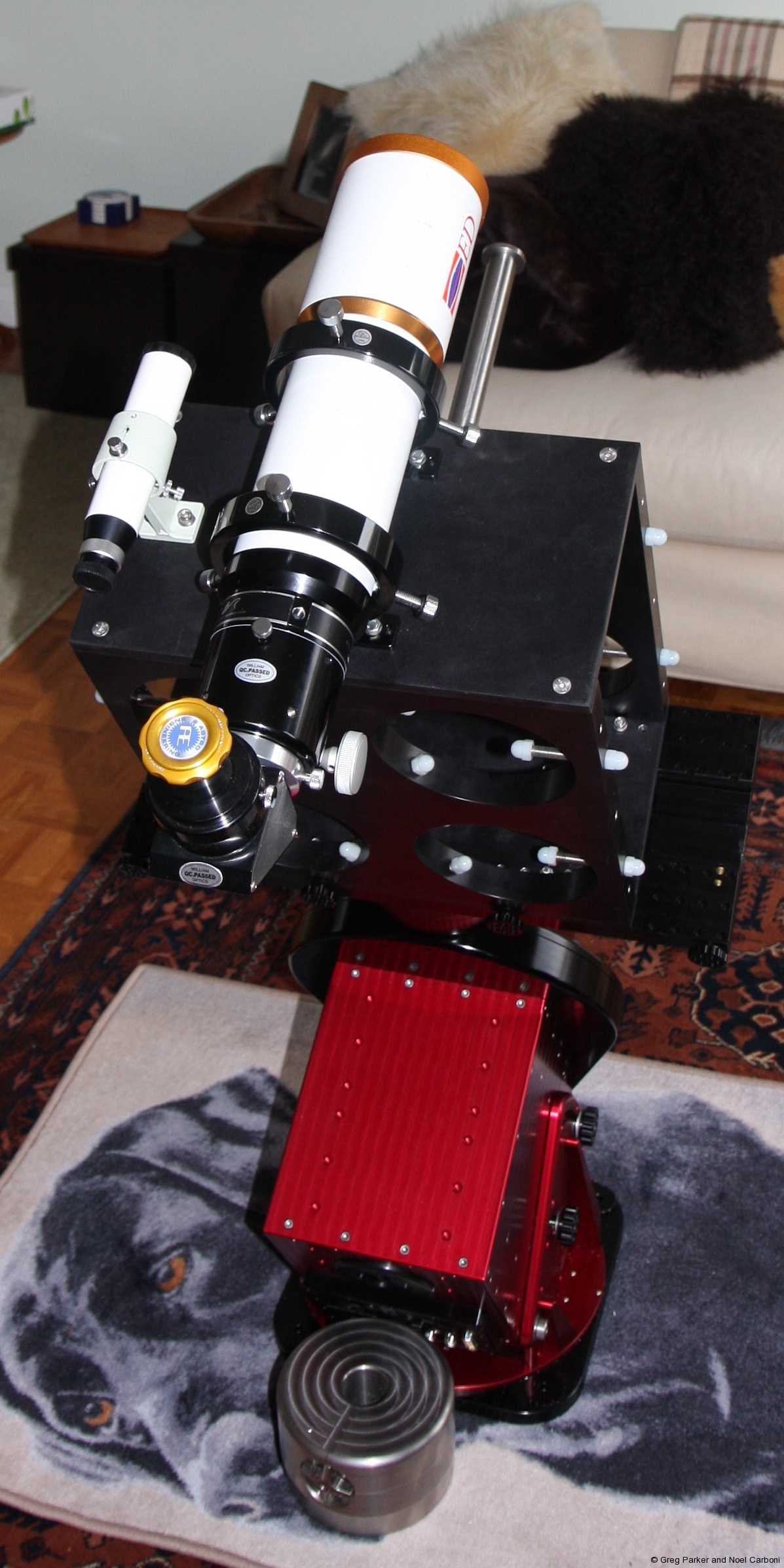
I bolted the mini-WASP telescope frame to the Paramount versa-plate to get a feel what the finished system will look like.  The funny-looking device sticking out the front of the frame is a counterbalance arm for the weight of all the equipment that will sit on the back of the telescopes.  I have left the two side panels off in this photo.  I have also left out the 2 Sky 90s from the bottom pair of holes as I need to remove the Robofocus units from them before fitting to the frame – I might do this tomorrow and update the photos.  The two holes at the top are for 2 x FSQ106 telescopes to be bought at some future (unknown) date, and these will be used for narrowband imaging.

This is going to be some beast to set up prior to an imaging run and I’m glad I didn’t make provision for any more telescopes as I don’t think it would be viable to get them all sorted without losing a lot of good imaging time per session.

Posted in Equipment, mini-WASP Array, Projects | Leave a comment

Star Vistas at Amazon U.K.

The price has now shot back up to £29.23 with only a 19% saving over RRP.  I have no idea what’s going on here.

Posted in Star Vistas | Leave a comment

Image processing blitz

Noel has been really busy recently with a number of projects and the NFO data backlog has been steadily growing.  As we have had the most atrocious weather all weekend I decided to have a go at image processing some of this data as I’m itching to see what’s been captured.  The supernova in NGC4008 below was one of this bunch of processed images, but I also had a look at:

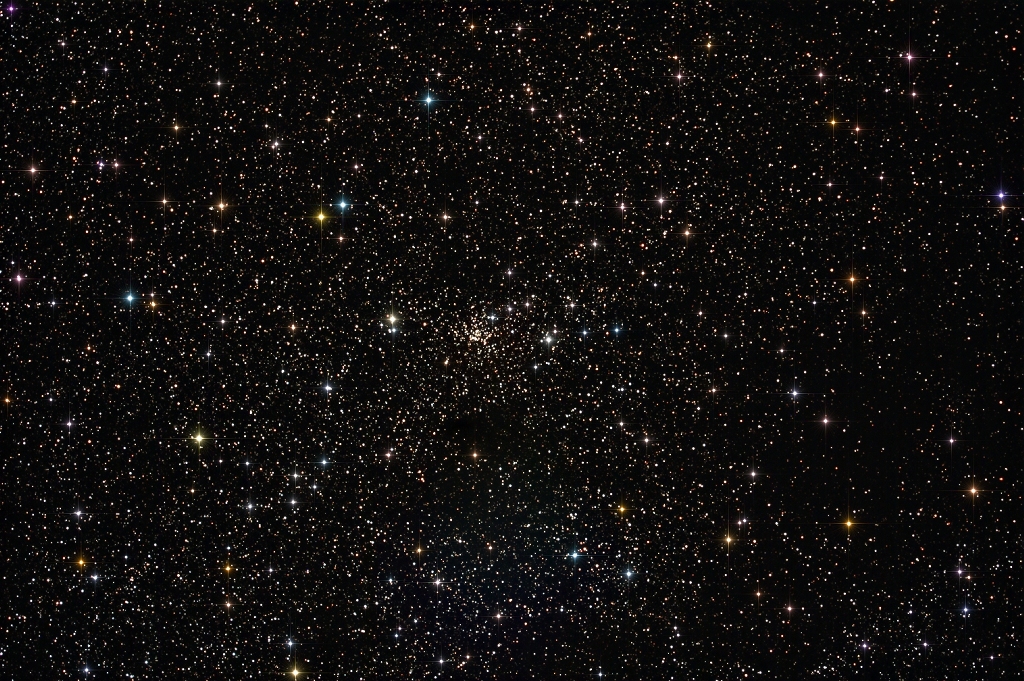
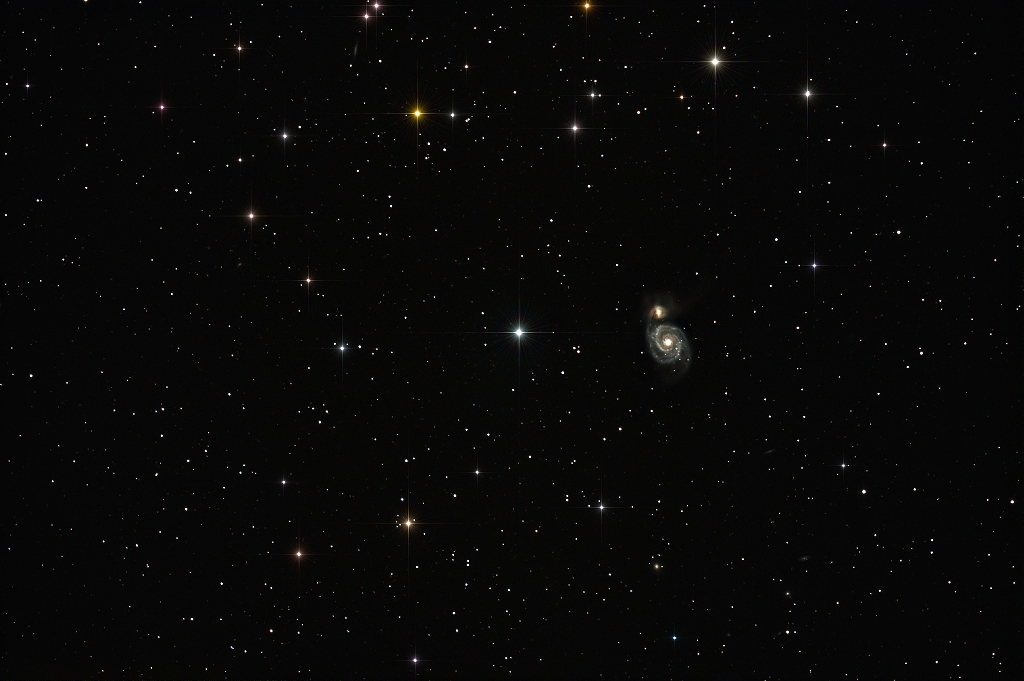
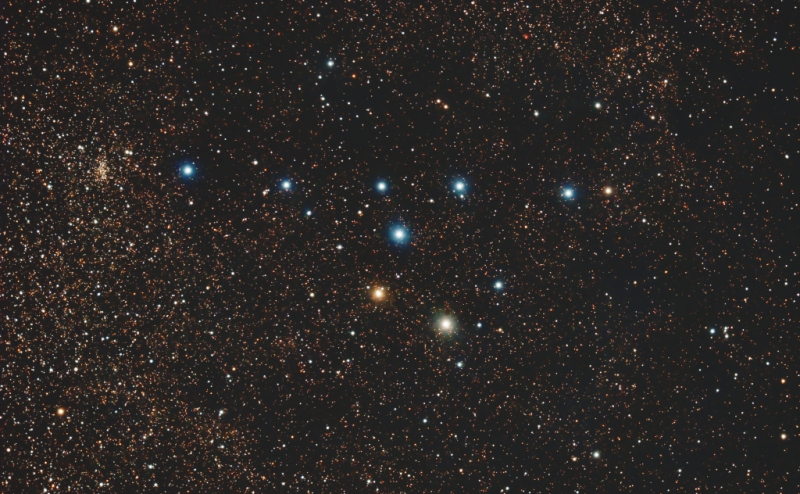
The mini-Coathanger cluster, 4-frame mosaic around Caph in Cassiopeia, NGC6883 open cluster and nebulosity in Cygnus, 4-frame mosaic around Schedir in Cassiopeia, Caldwell 8 (Ghost’s Goblet), and finally the interacting galaxy pair M51 in Canes Venatici.  The quality of the image processing doesn’t come anywhere near close to Noel’s standards – but at least I now have an idea what’s been captured 🙂

Posted in Hyperstar and SXVF-M25C | Leave a comment

Supernova in NGC 4008

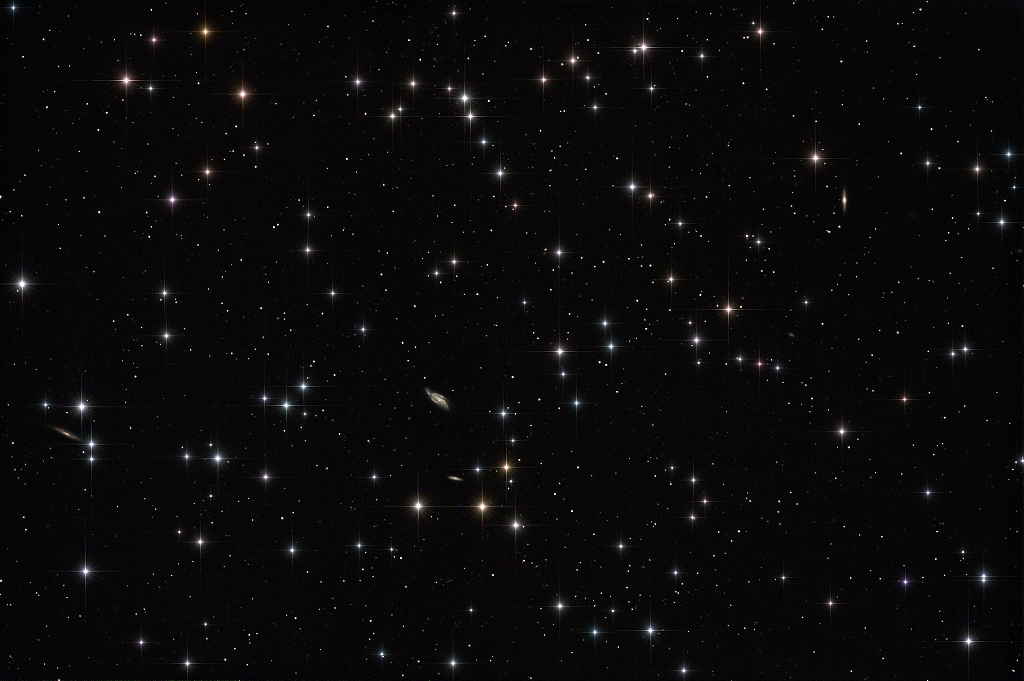
I just processed this image taken back on 18th April 2009.  The galaxy in the centre of the field of view is NGC 4008 in Ursa Major and what appears to be a bright nucleus is in fact the supernova (you can check against the NGC/IC catalogue image).  There’s a huge number of galaxies in the background too.

Posted in Hyperstar and SXVF-M25C | Leave a comment