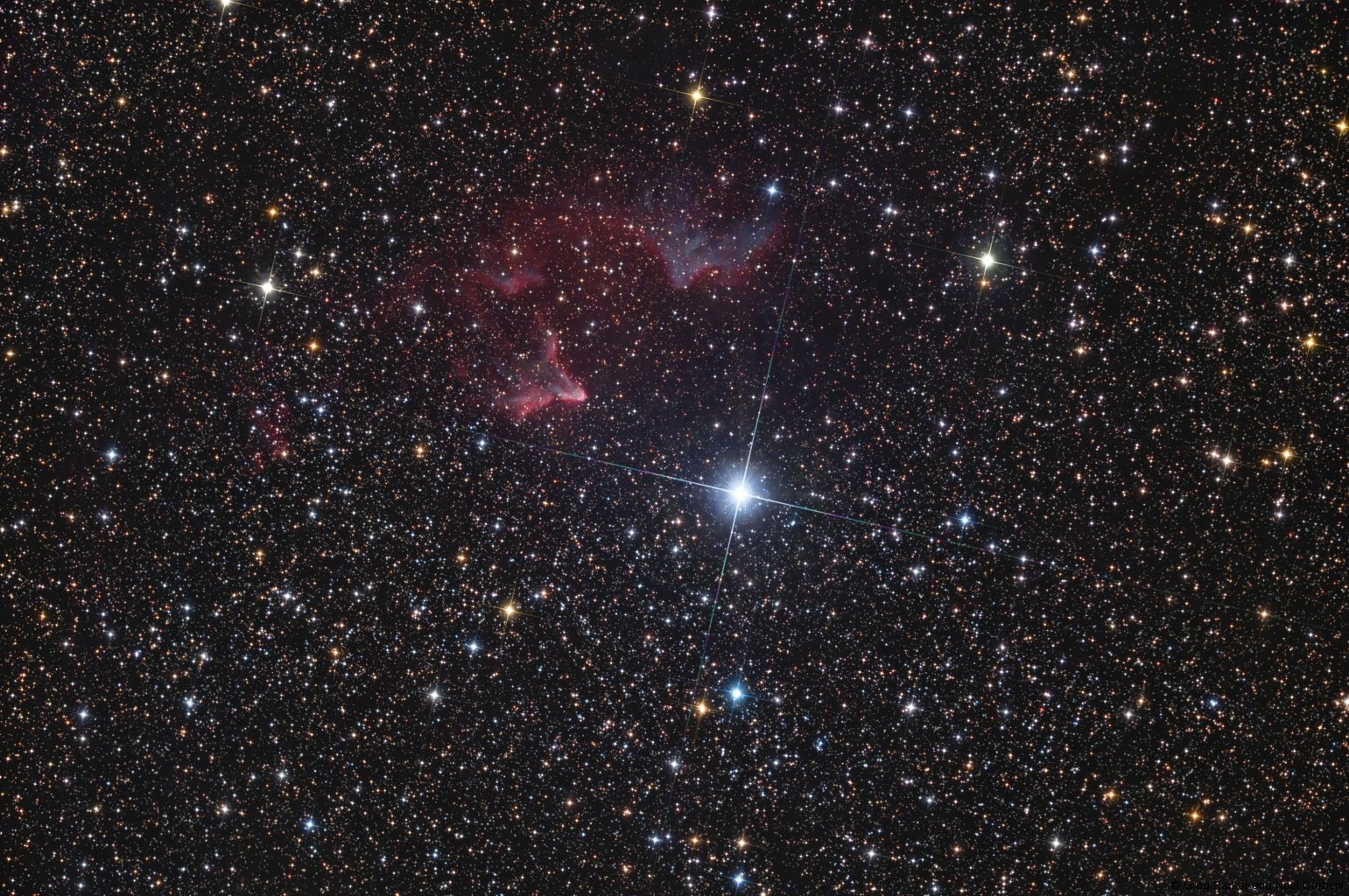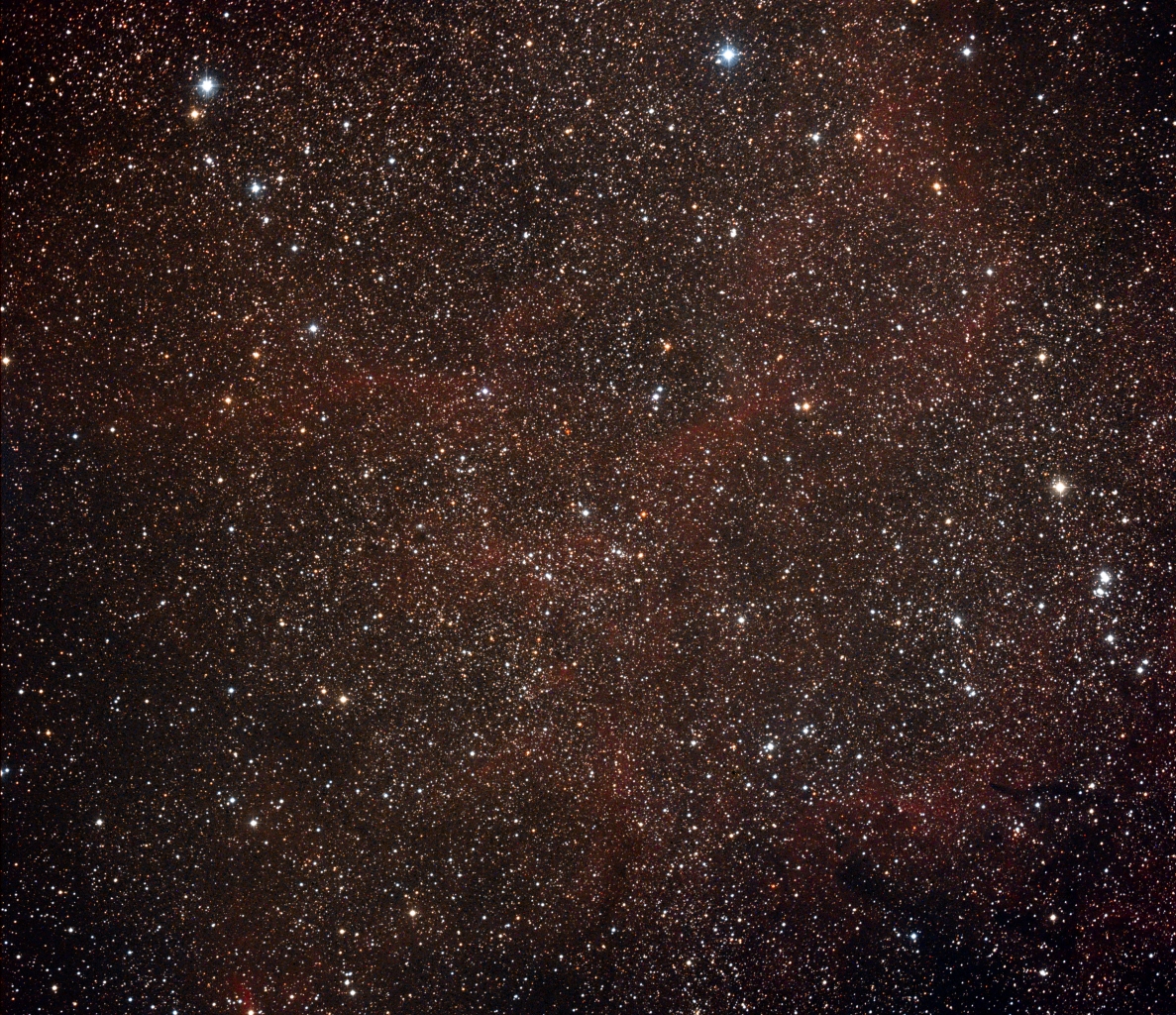
IOM November 2009 – the Gamma Cassiopeia region of Cassiopeia

Our long dark evenings now mean we can start early and easily get a good 6-hours on an object – weather of course permitting.  This Month’s object will do well with 6 or more hours total imaging time on it – it is the Gamma Cassiopeia region of Cassiopeia.  I am particularly fond of the Cassiopeia region anyway for its incredible star fields – not only is it in a rich Milky Way region of space, but it is also jam-packed full of open clusters and it is very hard to take an image anywhere within Cassiopeia and not find that you’ve bagged an open cluster (or two).

Gamma Cass is special however, in that it has two faint, but very beautiful nebulae associated with it – namely IC59 and IC63.  These emission/reflection nebulae almost half-encircle Gamma Cass and the subtle red/blue hues creates a beautiful image with the surrounding Milky Way star field.  Being very faint this region needs both long sub-exposure times and a long total exposure time as well.  Even with the Hyperstar III at f#2 I used 10-minute sub-exposures, and for a low-noise final image it would be good to get around 60 subs (at least) meaning a time investment around 10-hours or so.  Not only do I have a single frame (deep) image of Gamma Cass with IC59 & IC63 – but there is also a 4-frame mosaic of the region awaiting Noel’s time – now that one will be a stunner!!  Needless to say with such a faint object you need optimum conditions – and that of course means no Moon.

Put in the time and effort on this one and you will be amply rewarded.

We are fast approaching my favourite imaging Month of the year 🙂  See you all again in December!
Posted in IOM | 1 Comment

A brand new Paramount ME is on its way to the New Forest Observatory

Well it wasn’t a two week wait to see what happened – I crumbled just a few days after the last mini-WASP report and ordered up a Paramount ME from Kieron at SCS Astro – it is due to be with me early next week 🙂  Well I’ve really “bin and gone and dunnit” now haven’t I?  As I’ve purchased the “heart” of the mini-WASP array, all that remains now is to integrate all the various bits of the system and get imaging with the thing.  Estimated first light timescale is June/July 2010 if I don’t get another dome to house the array, and a bit earlier in the year if I do need to get a second dome.  It’s all systems go for the mini-WASP at the New Forest Observatory – we are about to enter a new era of amateur deep-sky imaging!!!

Posted in Equipment, mini-WASP Array | Leave a comment

New Forest Observatory – 100,000 hits and rising!!

Great news!  As you can see from the counter – New Forest Observatory now has in excess of 100,000 hits – that came around a lot faster than I ever imagined.  Please keep visiting NFO to keep up with the latest developments in deep-sky imaging from the New Forest.  The big news for this week is that I will be ordering (at last) the fantastic Paramount ME so that I can start putting together the long-awaited mini-WASP array. 

Here’s to the next 100,000 visitors to the NFO 🙂

Clear Moonles skies!

Posted in News | Leave a comment

Stephenie Meyer

Who is Stephenie Meyer and what has she got to do with deep-sky imaging?  Well Stephenie Meyer is an American author, and as far as I know she has nothing to do with deep-sky imaging.  So what is she doing being mentioned on the NFO site?

I keep an eye on sales of Star Vistas on the Amazon.co.uk web site, and it usually lurks around the 200,000 mark with occasional forays into the 50,000 or less area (which I have worked out means it sold something like 5 books in half a day or so).  However, if you take a look at the top 12 books on Amazon U.K.  you’ll find that four of those top 12 best-sellers are by one author – Stephenie Meyer.  I had never heard of Stephenie Meyer or her twilight Sagas” so I took a look at her Wiki page.  Meyer is all of 35 years of age and the idea of Twilight came to her in a dream (all the very best ideas come in dreams!!)  She has outsold J K Rowling and her books have been in the top 10 in America for a record number of weeks – and yet I’ve never heard of her before checking this out, however I’m sure we’ve all heard of J K Rowling.

So while Star Vistas languishes down in the hundreds of thousands – do take the time to check out the remarkable story of Stephenie Meyer and her Twilight Saga series of books – it’s quite inspirational!

Posted in News | Leave a comment

Statrep on the mini-WASP deep-sky imaging array

It’s been about a year since my last report on this project, and that last article actually said very little 🙂  I am on the point of putting my hand in my wallet (you cannot begin to understand the amount of pain this gives me) to purchase the heart of the system – yes, I am very close to putting in an order for a Paramount.  The grant I applied for at the beginning of the year didn’t come off, so I am going to have to find the not insubstantial amount of cash to build the mini-WASP myself – I guess you can hear the squeals of pain from wherever you are located.  I have 2 x Sky 90s for imaging and a Megrez 80mm for the guide scope, I have one SXVF-M25C and the SXV guide camera – so I also need to purchase the latest SXVR-M25C for the second Sky 90.  I only have one Robofocus, so a second Robofocus is needed for the second Sky 90.  I won’t be getting the FSQ106 and H36 for the fourth slot in the head (for narrowband imaging) for quite some time.  I need to see if I can use my small Pulsar dome to house this lot, otherwise the bigger dome will also be needed.  Starting the slippery slope on the road to a mini-WASP array is clearly going to severely test my bank balance, that’s why it has been so long (2 years) since first discussing the project that I am finally coming to the point of getting the mount – this project is a huge committment.  Well, it still might be just hot air – I haven’t “gone and done it” yet, but in a couple of weeks we’ll see if I finally took the plunge 🙂  Until then, I wish you clear skies – even if it has been pouring with rain for the whole of this past week!

Posted in Equipment, mini-WASP Array, Projects | Leave a comment

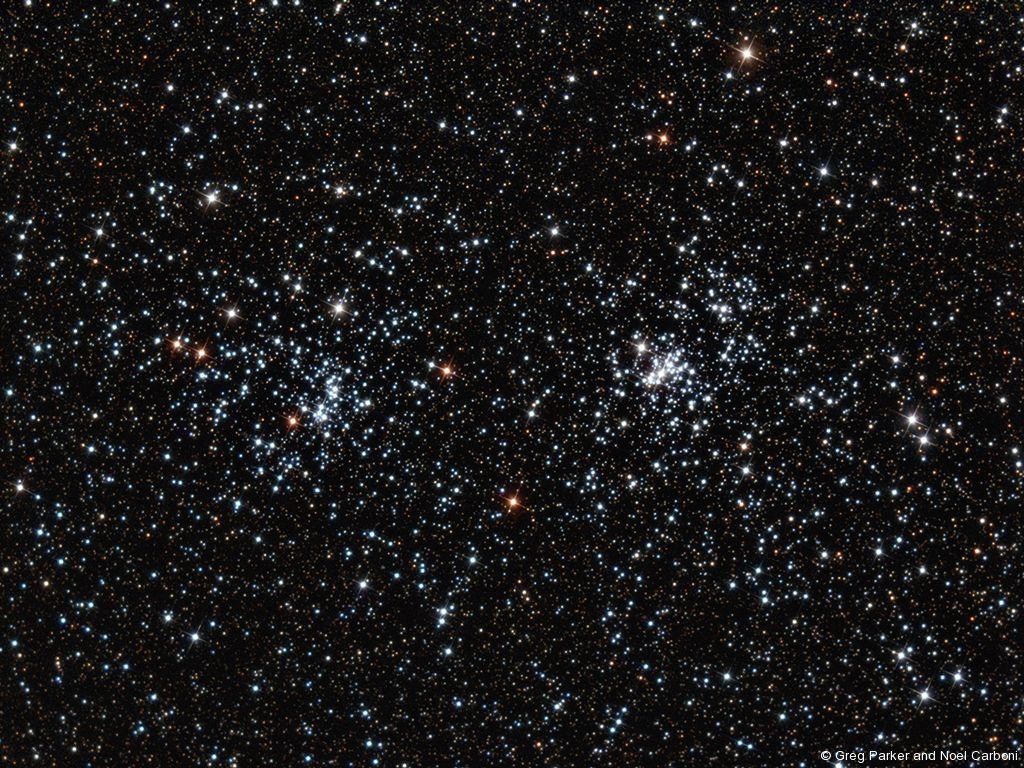
Meridian News weather picture October 10th 2009

The (evening) Meridian News weather picture for October 10th 2009 was the Double Cluster in Perseus taken from the New Forest Observatory.  I shall put up a very short video clip of this in the next few days.  The image looked very impressive up on the big screen 🙂

Posted in News | Leave a comment

Photographic exposures from 9-millionths of a second to 3-months

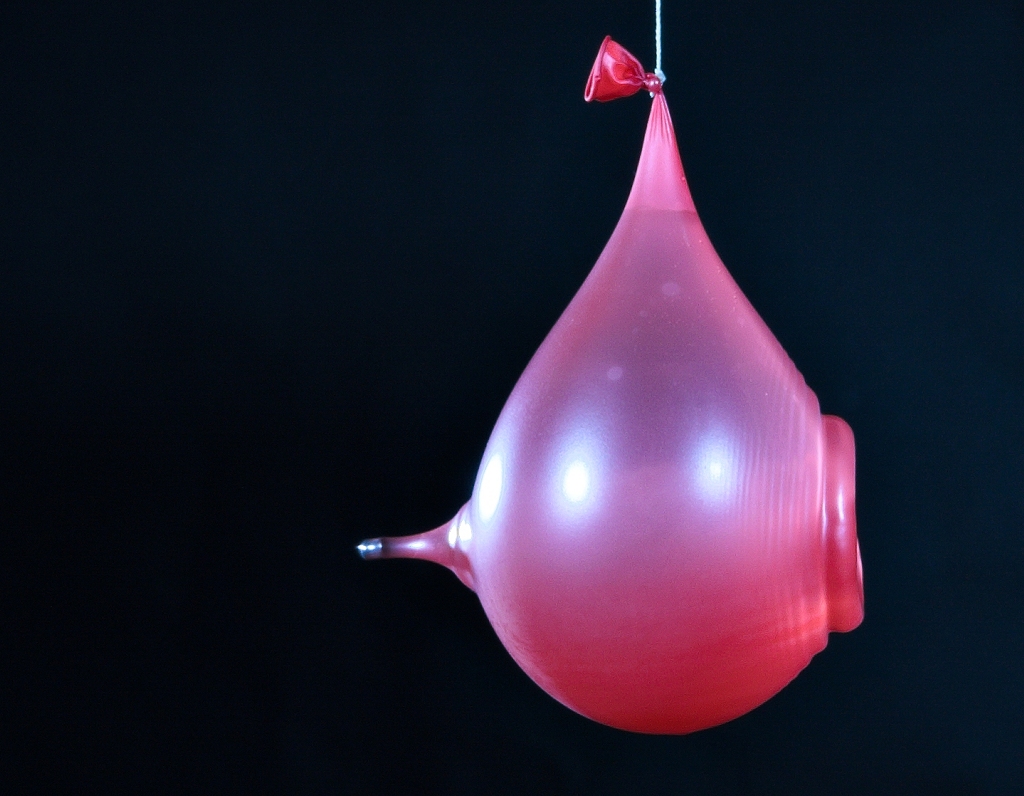
I just spent the day at Tony Allen’s photographic studio in Oxford with my high speed flash units.  We had another go at the water-filled balloons as they are so much fun.  Here’s a result from today’s efforts.

This exposure with the HSF units is only 9-microseconds long.  Compare that with the 3-month exposure I am taking with the pinhole cameras bolted to the side of my house 🙂

Posted in Projects | 2 Comments

Gamma Cassiopeia with new star spikes

Noel has just reprocessed an earlier image of Gamma Cassiopeia with the nebulae IC59 & IC63 lying close by – with the addition of some star spikes.

Posted in CCD Images, Hyperstar and SXVF-M25C | Leave a comment

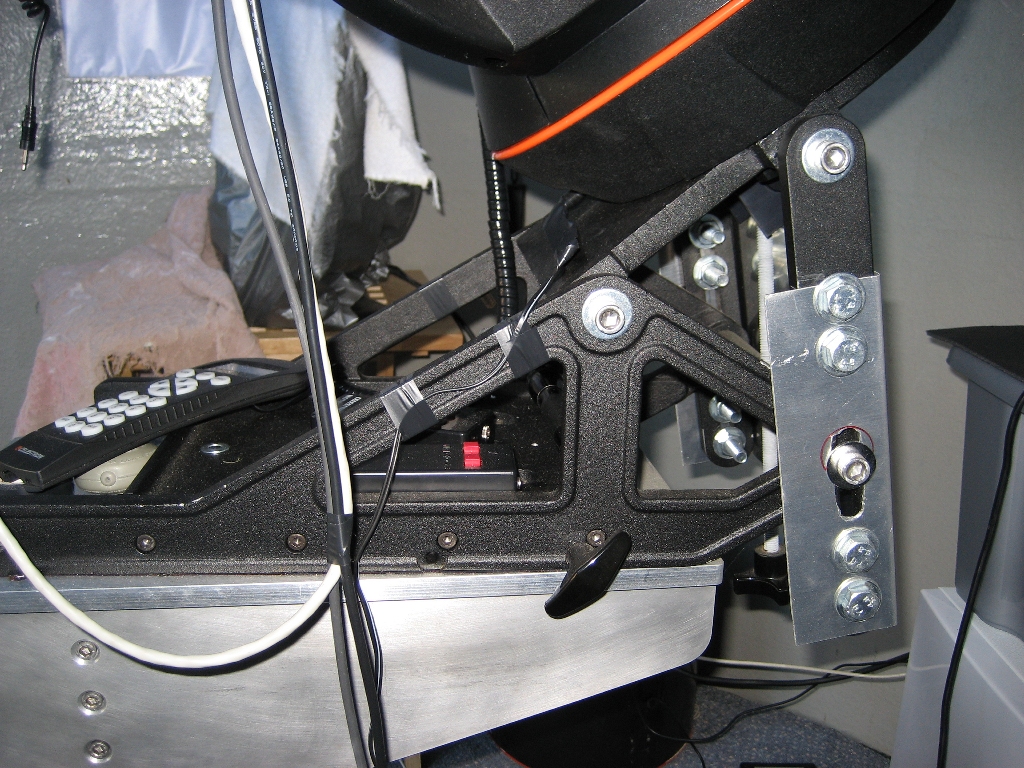
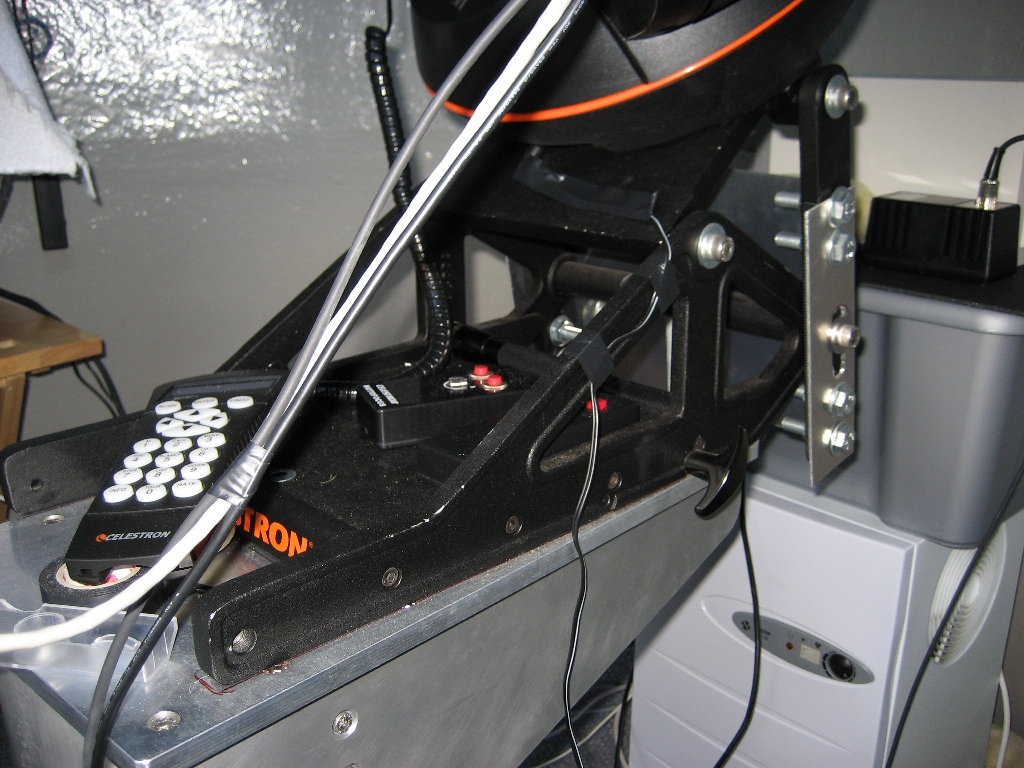
Modification to the basic Celestron wedge

I was recently asked about a problem in maintaining polar alignment due to a heavy scope being cantilevered all over the place on a wedge.  The standard Celestron wedge (which I use) would also give you problems as the heavy C11 or C14 is moved around the night sky, mainly due to the open ended construction where a large box end is fairly free to flex as several kg worth of scope is swung around.  The solution is to close off the box end with some sheet aluminium – the thicker the better.  I used 2mm thick aluminium sheet and bent it to fit over the end of the wedge.  Some slots were cut to allow solid bolting of the sheet to the wedge and the result can be seen here.

The modification has transformed a basically unusable wedge into a wedge that has solidly supported my Hyperstar C11 since I started imaging towards the end of 2004.

Posted in Equipment, Projects | Leave a comment

IOM October 2009 – the Double Cluster in Perseus

We are now enjoying long dark evenings and are once again getting into the swing of imaging well into the early hours – weather permitting.  The imaging object I have chosen for this month is the famous Double Cluster in the constellation Perseus.  The Double Cluster as the name suggests is made up from two beautiful open clusters, NGC 869 and NGC 884.  Walter Scott Houston in his Deep-Sky Wonders book has this down as a January object, but I find I have to have a go at looking/imaging this one the second it comes into a favourable position in my skies.  The usual description of this amazing object, when viewed through a low-power eyepiece is “Diamonds on Black-Velvet” – and I clearly recall my first observation of the Double Cluster throught the C11 was precisely just like that.  It is an incredible sight, and it is even a naked eye object appearing as a fuzzy glowing region near Cassiopeia.  In fact it is such an amazing visual object that CCD images rarely do it justice for reasons that will become apparent as we carry on examining this region.

If you use a low powered telescope, or better still a pair of 10 x 50 binoculars to look in the Double Cluster region, something very odd immediately strikes you.  Like ornaments on a charm bracelet the Double Cluster sits on the edge of a bright ring of stars which leap out at you when viewed through binoculars.  Now look at this region on a star map or planetarium program.  Although you can make out the ring of stars that make up “Greg’s Charm Bracelet” – they are by no means conspicuous, and don’t show themselves to be clearly differentiated in any way from the myriad of background stars in the region.  So this is clearly some sort of subtle eye-brain processing going on which makes the “Bracelet” so very clear when visually observed.  There are plenty more asterisms that “pop out” when observed through binoculars, but effectively “hide away” when looked at on planetarium programs and star maps – Kemble’s Cascade immediately comes to mind.  I think it is similar subtle processing by the brain-eye system that makes the Double Cluster itself so very striking.

Returning to imaging the Double Cluster, it is a matter of getting a large number of subs at maybe 2 or 3 minutes per sub, under Moonless conditions.  We can of course image clusters with the Moon up, but if we are trying to get that “Diamonds on Black Velvet” image, then we want the darkest skies possible.  It is also worth going as deep as possible as well in order to pull out the impressive dark rift that runs between the two clusters adding further to the  contrast when viewing this region.  For a nice noise-free image it is worth trying for at least 100 sub-exposures which means spending up to maybe 5-hours imaging the Double Cluster.  If you end up with an image that even approximates the view of the real thing – then it’s 5-hours really well spent.

Clear, dark skies until November’s object of the Month 🙂

Posted in IOM | Leave a comment