Ultra long sub-exposure photography

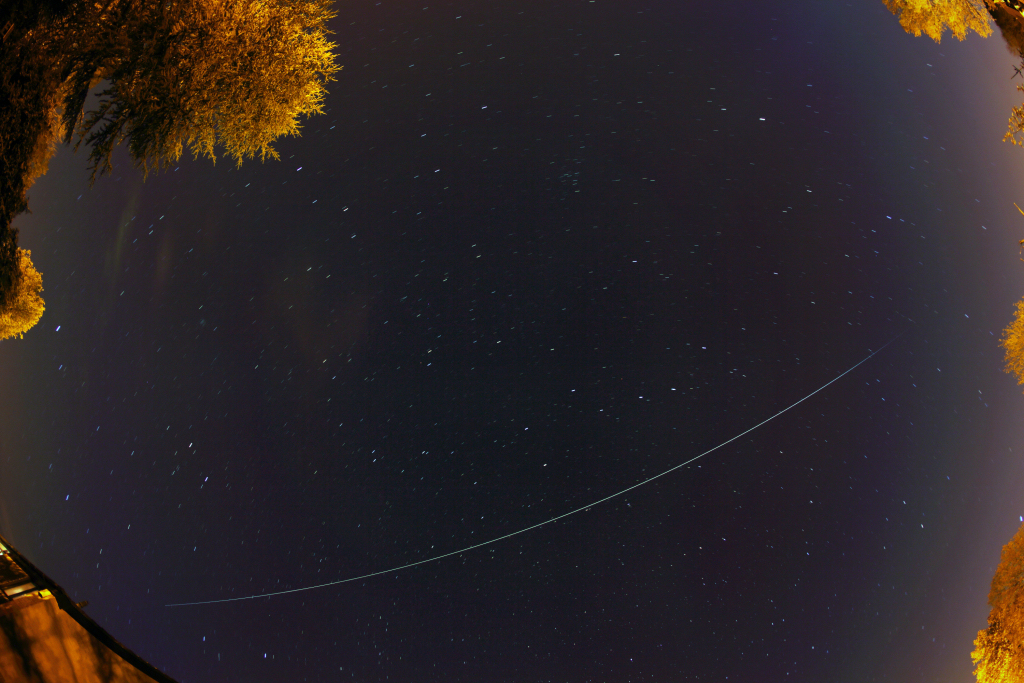
I have just made up 2 beer can pinhole cameras (see Justin Quinnell’s website to see how to do this) and fitted them to a wooden frame on a South-facing wall of the house.  I have opened the shutter (removed the black tape from the pin hole) of one of the cameras, and will start the exposure on the second camera in about a week.  Time for the total exposure?  Somewhere around 6 months 🙂  This will be the longest photographic exposure I have ever taken!  What will it show if it works?  Hopefully we will get the path of the Sun across the sky (for those days not covered in cloud) for the period of the exposure.  Clearly the data will also allow the plotting out of an analemma as a bonus.
Posted in Articles, Equipment, Projects | 2 Comments

IOM September 2009 – the Iris nebula in Cepheus

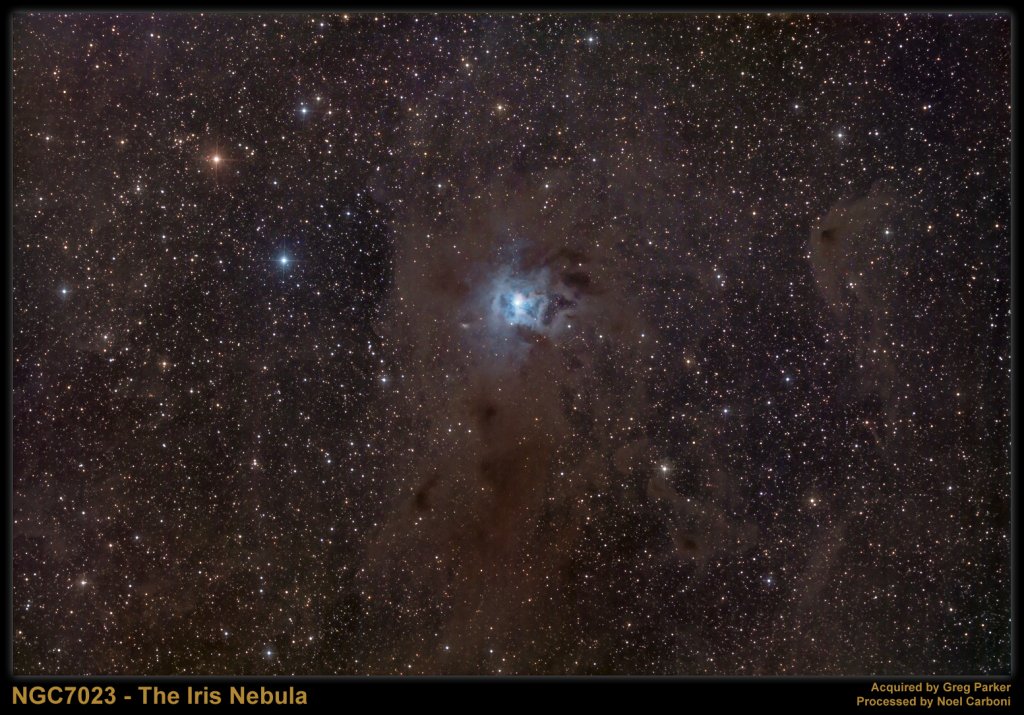
At last!  September has come around again and we can actually start imaging before 10:00 p.m. hooray!!  Less baggy eyes at work the next morning 🙂  This Month’s imaging object is the mysterious-looking NGC7023, a reflection nebula known as the Iris nebula in the constellation Cepheus.  From my notes I started imaging this one around 9:45 p.m. so not that much before 10:00 p.m. but sufficiently early in the evening for it not to feel too painful.

You need to go deep on this one in order to do justice to all the dark nebulosity that surrounds the Iris.  Look carefully and you’ll see a huge “clover-leaf” pattern surrounding the Iris nebula where most of the stars are missing – this is the massive dark nebulosity that fills this region.  In order to get that rich brown colour that is often associated with dark nebulae you need to go deep, and that means 5-10 minute sub exposures with the Hyperstar and 10-20 minute subs with an f#4.5 instrument like a Sky 90.  For total exposure times you’d like to get around 4-6 hours with the Hyperstar which translates to in excess of 24-hours with the Sky 90, which is bordering on silly.  This example shows the power of Hyperstar imaging where you can download quality data 6 times faster than is possible with a very popular imaging refractor.

The Iris nebula lies at a distance of 1,400 light years in Cepheus, and it’s not an easy one to process as the core is so bright it is hard to control it and not having it “blow out”, while at the same time trying to show the dark nebulosity at its best.  You’ll know you’ve got quality (deep) data and that you’re processing is top-notch if you manage to bring out the little pink region lying very close to the core of the Iris.

Hooray!!  The earlier evenings have returned – we now have (hopefully) another 7 months of great imaging ahead of us.

I wish you clear, dark, Moonless September skies.

Posted in IOM | 7 Comments

New H-alpha filter ordered – broadband 35nm bandwidth

Conventional narrowband filters (12nm or smaller bandwidth) do not work with the Hyperstar III system due to its very low f#.  The cone angle of the rays passing through the filter are so far from normal incidence that the actual operating wavelength of the filter (at the incident light angle) is no longer at H-alpha wavelengths.  One possible solution to this problem is to use a filter with a very large passband.  I have just purchased a 35nm bandwidth H-alpha filter from Ian King Imaging and can’t wait to see if the Hyperstar III will work with it.  My first target for testing the new combination will be CTBI, the supernova remnant in Cassiopeia that I have had trouble imaging before as it is so faint.  It will be very interesting to see if the new filter allows me to get a decent image of this difficult object.  If it does, I might just give Simeis 147 a go – I have always left this one well alone as it is so large and faint.

Posted in Equipment, Hyperstar and SXVF-M25C, News | 4 Comments

Live and learn!

You will see from a couple of posts below that I had some severe computer trouble.  All I wanted to do was upgrade the processor and memory and keep everything else the same, strangely the graphics card played up after the upgrade and all text was like a “spidery” Arial no matter what program was displaying the text.  I downgraded the graphics card and it all worked well again.  I did notice however that as I was putting in the downgraded card there was some dust (fluff) in the PCI Express connector socket which I just blew out the way before putting in the downgrade.  It struck me a few hours later that this fluff may have actually caused the fault with my old card.  So tonight I put the old (better) card back in – and of course it works just fine.  Sometimes these subtle computer faults can be very trying.  Lesson to be learned – when swapping cards/upgrading give the sockets a quick going over with the vacuum cleaner as well as the rest of the case/components.

Posted in News | Leave a comment

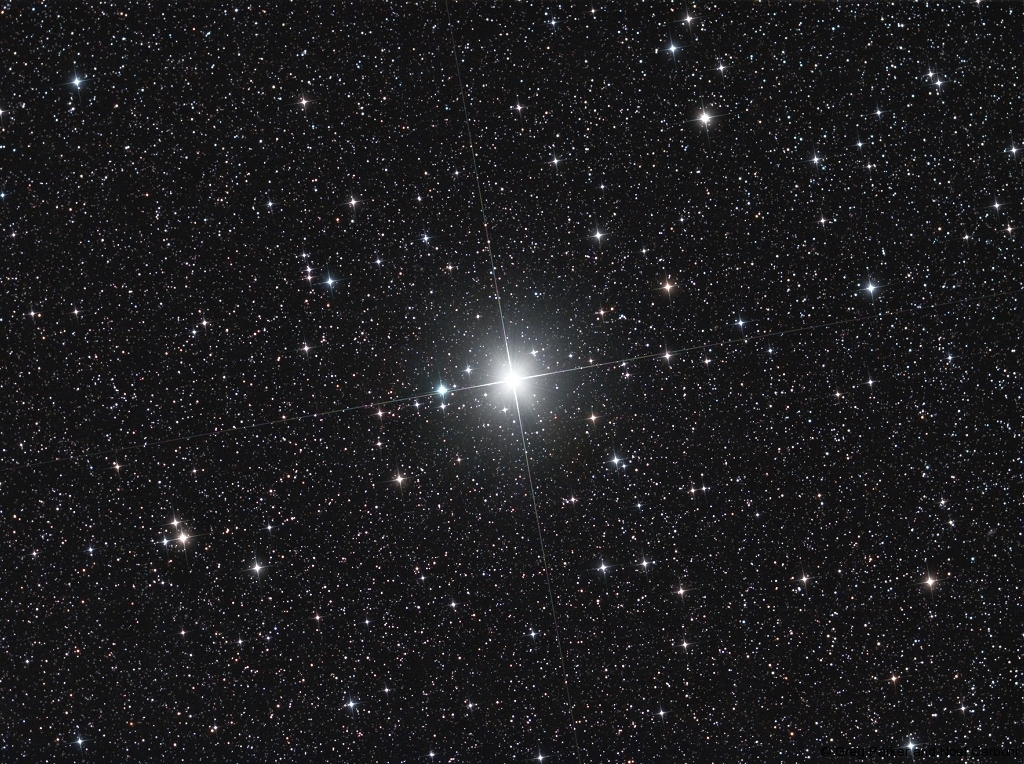
Regulus also gets the star spike treatment

Posted in Sky 90 and SXVF-M25C | Leave a comment

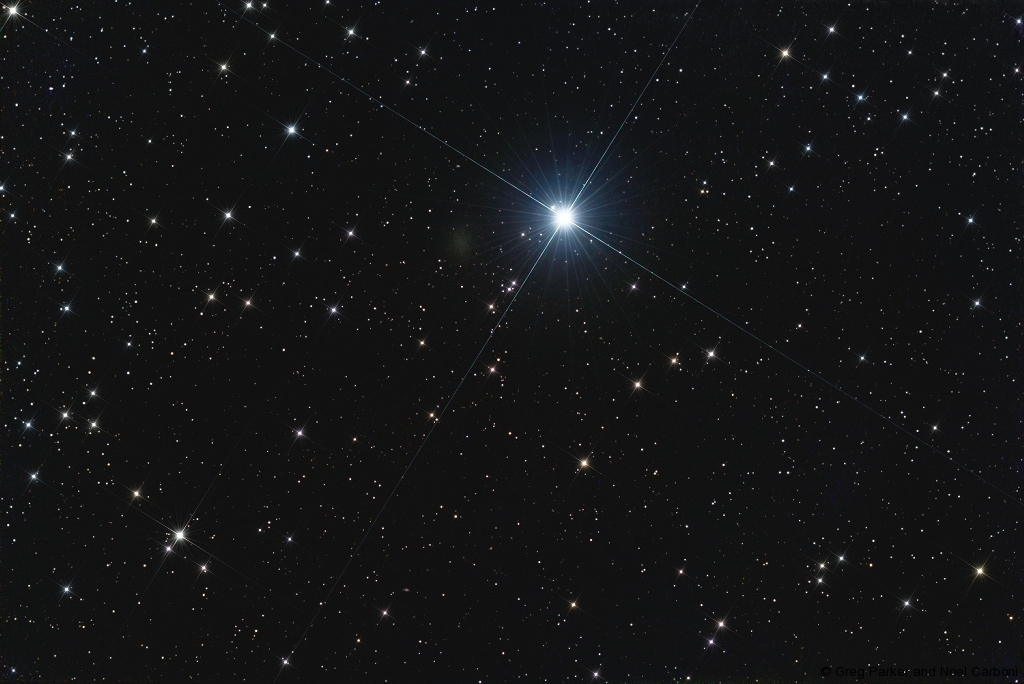
Procyon – with added star spikes

Noel Carboni has been putting a considerable amount of effort into developing a new star spike plugin for Photoshop.  He has been trying it out on a few of our images as a test and this is the result of working on the deep-sky image of Procyon.

Artificial star spikes are either something you like, or something you pretty much dislike – personally I think they add to an image about 90% of the time with only very few images not benefitting from adding spikes.

Posted in Sky 90 and SXVF-M25C | Leave a comment

Back in business!!

After a considerable amount of pain and anguish – I’m back in business computer-wise 🙂  Now have a quad-core 2.33GHz running with 4Gig of RAM and a pair of 24″ “letterbox”  LCD monitors.  Also added a 2Tb external hard drive as I was getting panicky at the lack of backup.  So not only back in business – but it also looks like we’re going to get a clear Moonless sky tonight – AND – I don’t have work tomorrow.  From the depths of despair its suddenly all rosy once again 🙂

Posted in News | Leave a comment

Ultra wide field Cygnus

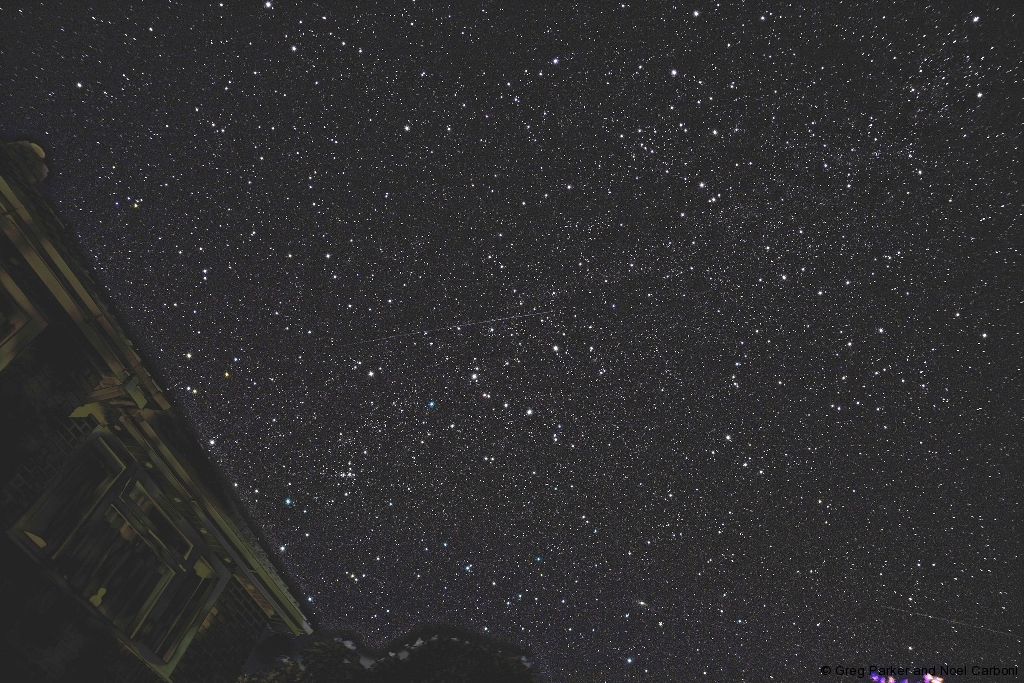
Took the 40D out for a couple of hours last night as it was clear – clear but very moist air, so moist I packed up at midnight as it was almost fog.  Used the 17-55mm zoom at 55mm with the 77mm IDAS filter (SCS Astro) and got most of Cygnus in the frame.  Had to put the air blower on the IDAS after every 4-minute sub to keep the dew off.  Ended up with 12 x 4-minute subs which look half reasonable.  As my main computer decided to pack up today I won’t be able to get this data to Noel until the thing gets fixed.  Today has not been a good day!!

Posted in News | Leave a comment

Perseids 12th August 2009

Unfortunately last night (12th) we were completely clouded out, so I didn’t get a chance to put into practice what I’d learned about meteor imaging (the first time I’ve attempted this) from the night before.  Never mind, we still have the Orionids, Taurids, Leonids, Geminids and Ursids before year end 🙂

Posted in News | Leave a comment

The Perseids from August 11th 2009 imaged from the New Forest Observatory

Noel Carboni worked his Photoshop magic to bring a great image out of very suspect data!  This was only 45-seconds of exposure time at ISO1600 using the Canon 40D and the 17-55mm zoom lens at 17mm.  In this image you can see three Perseids (the third very faint Perseid runs just under M31).  None of these meteors was visible to the naked eye over the bright Moon pollution.  Like the fisherman’s tales -a very bright meteor passed right through the field of view less than 10-seconds before I actually started imaging!!  It was all downhill from then on 🙁

The kit was mounted on the superb Astrotrac which performed flawlessly throughout the night – even if the meteors didn’t.

Posted in News | Leave a comment