EPOD 1st November 2008 the Jellyfish nebula

More great news!!  Today we got the Jellyfish nebula (IC443) and its companion IC444 published as an Earth Science Picture of the Day.  Continue reading
Posted in EPOD, Sky 90 and SXVF-M25C | Tagged , , | Leave a comment

IOM November 2008: IC410 and IC405 the Flaming Star nebula

This Month’s gems are a pair of beautiful emission nebulae in the constellation Auriga.  Of the two, IC405 is the more famous as it is the well-known “Flaming Star” nebula, a region of H-alpha emission, but with an amazing reflection nebulosity in the “head” of the nebula caused by the reflection of short (blue) wavelengths of light by dust particles. Continue reading

Posted in IOM | Leave a comment

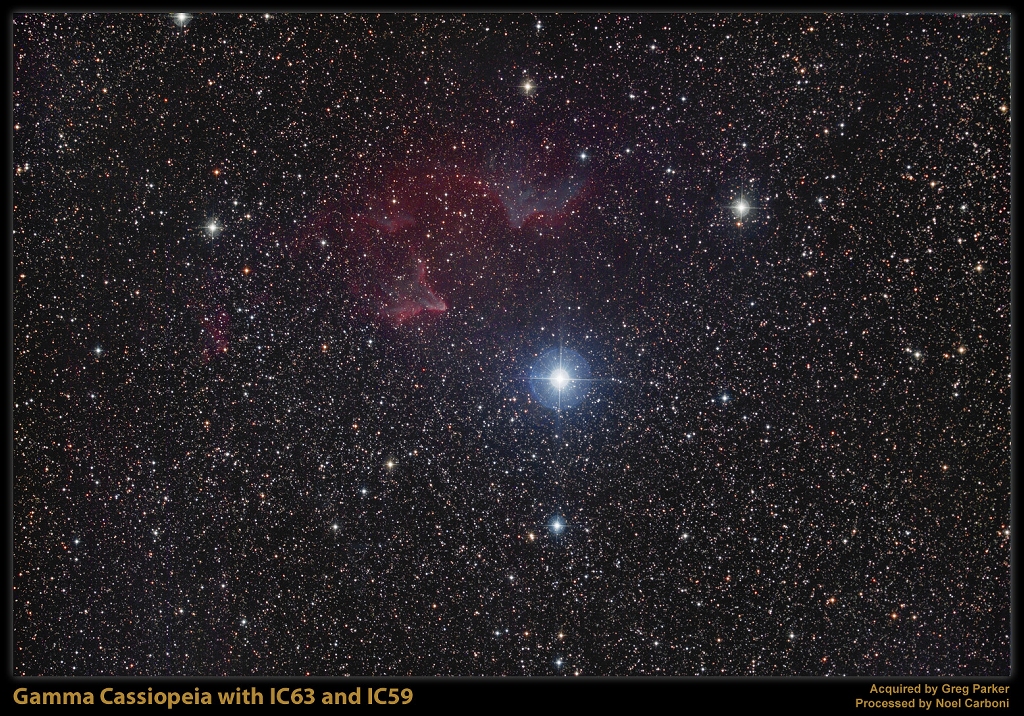
Work in progress IC59 and IC63 Gamma Cassiopeia

With under a couple of hours using 90-second subs I wasn’t expecting much from this one apart from the stars.  I was amazed at how well the nebulosity stood out – power of the Hyperstar!!!  Noel did a heroic job of processing out the huge lens flare around Gamma Cassiopeia.  I shall be definitely going back to this one to get a LOT more data for Noel to work with.

Posted in Hyperstar and SXVF-M25C | Leave a comment

IYA website Astropic of the week

Noel & I have an image today on the International Year of Astronomy’s website as “Astropic of the Week”.  It is our image of NGC6914 – a reflection nebula in the huge Gamma Cygni nebulosity IC1318.  Excellent!!!

Posted in Articles | Leave a comment

Work in progress – the NGC7788 region in Cassiopeia

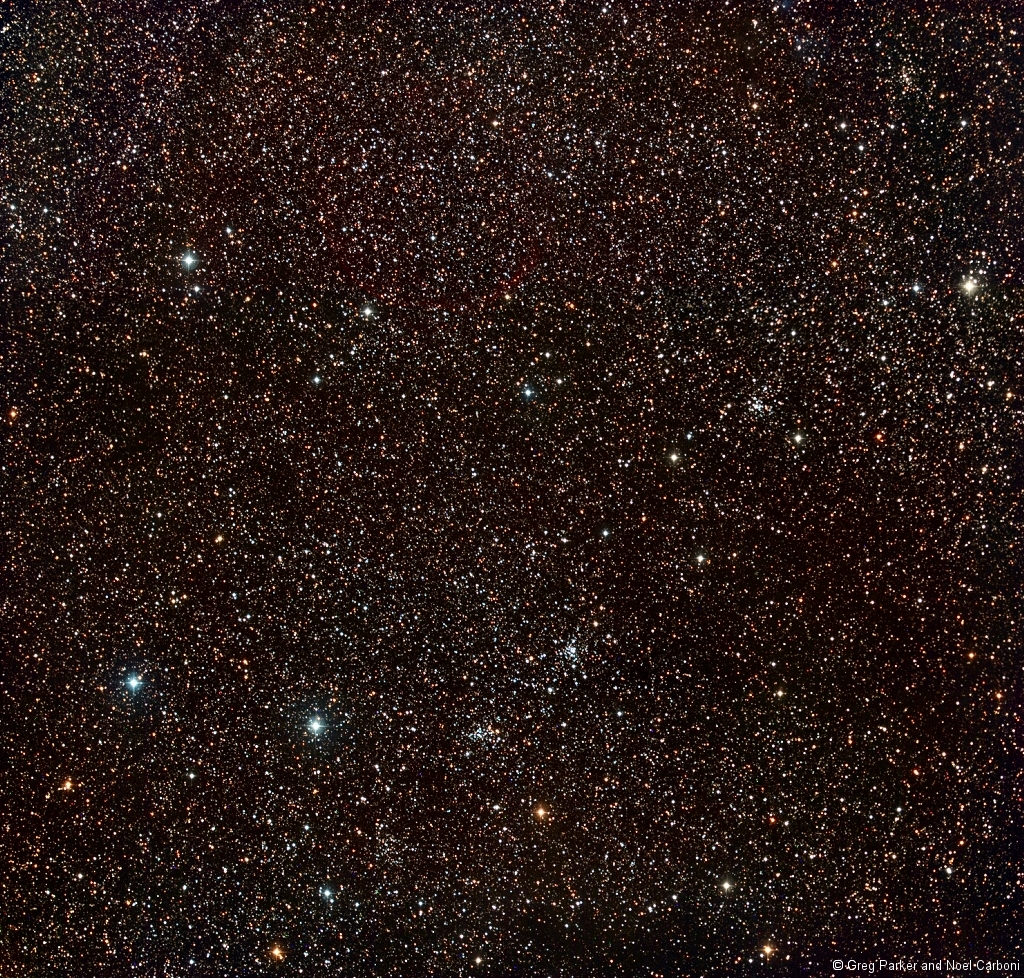
This is a 2-frame Hyperstar III mosaic of the NGC7788 region in Cassiopeia. This region is famous for having 6 open clusters in a line. However, towards the top of the frame (not visible in this image) is a fascinating supernova remnant CTB1 that I want to get. This will need to wait for dark skies and an attempt using very long sub-exposures.

Posted in Hyperstar and SXVF-M25C | 4 Comments

Hyperstar III image of IC1805 in H-alpha

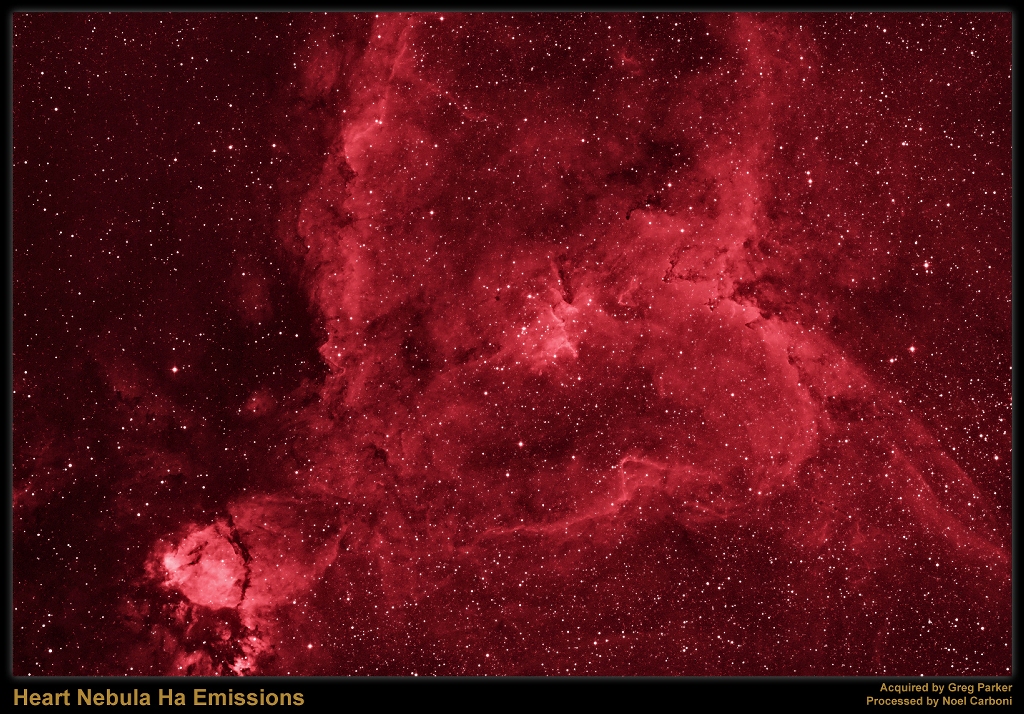
On 10th October 2008 I managed to get 3 hours and 40-minutes worth of H-alpha data on the Heart nebula in Cassiopeia using 10-minute subs.  The Moon was causing all sorts of trouble and the seeing was poor which led to pretty mediocre data for Noel to work with.  However, Noel eventually managed to work his magic even with this one to give this very nice high-contrast result:

Posted in Hyperstar and SXVF-M25C | Leave a comment

Moon – it’s up there, causing trouble, so may as well image it!

For us deep-sky images I’m afraid the Moon is simply a nuisance, especially as it approaches full.  Well tonight I wanted to do some imaging – so there’s only one choice really, and that’s the Moon.  This image was taken with the Canon 40D and the 100-400 mm zoom lens with a x1.4 teleconverter giving me an overall 560 mm focal length. Continue reading

Posted in Articles | 2 Comments

Report on hardware changes

I can report that the hardware changes made a couple of days ago produced the expected result – tracking is now back to the very high accuracy I had when using the Hyperstar 1.  Unfortunately I also had to turn of the dither function in Maxim DL as it was taking the system far too long to come back into accurate tracking again, even after movements as small as half a pixel.  This unfortunately feeds through to Noel who now has the annoying hot pixels to deal with at the final processing stage.

Posted in Hyperstar and SXVF-M25C | Leave a comment

Astronomy Technology Today (October 2008)

In their latest edition, Astronomy Technology Today have published two very nice Hyperstar articles, one written by the Starizona boys and one by yours truly. Astronomy Technology Today have kindly allowed the New Forest Observatory to host these articles, and the cover of the magazine which shows an early Hyperstar 1 image of M42 taken from the NFO. Thank you ATT!

[download#2#image]

Click the download icon to download a PDF version (be warned: it is over 3 megabytes in size).

Posted in Other Magazines | 2 Comments

The New Forest Observatory makes today’s EPOD!!

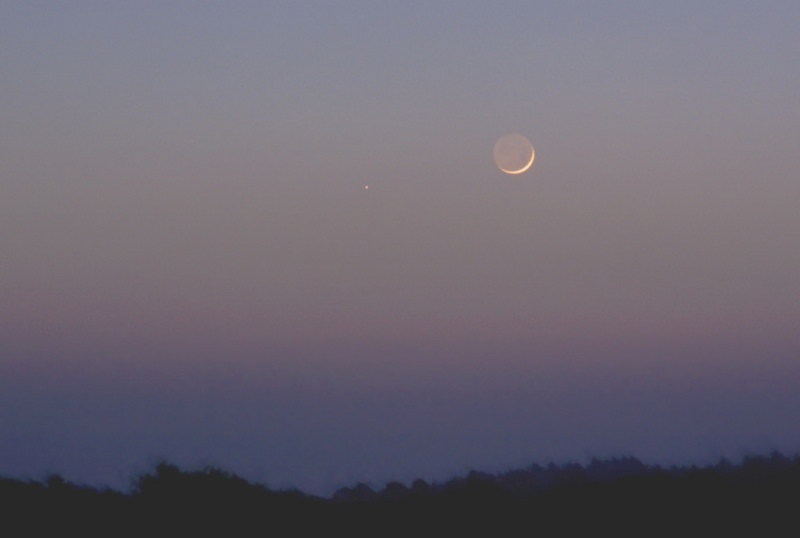
Today’s EPOD is the Canon 40D image of the crescent Moon and Mercury taken a while back.

The sky played ball for a change giving a very atmospheric 🙂 image.  This one image has by far the greatest number of viewing hits on my Flickr site!  Thank you once again Jim for publishing work from the NFO on your site.

Posted in EPOD | Leave a comment