Picture of the Week

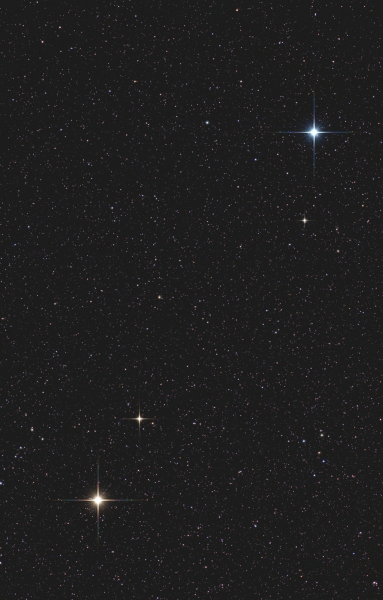
Picture of the Week is Greg’s 3 asterism in Leo seen almost dead centre in this image. The image comprises 14 x 12-minute subs taken with the 200mm lenses and M26C OSC CCDs.

I first discovered this asterism whilst scanning across “The Sky 6” planetarium program looking for something interesting. It certainly looked VERY interesting on the monitor. As the object was not in my sky at the time I then downloaded the DSS2 data to have a look at it. Looked EXTREMELY interesting! I then had to wait a few months to get my first Sky90 image of the asterism, and then there was a couple of years wait before getting the 200mm lens image you see above.

Posted in Picture of the Week | Leave a comment

Picture of the Week

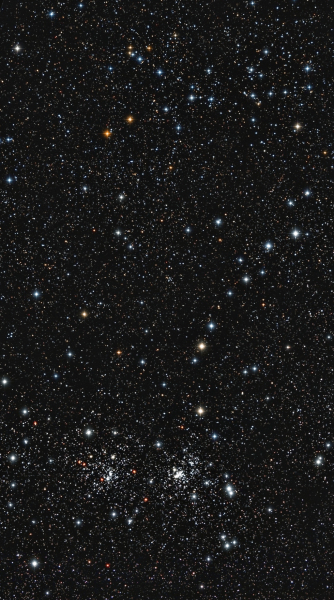
For this week’s “Picture of the Week” I have chosen my favourite asterism, namely Kemble’s Cascade. Not only is this a superb star cluster in its own right, but it also has 3 very special stars closely associated with it. These are:

  1. UV Camelopardalis, SAO13009, R-type star.
  2. V Camelopardalis, SAO12870, N-type star.
  3. BD Camelopardalis, SAO12874, S-type star.

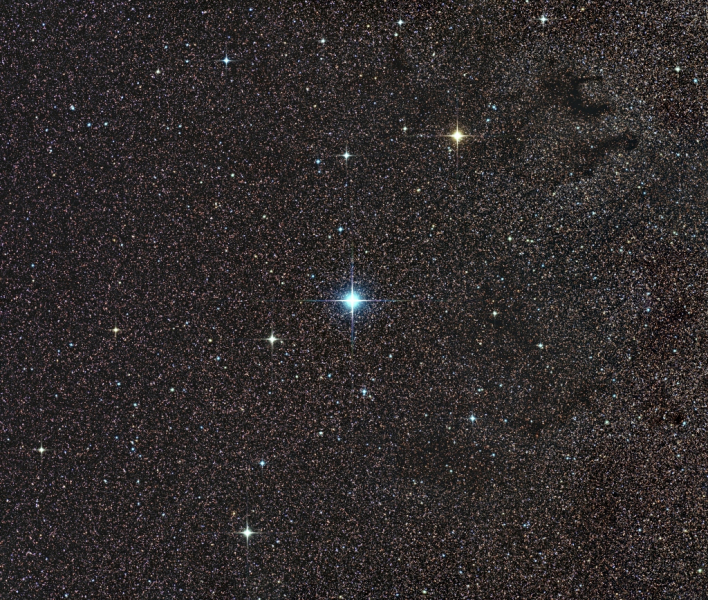
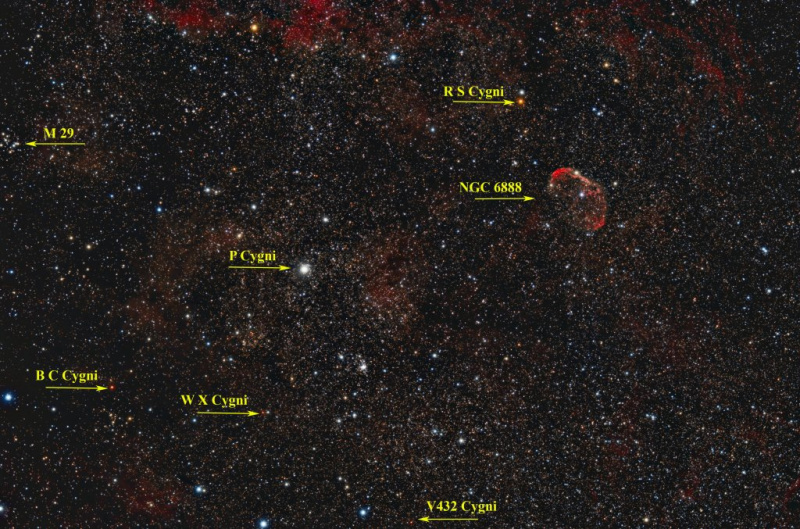
I like this region so much I have imaged it with the Hyperstars, the Sky90 array and the 200mm lenses. The first image above is a 4-frame mosaic using the Sky90 array. The second image is a single framer using the 200mm lenses, and the third image is a composite with the R, N and S-type stars annotated.

Posted in Picture of the Week | Leave a comment

Picture of the Week

A regular visitor to this website made the valid comment that the Andromeda image has been the latest one to be shown for far too long. Why has it been up there for so long? Very simple really, I haven’t had a clear Moonless night for weeks, and I haven’t managed to visit any of my winter regulars at all this year. That however is absolutely no excuse for not keeping this site right up to date (weekly at least) and presenting material I have taken earlier.

Here’s one I might not even have put up before (I haven’t checked) and if so that’s pretty remiss. This is 22 subs at 2-minutes per sub on the 200mm lenses with the ASI 2600MC Pro CMOS cameras – and the subject is Sirius. I say cameras (plural) but in fact only one of the lenses could actually image Sirius, the other was below the level of the observatory wall.

So that I do not lapse into extreme laziness in my old age I will attempt to produce a new “Picture of the Week” every Sunday to try and keep (the rapidly waning) enthusiasm going.

Posted in 200mm lens and ASI 2600MC-Pro camera, Canon 200mm prime lens, Picture of the Week | Leave a comment

M31 – the Final Cut

I just found another 6-hours of 40-minute subs of M31 taken with the Sky90 array, and I added this to the earlier composite. You can see the result above and it is virtually no different from the previous result. I think that means this is the best I am going to get given my skies, and I can finally cross M31 off the imaging list.

Posted in Hyperstar 4 and ASI2600MC-Pro, mini-WASP Array, Projects, Sky 90 and SXVF-M26C | Leave a comment

Composite Rosette Nebula

This image of the Rosette nebula is a composite using data from the 200mm lenses with ASI 2600MC Pro CMOS camera and Optolong filter, together with Hyperstar 4 data using an ASI 2600MC Pro CMOS camera and a UV/IR cut filter. Total integration time just over 12-hours.

Posted in 200mm lens and ASI 2600MC-Pro camera, Hyperstar 4 and ASI2600MC-Pro | Leave a comment

A Maths Problem for You

Here’s a simple little maths problem for you to look at, if you like that sort of thing.

For what value of x does the following equation hold true?

x^n + 2.x^n+1 = x^n+3

Where x^3 is x cubed.

Posted in News, Projects | Leave a comment

Definitive M31

I sent a friend a low-res version of M31 and they asked if they could have the hi-res version to print out and put on their wall. Now it gets embarrassing – can’t find the hi-res version anywhere. So I have to go back to the original datasets (Sky90 and Hyperstar 4 data) composite them, completely reprocess them, and have another go. The result is above. Close to the original low-res version but not exactly the same.

Posted in Hyperstar 4 and ASI2600MC-Pro, Sky 90 and SXVF-M26C | Leave a comment

The Full Stellar Spectral Classification

Kemble’s Cascade alone has R N and S-type stars in the frame. In case the labelling on the image itself doesn’t come out too well, the TOP labelled star is BD Camelopardalis S-type, the MIDDLE star is V Camelopardalis N-type, and the BOTTOM labelled star is UV Camelopardalis R-type. I have an image of another S-type star lying near Rigel and it too looks the same washed out colour as BD Camelopardalis, so although it looks odd (in not being VERY red) it appears to be correct.
 
Posted in News, Writing | Leave a comment

Stellar Spectral Classes

I just put this montage together of stellar spectral classes with some real examples.

Posted in Writing | Leave a comment

M33 – The Triangulum Galaxy

Absolutely all the data I have on the Triangulum Galaxy.

Posted in Hyperstar 4 and ASI2600MC-Pro, Hyperstar and 814C, Hyperstar and SXV-H9C | Leave a comment