Having spent the whole day on the Golden Ratio, the Fibonacci sequence, the Golden (Planar) Angle, and Phyllotaxis – here is a Mathematica produced piccie of the Sunflower seed-head pattern using 2,000 “seeds”.
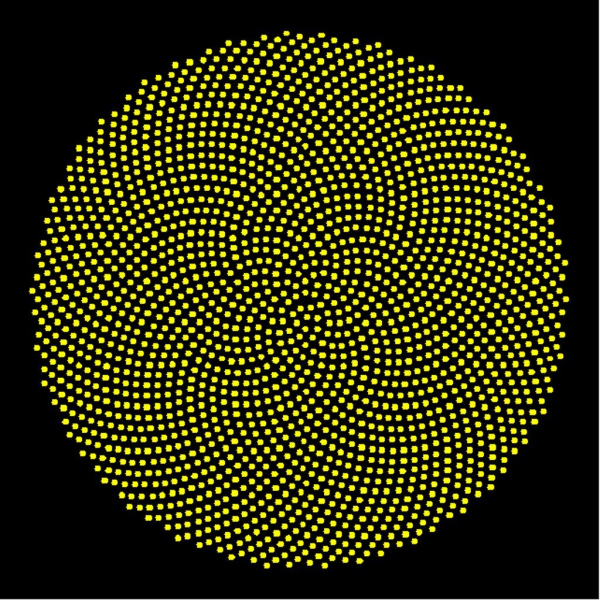
Having spent the whole day on the Golden Ratio, the Fibonacci sequence, the Golden (Planar) Angle, and Phyllotaxis – here is a Mathematica produced piccie of the Sunflower seed-head pattern using 2,000 “seeds”.
The well-known Fibonacci sequence formed by summing consecutive terms looks like:
1, 1, 2, 3, 5, 8, 13, 21, 34, 55, 89……….
And a well known property of this sequence is that if you take the ratio of consecutive terms you get closer and closer to the Golden Ratio the higher up the sequence you go. So if we divide 89 by 55 we get 1.61818181…….
We can create a Fibonacci sequence incorporating the variable x in the following way:
1, x, (1+x), (1+2x), (2+3x), (3+5x), (5+8x), (8+13x)…
Now a remarkable property of this sequence is that once again, if we take the ratio of consective terms in the sequence, we get the Golden Ratio – Phi – provided x=Phi, which I think is a remarkable result.
What this means is that looking at the sequence with Phi replacing x we get:
1, Phi, (1 + Phi), (1 + 2*Phi), (2 + 3*Phi), (3 + 5*Phi)…
And if taking the ratio of consective terms gives us Phi, this means that:
(1 + Phi) = Phi^2
(1 + 2*Phi) = Phi^3
(2 + 3*Phi) = Phi^4
The first result comes directly from the basic definition of Phi itself, namely that (1 + Phi)/Phi = Phi
Taking a deeper look at the above sequence I was able to come up with a general result, namely:
Phi^n + 2*Phi^(n+1) = Phi^(n+3)

Another star reduced version of an oldie. This time it’s the North America/Pelican nebula region of Cygnus taken with the 200mm lenses and the Trius M26C OSC CCDs. This is a 3-frame mosaic.
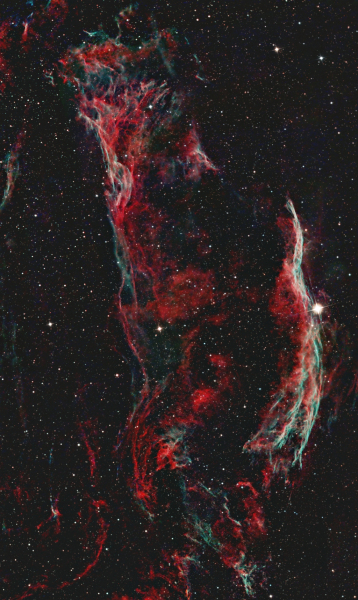
Another oldie that benefits greatly from a bit of star reduction.
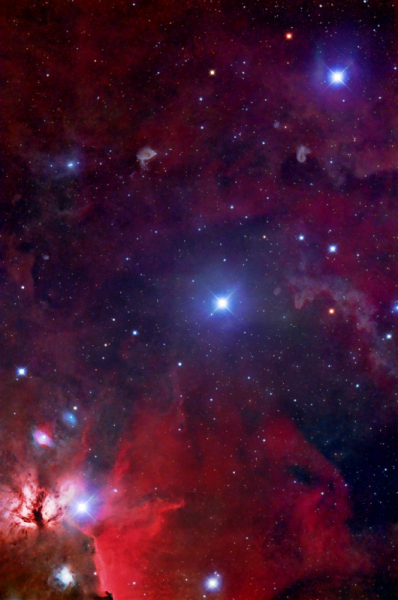
Another star-reduced image of an oldie.
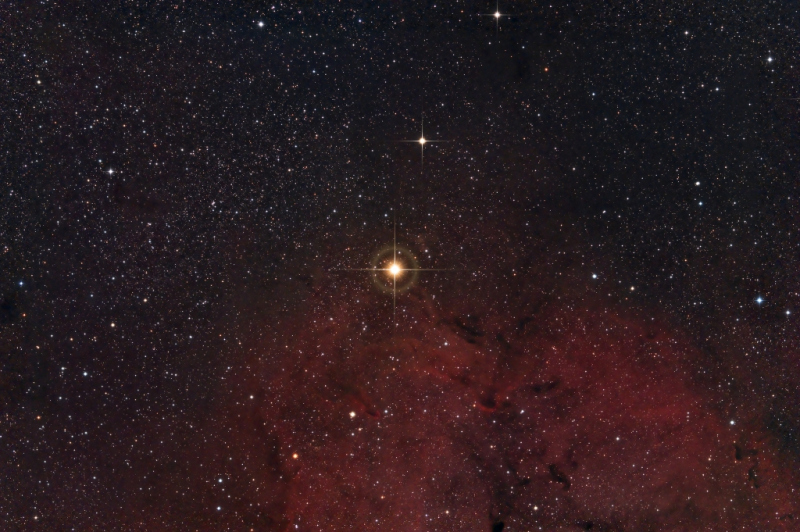
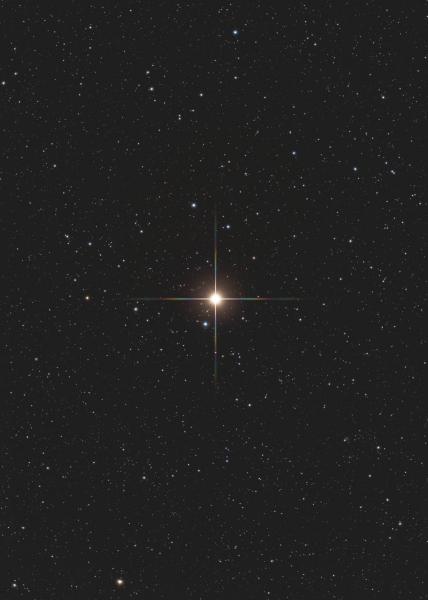
A reprocess of Mu Cephei.
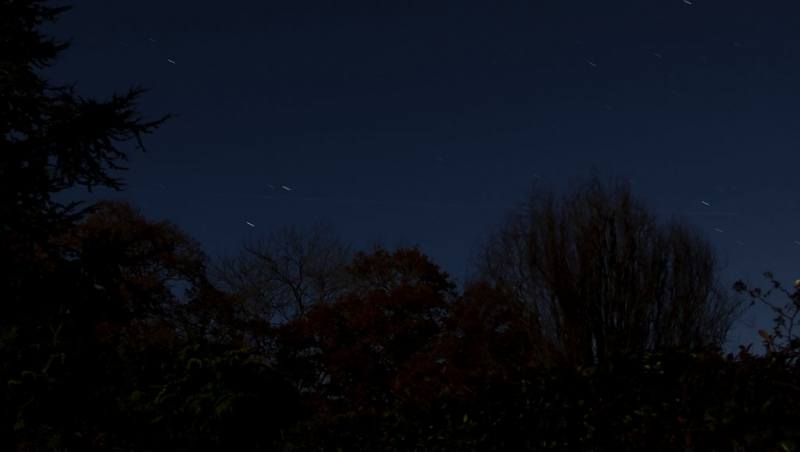
From 5:39 p.m. tonight – another faint ISS pass – this time due to a blazing Moon directly behind me. You can JUST see the ISS running across the middle of the image.
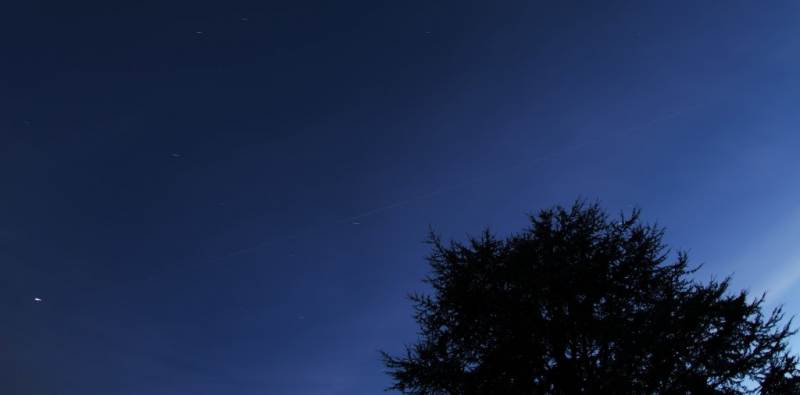
Tonight’s ISS pass in nautical twilight (too light really to take the image) – but you can just about make it out.

A star-reduced version of the North America and Pelican nebulae processed by Noel Carboni.