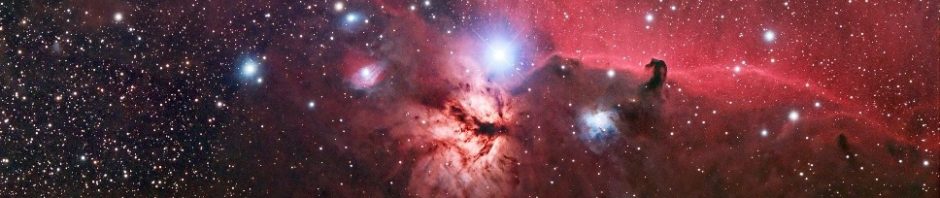

Got out for some Hyperstar 4 imaging last night, started at 11 p.m. and wound up at 2 a.m. Managed to get 32 x 4-minute subs on the Markarian Chain region under damp, poor visibility skies.
Got out for some Hyperstar 4 imaging last night, started at 11 p.m. and wound up at 2 a.m. Managed to get 32 x 4-minute subs on the Markarian Chain region under damp, poor visibility skies.
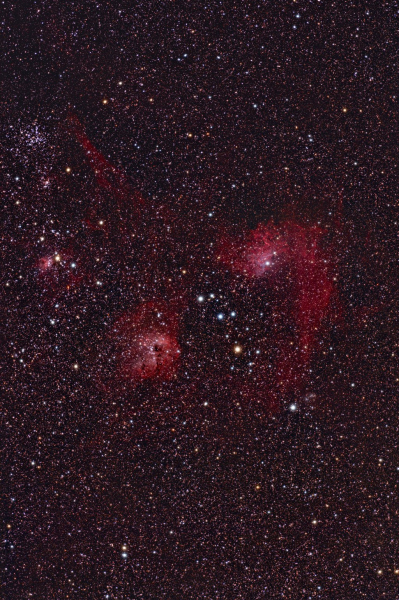
Last night only got 16 x 15-minute subs due to a massive Iridium flare, something that was as bright as the ISS, and Auriga dipping below the roof at the end of the session. So as this one has used up 4 very rare, very valuable clear Moonless nights, that’s it for this year. If after Noel Carboni’s processing of the data it looks like it is worth getting more, then it will be next Winter’s project.
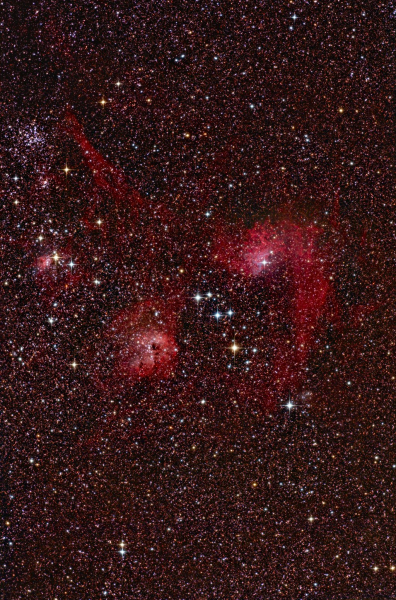
I got another 20 subs at 15-minutes per sub on the IC405/410 region last night using the 200mm lenses and ASI 2600MC-Pro cameras. The bad news is, the image just keeps on improving. So where do I stop? 80 subs? 100 subs? I am getting too old for this sort of imaging. I will try to get 100 subs on this target but there seems to be a weather change coming, AND the bloody clocks go forward an hour which doesn’t help matters. So it might be next year before I find out. What this does show me is that I have been taking steps backward with every “improvement” from my original Hyperstar work. In my original work I used to regularly take 100 sub images as the sub-exposure times were only 1 or 2-minutes, and I didn’t dither the subs either. The huge speed of the Hyperstar of course is what allowed me to use such short subs. I think this stuff needs a mjor rethink.
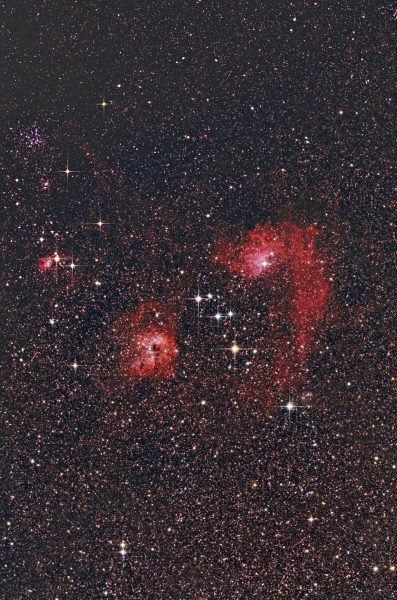
Got another 20 subs at 15-minutes per sub on IC410 last night, so added that to the 20 subs I got the night before and this is the result. Clearly an improvement, so I might try and get another 20 (and another 20?) and see what happens. In the early days of Hyperstar imaging I always went for 100 subs for an ultra clean (high SNR) image, but then the subs were only 1-minute long, so that was a lot easier (on the total time taken). 100 subs at 15-minutes per sub is 25 hours of total data (and with 2 x 200mm lenses) 12.5 hours of actual imaging time. So it would not be too surprising to get a really nice result with all that effort (and data).
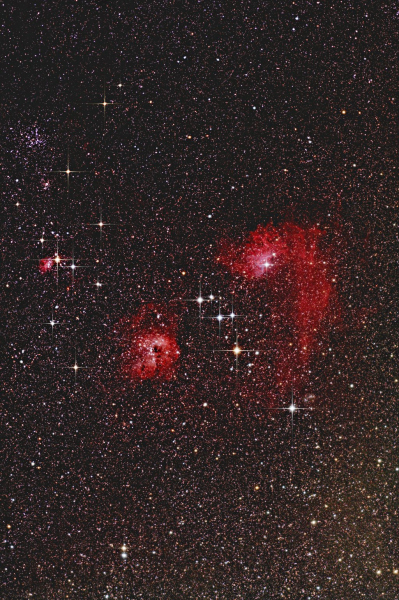
A clear, Moonless night last night and I managed to grab 5 hours worth of data (15-minute sub-exposures) on the IC410 region using the 200mm lenses and ASI 2600MC-Pro CMOS cameras. I lost the last hour’s worth of data when part of the region dipped behind the house roof. Looks to me like I need at least another 5 hours of data on this one for a decent image.
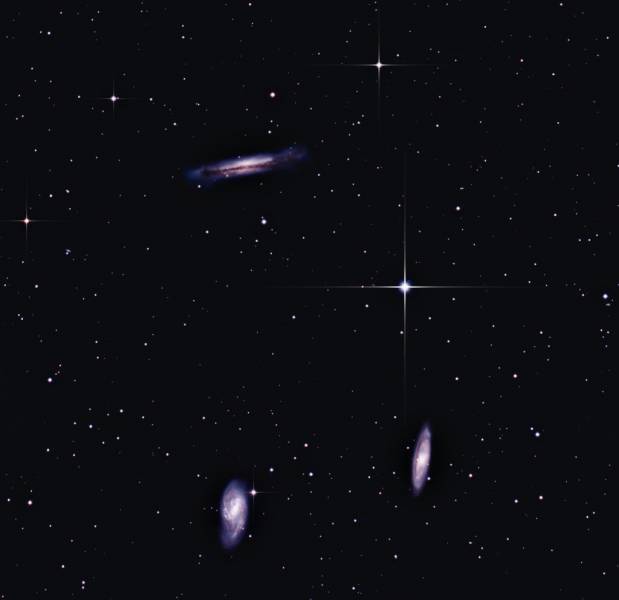
Last night I got 12 x 5-minute subs on the Leo Trio using the Hyperstar 4 and ASI 2600MC-Pro CMOS camera. I added this data to previous HS4 & HSIII data and the above is the result. Pretty disappointing not to see the tidal tail – but there you go.
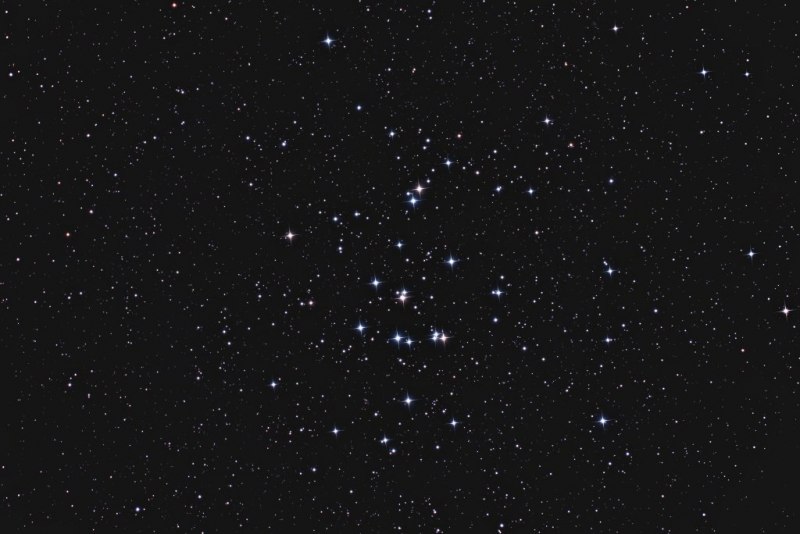
Managed to get 28 x 150-second subs on M44 last night using the Hyperstar 4 and ASI2600MC-Pro CMOS camera. Collimation was pretty good during this run.
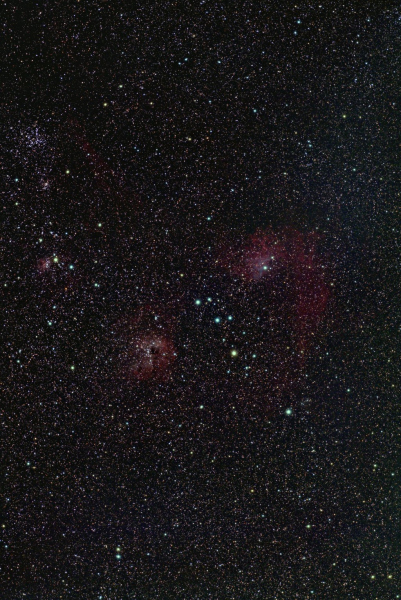
Well it has been months of pain, but finally I have the 2 x Canon 200mm prime lenses, the 2 x ASI 2600MC-Pro cameras, and the 2 x Astromechanics focusers all up and running and talking to each other. Last night I also got down a bunch of flat frames and bias frames for both cameras, so the terrible vignetting is at least now controllable.
The above image of the IC410/IC405 region may look pretty unremarkable, but, it is only 18 x 5-minute subs when the sub-exposure time should have been at least 15-minutes with this kit. Also, this image was taken under a FULL MOON with a one shot colour camera, so the best of both Worlds.
There is one last thing to check on one of the cameras and then it should be all systems go for the next clear Moonless night.
Next job is to get all 3 Sky90s up and running and focused, and then a bunch of flats and bias frames for them as well. Once that has been completed it is again awaiting clear, Moonless nights to get on with some work.
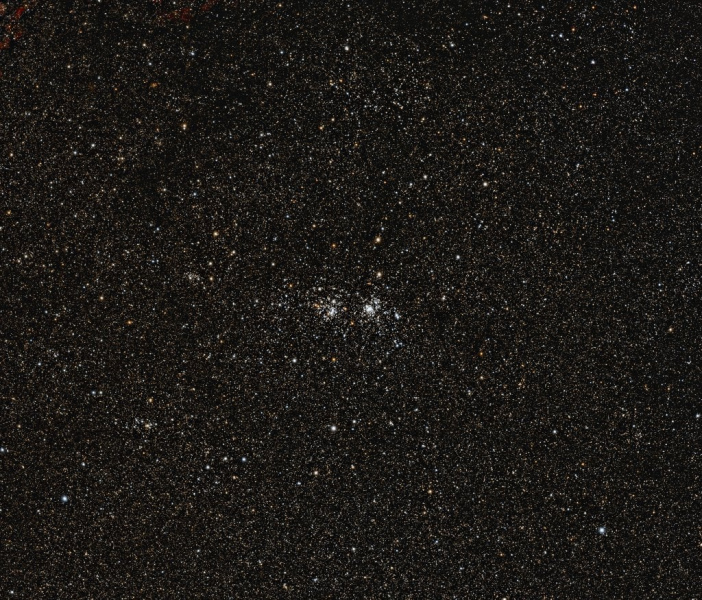
Another reprocess, this time the Double Cluster & Stock 2 in Perseus. This is another 200mm lens 2-framer with the Trius M26C OSC CCDs.

This is a 2-frame mosaic of Arcturus taken on the Canon 200mm prime lenses using the Trius M26C OSC CCDs. Note Napoleon’s Hat in the 5 o’clock position.
