The California nebula processed from DSS2 data.

no images were found

Yet another boring grey day with absolutely no chance of imaging. So to keep my hand in with the image processing I decided to have a go at the California nebula region using DSS2 data. I tell you how to process this data in my book “Making Beautiful Deep-Sky Images” and I have also written a tutorial article for Astronomy Now.

Luckily – the DSS2 data seems to be pretty good around the California nebula region (this is unfortunately not always the case).

Please find above my rendition using Photoshop 2020 and Noel Carboni’s Astronomy Actions.

Posted in Deep Space Objects, News | Leave a comment

V1331 in Cygnus captured by the Sky90 array.

V1331 Cygni is a young star in the constellation Cygnus. V1331 Cyg is located in the dark nebula LDN 981. V1331 Cygni is most noted for having an arc-like reflection nebula surrounding it. This circumstellar disc is a great birthplace for young stars, which form in the cloud. 

This image is over 12-hours (total exposure time) using 15-minute subs on the Sky90/M26C array.

Posted in Deep Space Objects, mini-WASP Array, Sky 90 and SXVF-M26C | Leave a comment

Of course.

As I have both rigs (Hyperstar and MiniWASP array) now beautifully polar aligned, we have had nothing but cloud ever since setting them up – including right the way through the no Moon period. I know this is to be expected – but it still pi**es me of all the same.

Posted in News | Leave a comment

The Milky Way up Close and Personal: The Stars Like Dust

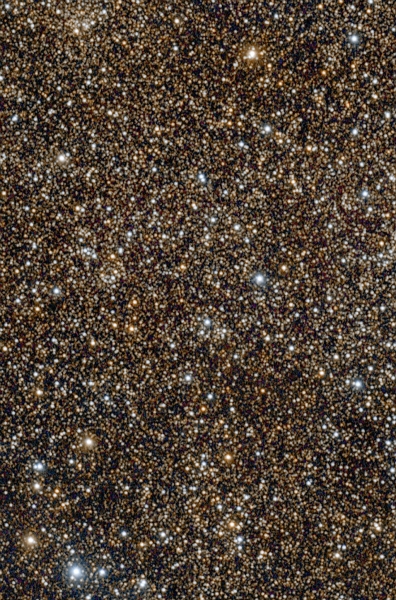
This is a region of the Milky Way near the star Caph in Cassiopeia. It is a zoomed-in image taken using the 200mm Canon lenses and the Trius M26C OSC CCDs. We are used to seeing the zoomed-out images of the Milky Way where it appears as a beautiful cloud-like structure, but I haven’t seen many zoomed-in images where all the stars can be seen tightly packed-in together.

This image is 4 and a half hours of 15-minute sub-exposures.


Posted in Canon 200mm prime lens, mini-WASP Array | Leave a comment

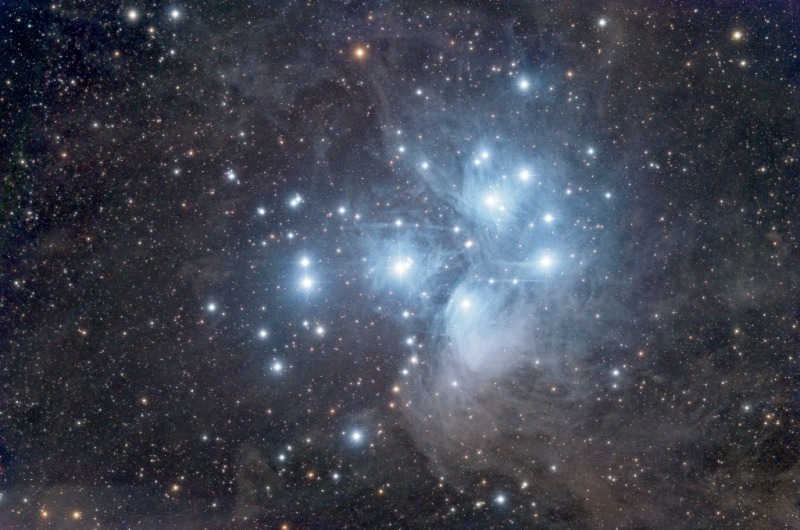
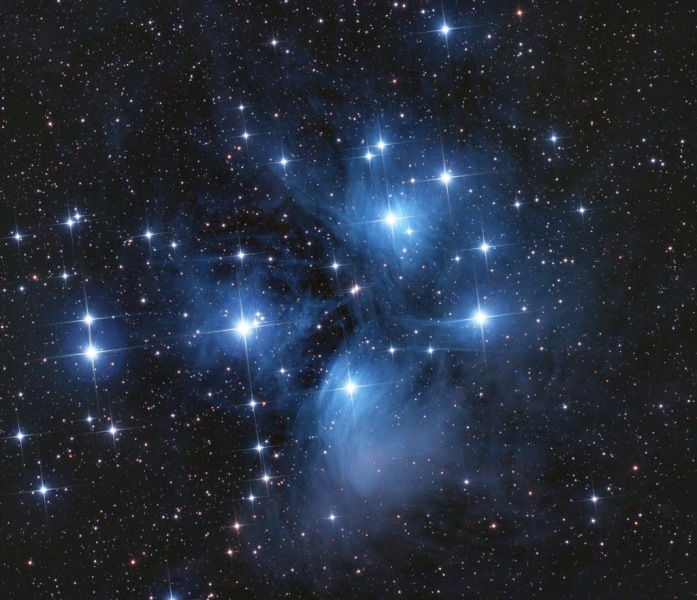
Pleiades Deep and Ultradeep (for posting elsewhere)


Posted in CCD Images, Sky 90 and SXVF-M26C | Leave a comment

Collimating the Hyperstar 4

In my opinion the Hyperstar 4 is a most amazing piece of kit, and it is beyond me why anyone entering astrophotography for the first time wouldn’t consider this as their route to entry. But there is a caveat. To get high quality images out of the Hyperstar your system must be well-collimated. Now, I don’t know how much of a problem maintaining collimation is with the new “Edge” models, but with my aging C11 it is certainly not trivial. Maintaining collimation is vital for image quality and it is an ongoing and labour-intensive process, but not beyond the capabilities of your average astrophotographer. I shall go through the collimation process, and then give you a few of my “tricks” for maintaining good collimation.

The number one piece of software you MUST have in order to carry out collimation of your Hyperstar is CCDInspector. I have absolutely no idea how people collimate their telescopes (refractor, or reflector) without this software. In the case of a refractor I use CCDInspector to accurately flatten the imaging chip to the optical axis. In the case of the Hyperstar the process is slightly different.

The very first thing you must do, before you even put the Hyperstar on your telescope, is to flatten the CCD or CMOS imager chip. Larger chip cameras usually have a moveable front plate that allows you to accurately place the plane of the chip perpendicularly to the optical axis. There is a tutorial on the Starlight Xpress website that shows you how to do this. With your imaging chip flattened, and your camera fitted to the Hyperstar, we can now get on with the business of collimation.

With your camera mounted on the Hyperstar, the very first thing you need to do is get a rough collimation. To do this you use the mount to get a star (magnitude 4 or greater) placed in the center of the frame. You then deliberately move the star well out of focus to get the usual “donut” image with a dark central region and and a bright ring around the outside. You now MANUALLY change the collimation adjusters on the Hyperstar to get the dark region as well centralised as you can manage. Now focus the Hyperstar and take an image, it should already look reasonably good in the centre, but you may see issues in the corners.

The first step in fine-collimating your Hyperstar is to get a good focus. As you are repeatedly going to have to get a good focus, this is something that can only be achieved by an autofocuser, so if you don’t have one, that is your next purchase. With your autofocuser connected and running, this is the procedure. In adjusting the collimation screws you will now use a screwdriver to change collimation (NOT manual adjustment) and you will take up any slack with the push screw at the end of an adjustment.

  1. Get a good focus on a star field, it is a good idea to pick a star field that does not have nebulosity or galaxies in it as they might confuse CCDInspector.
  2. Run CCDInspector, open “Curvature” and write down in a notebook the X tilt, the Y tilt and the collimation.
  3. Alter one of the Hyperstar collimation adjusters and note how you have done this in the notebook.
  4. Autofocus again.
  5. Run CCDInspector and note how the X tilt and Y tilt and collimation values have changed. Your aim is to get the X tilt, Y tilt and collimation values as low as possible, 0, 0, 0 if at all possible (this may take you some time!).
  6. You now go through an iterative process of altering the collimation adjusters, refocusing, running CCDInspector and noting the tilt values in order to zero in on good collimation.

If you do get the magic 0, 0, 0 don’t pat yourself on the back and think the job is done – your first slew to an object is likely to throw you off the 0, 0, 0 magic numbers. Hence, if you are in the process of collimating before an imaging session, it is a good idea (if you can) to do so on the region you are about to image (so you don’t have to slew and lose collimation). If you do have to slew to your imaging object, then use a slow slew rate. That’s trick number one.

When you have finished your imaging session, leave your telescope pointing vertically upwards. Also, if possible, image your object as it approaches and passes over the zenith, that way your mirror stands more of a chance of maintaining its position and not “flopping”. Obviously if your mirror flops, you will need to re-collimate. That’s trick number two.

Every couple of months or so, run the mirror well up above and well down below focus to keep the grease evenly spread along the mirror support. That’s trick number three.

If you get to a tilt of +/- 0.1 pixels in x, and +/- 0.1 pixels in y, that will be good enough for a high-quality image, don’t kill yourself and lose all your imaging time trying to get the magic 0, 0, 0 – some nights it just doesn’t seem to happen. That’s trick number four.

When you refocus, make sure the FWHM number is where you expect it to be. If the autofocus routine has not done so well that particular time you will get confused with the readings CCDInspector comes back with. Run the autofocuser again (and again) until you get a value that looks o.k. to you. That’s trick number 5.

The depth of focus is something like 7 microns for my system, so if you consider the diameter of a human hair as something around 80 microns or so, you can see how accurately we have to place a thumping great mirror to get good focus. If you think about it too much you wonder how it is possible at all. Clearly if your focus shifts, due to a rapidly dropping temperature for instance, then your collimation shifts accordingly. So unless the temperature is stable, then you are likely to need to refocus every hour or so. In my observatory, in the winter, I nearly always need to refocus every hour. That’s trick number 6.

There’s probably a few more tricks I have, but for the moment I can’t think what they are. If I remember some more, I’ll add them on the end.

I’m not trying to put you off trying to image with a Hyperstar, far from it, the Hyperstar is the quickest way of getting high quality deep space images down to your computer. But quick, is not necessarily easy, it is not easy to get high quality images, it is most definitely an on-going process. But as I said at the beginning, none of this is beyond the capabilities of your average astrophotographer.

Happy Hyperstar imaging!!!

POSTSCRIPT: 31/07/2023

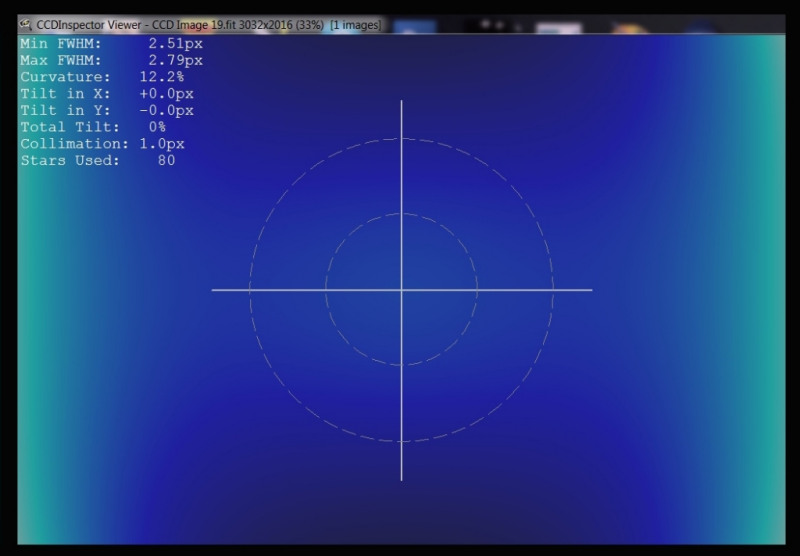
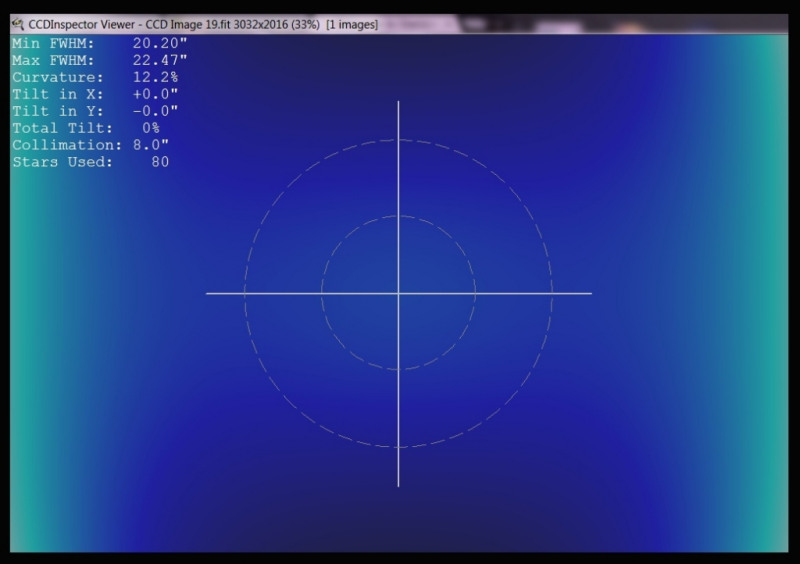
Coming back to the above on 31/07/2023 – I can’t believe I didn’t include any CCDInspector screen-shots to prove that all the stuff above isn’t just hot air. I am getting old 🙁 Anyway, here are a couple of old screenshots which were taken after collimating a Hyperstar III with an SX M25C OSC CCD attached. The method used for collimation was exactly as described above, and as you can see I didn’t go all out for the magic 0, 0, 0 – but the resulting collimation was good enough for a very nice image to be captured.

I’ve only just noticed that somehow I must have put in the wrong arc-seconds per pixel value into CCDInspector. For the M25C on the HSIII the value is 2.88 arc-seconds per pixel, so the collimation in arc-seconds should be 2.88″ – not 8″ as shown in the image.
Posted in Articles, Equipment, Hyperstar 4 and ASI2600MC-Pro, News | Leave a comment

Crop to square and add some star spikes.

Posted in Hyperstar 4 and ASI2600MC-Pro | Leave a comment

Out until 3:00 a.m. last night – the joy of astrophotography.

Well last night was an extremely rare, beautiful clear and Moonless night. I had 2 main things to get on with, one get the array in the North Dome polar aligned and all the cameras/scopes set up ready for imaging, and two, get some imaging in with the HS4.

I started off with trying to polar align the array and after 2 and a half hours I gave up, shut down shop, and went over to Hyperstar imaging the Pleiades. Once the HS4 got itself underway, I pulled myself together and went back in the North Dome to try yet again to get the mount polar aligned using Sharpcap. What has been the problem? At times Sharpcap plate solves and stays plate solving – no problem. Then at times the plate solving becomes very erratic. And yet still at other times Sharpcap will not plate solve at all. What the Hell is going on here? Well it was only going out for the second time that I finally twigged, it was not TIMES but ANGLES that were the issue. How come?

To the north of the North Dome I have 2 apple trees planted way too close to the dome. I wasn’t bothered cos that’s north innit – but it does become an issue when Sharpcap needs to see Polaris. O.K. well that’s still not too much of a problem, Polaris is well above the roof of the house so all I need to do is chop the top off the apple trees so I can clearly see the house roof. And that’s what I thought I’d done a couple of weeks back. However taking a close look in the daytime I see I didn’t quite do a good enough job – still more needs to be taken off. Fortunately, last night I could “work between the angles” and managed to get “Excellent” polar alignment sorted out. Checking out a few other bits of the rig and I left the North Dome all set up and ready for its first imaging session of the season.

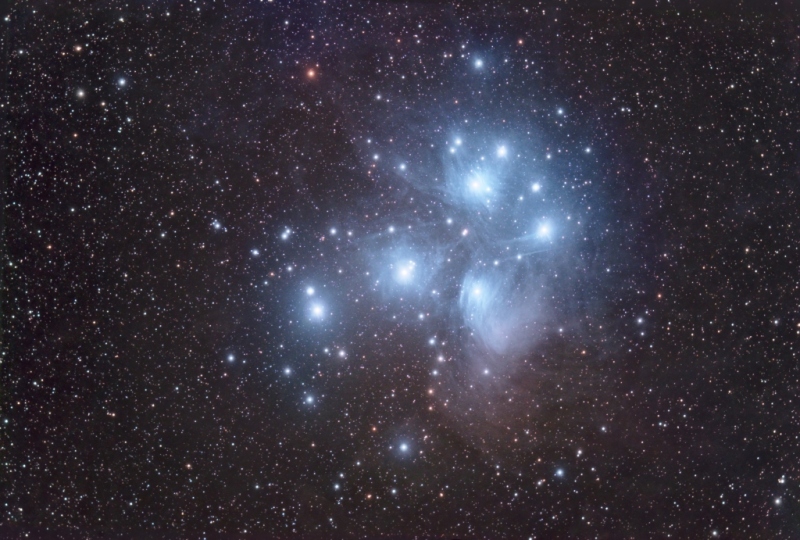
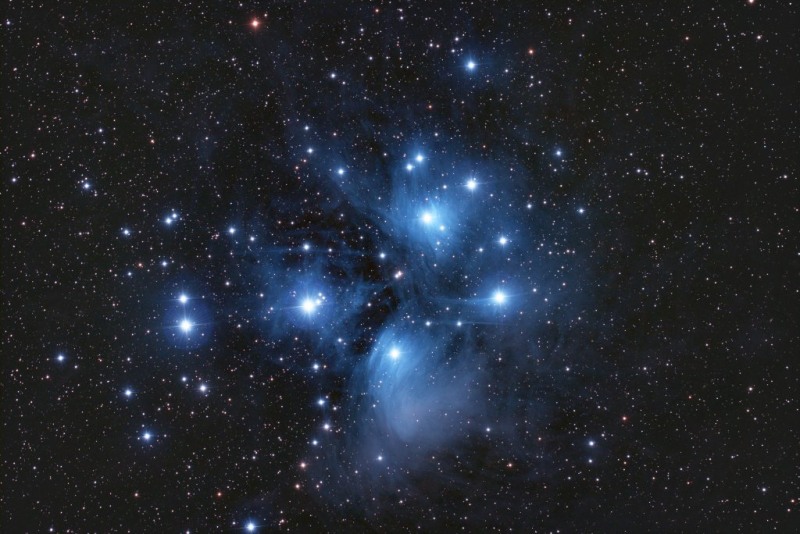
Meanwhile, in the South Dome, I am imaging the Pleiades with 3-minute subs (equivalent to 15-minute subs on the Sky90s), 27 subs later and you get the image shown at the top of this post. Now that doesn’t go particularly deep, it doesn’t show the Taurus molecular clouds, but it DOES go exactly as deep as I’d expect for 15-minute subs from the Sky90s – so that hangs together well. To start pulling out the Taurus molecular clouds I was using 1-hour subs on the Sky90s which translates to 12-minute subs on the HS4. So the FINAL part of this (seemingly lifelong) experiment will be to take 5, 10 and 15-minute subs with the HS4. I know I can take 10-minute subs with the HS4 as that’s what I used for the Pelican nebula images. 15-minutes I won’t know until I try.

Oh yes – and there is a mega bonus with this HS4, can you see it? Or rather can you not see it? No sign of ghost flaring from the bright stars in the Pleidaes – yipeeeeeee!!!!!

Posted in Equipment, Hyperstar 4 and ASI2600MC-Pro, mini-WASP Array, Observatory | Leave a comment

We are living the Fermi Paradox!

With regard to increasing global temperatures, I believe the planet is now in a state of positive feedback.

Increasing temperatures, apart from melting the permafrost, also release huge quantities of Methane, a worse greenhouse gas than CO2. Increasing temperatures also set off global wildfires, which not only removes trees and vegetation from the planet, but also produces even more CO2 – a double-whammy. This in turn leads to even higher temperature increases which in turn produces more Methane and CO2 and so on – that is the positive feedback. So even if you dropped CO2 emissions to zero tomorrow – it would still be too late as there are plenty of other mechanisms operating to take over our puny efforts at destroying the planet.

I sent my thoughts off to 2 Professors this afternoon, one a Professor of climate science, the other probably one of the brightest blokes in the country – I wanted their honest opinions. Unfortunately – they both agreed with me – which I must admit left me seriously pissed-off.

One solution to the Fermi Paradox, often cited, is that advanced civilisations don’t make it past the nuclear age – they end up blowing themselves to smithereens. Suppose it’s the even more likely scenario that they don’t make it past the global climate catastrophe age – due to sheer greed and stupidity. Wouldn’t that be ironic?

Posted in News | Leave a comment

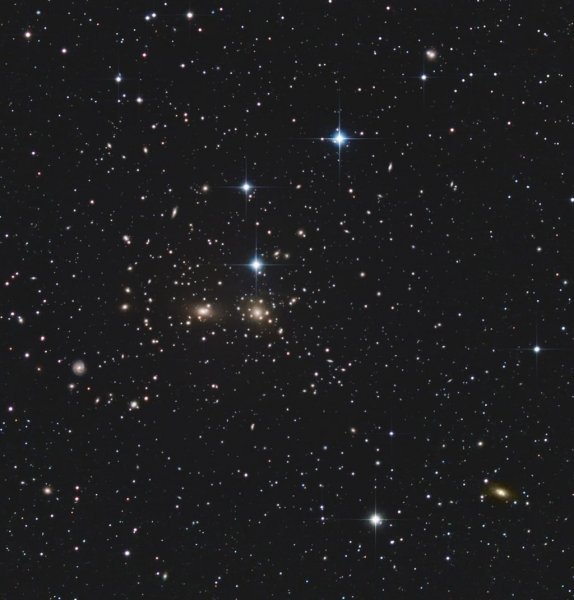
The Coma galaxy cluster, Fritz Zwicky, and Dark Matter.

This is an original Hyperstar (no collimation or camera angle adjusters) and SX H9C OSC CCD image of the Coma cluster of galaxies. This galaxy cluster was made famous by Fritz Zwicky who studied the cluster, and by applying the virial theorem to star motion in the galaxies he deduced that there must be some form of Dark Matter present.

There are a number of people attempting to re-write history by stating that Vera Rubin discovered Dark Matter during her work in the 60s and 70s where she also applied the virial theorem to star motion in galaxies. Unfortunately she was around 30 years late in coming up with that one.

Posted in Hyperstar and SXV-H9C | 2 Comments