A very quick tutorial for collimating the Sky90

I just received a mail asking how you collimate the Sky 90. I do not have a Sky90 in front of me, so some of this will be down to my failing memory. From memory I think there are 3 adjustment screws (widely spaced) sitting behind 6 adjustment screws (more closely spaced). Don’t touch the 3 adjustment screws but do all the collimation with the 6 screws.

You now need to buy yourself an artificial star, which is no more than an LED behind a tiny Aluminium aperture. Set the artificial star about 30 feet away from the Sky 90 and get an image of the star on a webcam fitted to the Sky90.

Now I think the software I had that made the collimation a doddle was Sharpcap, but I couldn’t swear to it, but it made setting up very easy as it locked on to whichever artificial star you click on (I worked with the smallest aperture).

It is now a good idea to have 6 Allen keys, one for each adjustement screw, or this will be a VERY long process. Focus the artificial star and then move very slightly IN and OUT of focus to set up the collimation on both sides of focus. With the Sky90 slightly out of focus (on either side) you should see Airy rings, and the central ring will be displaced from dead central of the ring pattern. You now have to see how untightening/tightening the adjustment screws moves the central Airy ring. Adjust the screws until the central Airy ring is dead central on both sides of focus.

That’s it. From a fresh start it probably takes me around 4 – 6 hours with several breaks. It is very tedious.
Posted in Articles, Sky 90 and SXVF-M26C | Leave a comment

I was very remiss keeping up to date in 2020

For reasons that we will all know, 2020 was a bit of a write-off when it came to keeping New Forest Observatory stuff up to date. I have just entered the M87 data I took last night and see that it was a year ago when I took a bunch of other Hyperstar images that never made it onto the site. So I’ll rectify that now.

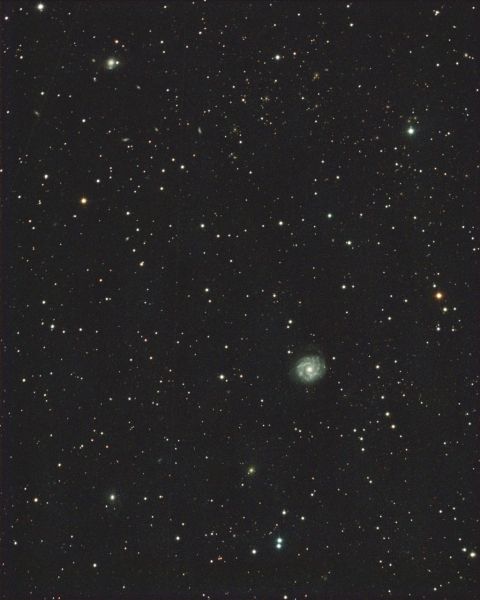
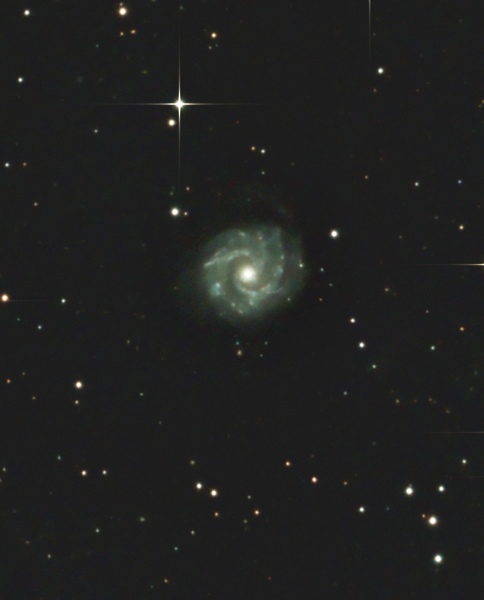
In April 2020 I took an HSIII image of NGC3631.

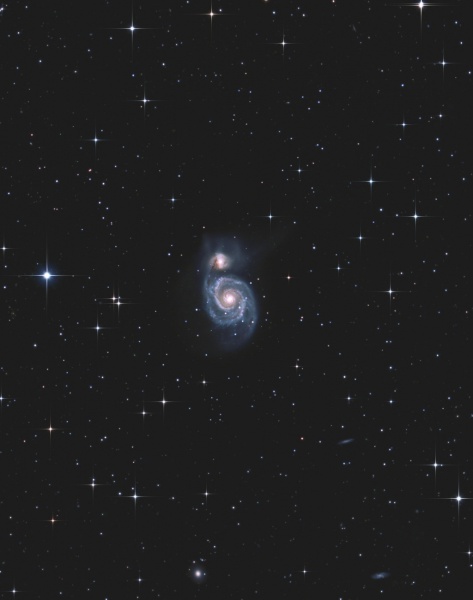
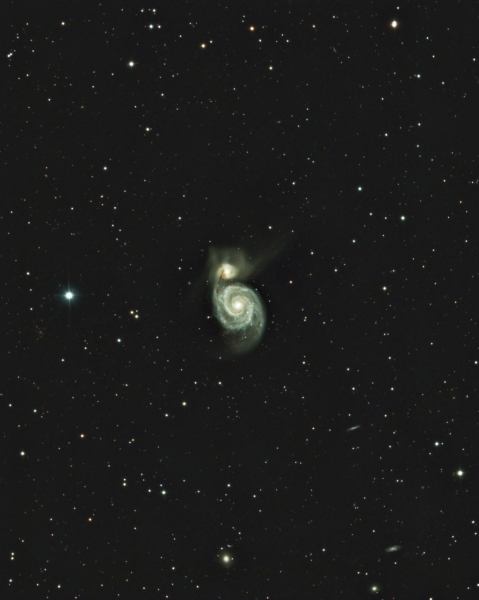
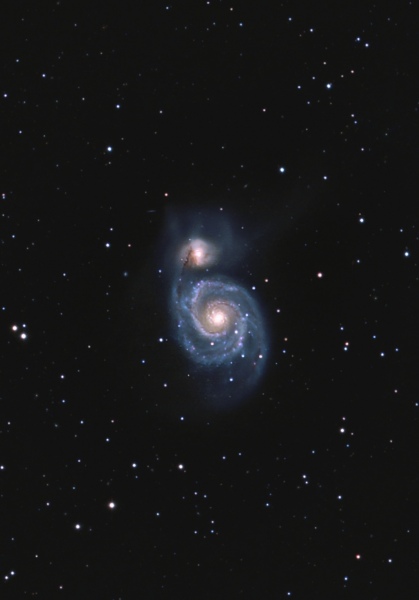
In April 2020 I took an HSIII image of M51.

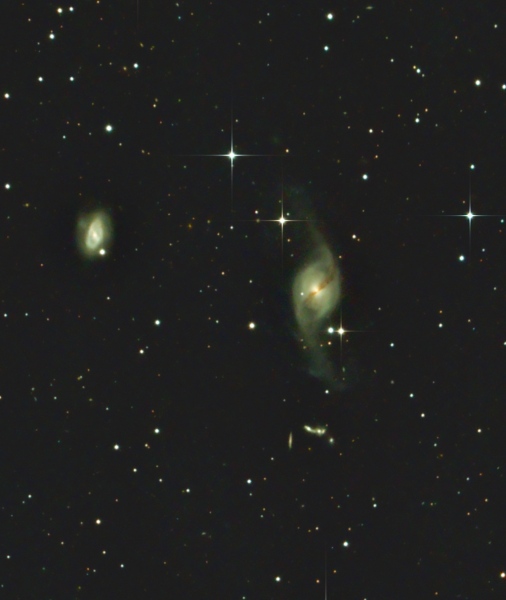
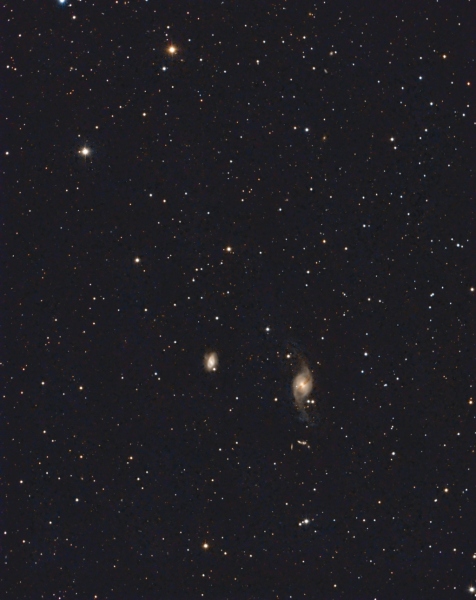
On April 22nd 2020 I took an HSIII image of NGC3718.

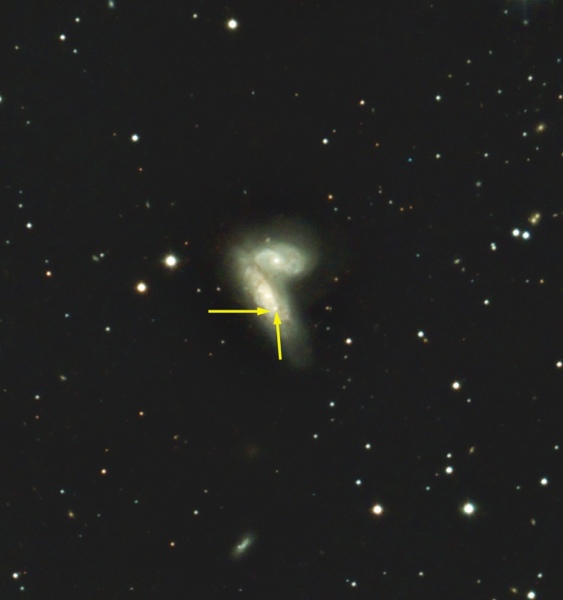
On April 15th I got a shot of the supernova in the Siamese Twins (galaxies) using the HSIII.

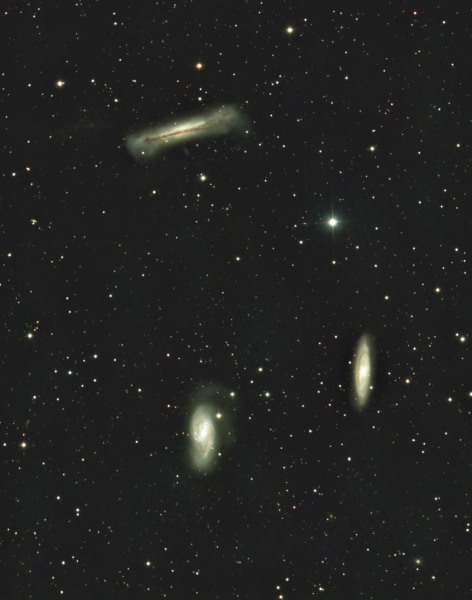
And finally on April 25th 2020 I took a couple of hours of 10-minute subs of the Leo Trio using the HSIII.


Posted in Hyperstar III and Trius SX-814C | Leave a comment

An hour’s worth of Hyperstar III imaging on 18/04/2021

Well I wasn’t expecting to get out imaging last night, but it was clear and the Moon was not directly intrusive so I fired up the Hyperstar III on the C11 with the Starlight Xpress 814C OSC CCS and Lodestar guider and set to work. Almost. It took an hour to sort out gremlins which had come in from God knows where. For some reason Maxim had lost both the camera and guider settings since it was last used a few months ago and it took me an hour of various permutations and combinations to get things back to how they were.

O.K. so the system is tracking and imaging fine so what am I going to go for? I have always fancied trying to get the relativistic jet emanating from M87, and as I have about an hour before it crashes into next door’s stupid great Blue Cedar which belongs more in Exbury gardens rather than a Brockenhurst back garden, M87 it will be.

I randomly chose 4-minute long subs so with the 1-minute dither time I will be taking 5-minutes per sub so 12 subs per hour.

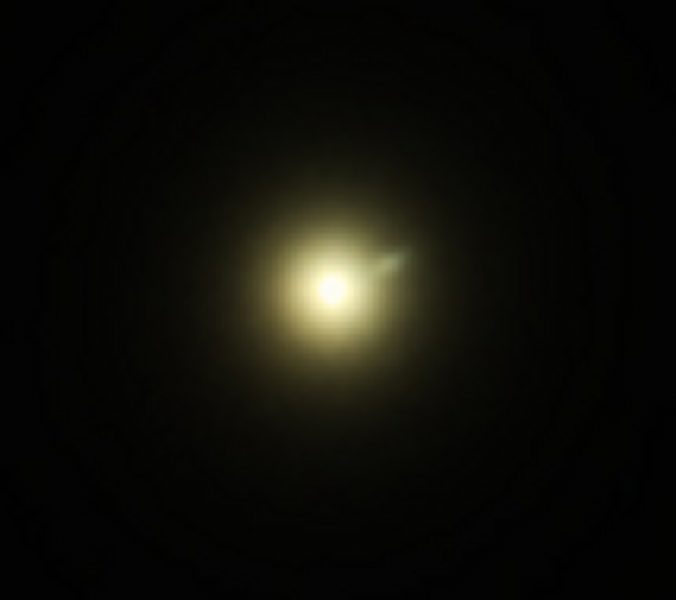
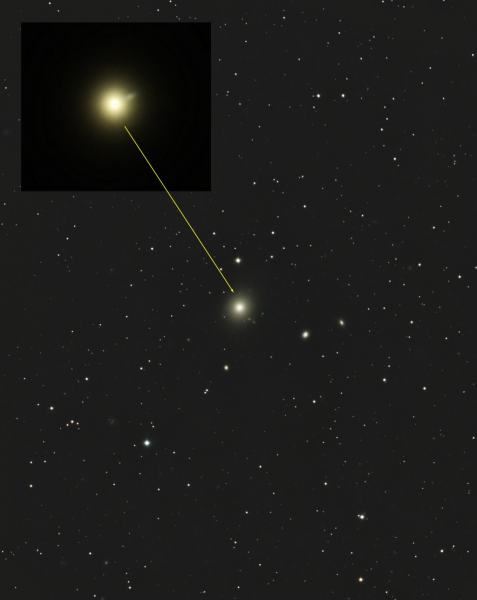
M87 roughly centred and off I went. Good news right from the off – I could actually see a little blip (the jet) on subs as they were downloaded to the computer, so there shouldn’t be any problem with the processed image. Except there was. If I did my normal process using Curves to drag the data out, the jet got lost in the glare from M87. However, if I used the Maxim Digital Development Filter (I usually reserve that one for globular clusters) then the jet magically appeared.

Below is a magnified image of just M87 and the jet, and the second image is the whole field of view of the 814C OSC CCD with the magnified view dropped in as an insert.

Posted in Hyperstar III and Trius SX-814C, Projects | Leave a comment

HAPPY NEW YEAR!!

Well we have managed to survive 2020 and now await the developments of 2021.

As per usual, this imaging season has been complete rubbish so far with only a couple of good nights since the beginning of October 2020 – but that’s the way the weather seems to go nowadays.

In a vain effort to try and cheer myself up – here is my 7-minutes of fame from 10 years ago when Chris Packham came round to the New Forest Observatory to make a short programme for “Inside Out”. Enjoy!!

(10) New Forest Observatory on the box – YouTube


Posted in News, Observatory, Television and Radio | Leave a comment

EPOD 20th Anniversary – The Splendid Andromeda Spiral Galaxy

September 24th, 2020 – Got today’s EPOD with the single framer of M31 using the Sky90 array. My aim this season is to get a DEEEEEEP 2-framer of this one with the Sky90s so that I get the tips of both ends of the galaxy in the field of view. I must say the season so far has not been too bad at all, certainly better than the last 3 or 4 years that’s for sure.

https://epod.usra.edu/blog/2020/09/epod-20th-the-splendid-andromeda-spiral-galaxy.html

Posted in EPOD | Leave a comment

20th Anniversary of EPOD

Got today’s (20th Anniversary) EPOD with “First High-Quality Real Stereo Image of Pluto” with Brian May (who did all the work on this one).

Posted in Uncategorized | Leave a comment

Earth Science Picture of the Day for 19th May 2020

Got yesterday’s EPOD with my recent Hyperstar III image of the M51 region.

https://epod.usra.edu/blog/2020/05/m51-and-group.html


Posted in EPOD | Leave a comment

NGC3631 with the Hyperstar III and Trius 814C OSC CCD

Last night’s effort with the Hyperstar. Only 13 x 5-minute subs so still pretty noisy unfortunately. This is the NGC3631 region with a huge pile of faint fuzzies at the top (North).

Posted in Hyperstar III and Trius SX-814C | Leave a comment

Arp214 (NGC 3718) and a pile of other galaxies in Ursa Major

Only 13 x 5-minute subs on the Hyperstar III on the C11 with the Trius 814C OSC CCD, so quite noisy. Arp214 and friends in Ursa Major.

Posted in Hyperstar III and Trius SX-814C | Leave a comment

M51 and galaxy friends

Managed to get out last night with a clear, Moonless night, but lots of water vapour.

Grabbed 20 x 5-minute subs with the Hyperstar III on a C11 with the Trius 814C OSC CCD. Also added a similar amount of original Hyperstar data to this plus some star spikes.

Posted in Hyperstar III and Trius SX-814C | Leave a comment