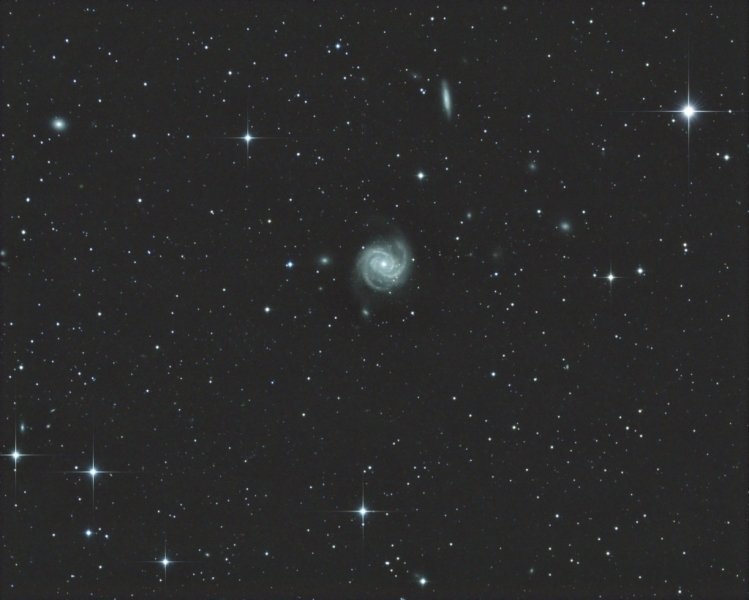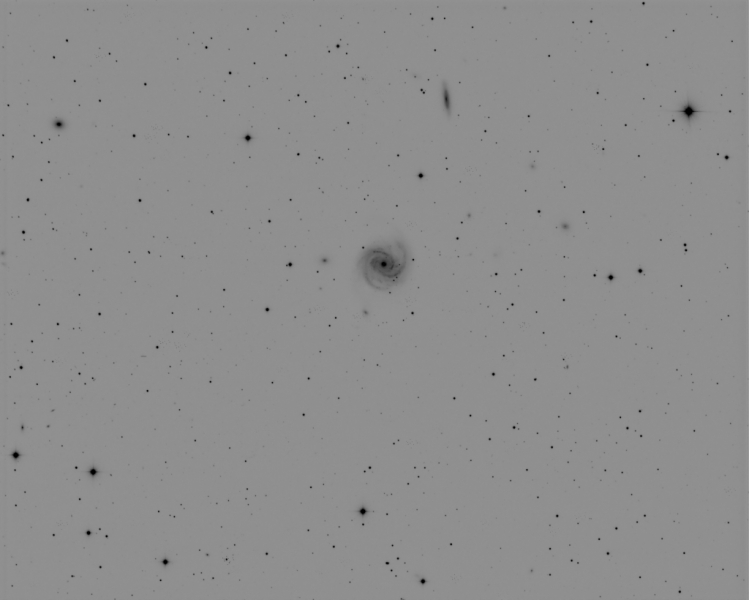
Only been able to recently process this one properly thanks to Noel Carboni’s new AstroFlat plugin.
This is a 2-framer using the 200mm lenses and Trius M26C OSC CCDs with each frame a total of 12-hours integration time using 20-minute subs.

Only been able to recently process this one properly thanks to Noel Carboni’s new AstroFlat plugin.
This is a 2-framer using the 200mm lenses and Trius M26C OSC CCDs with each frame a total of 12-hours integration time using 20-minute subs.
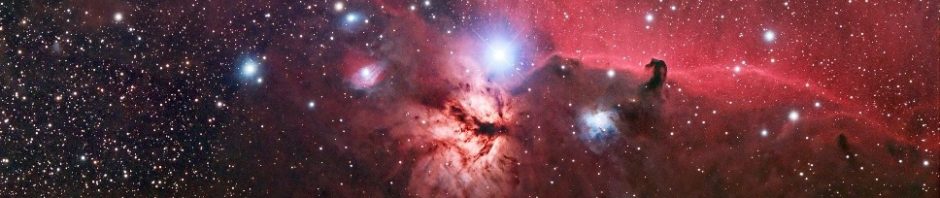
With this recent Canon 5D MkII image from the New Forest Observatory
Here is an image of last night’s (27/05/2018) 6-minute ISS pass at 10:27 p.m. As you can see it is still pretty light, and this is not helped at all by a nearly full Moon blazing away at the bottom of the image.

Clear night but half a Moon blazing away. Never mind there’s a nice long 6-minute pass of the Space Station due at 22:35. In fact for the next week there are 6-minute passes due every night!

I didn’t notice a bad stitch in the original data. This is a 4-pane mosaic using the Canon 200mm prime lenses and Trius M26C OSC CCDs.
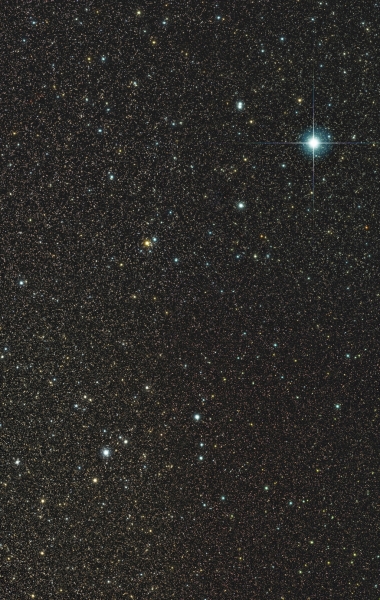
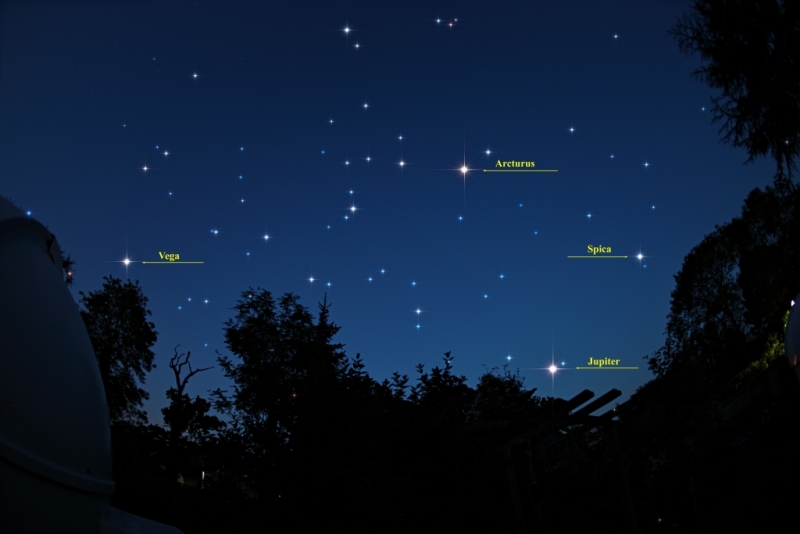
An unusual grouping had me out last night with the Canon 5D MkII and 15mm Canon fisheye lens. It was 10:30 p.m. and still fairly light outside (darkness doesn’t start until Midnight!). Vega, Arcturus, Spica and Jupiter provided the Quartet, and as Ursa Major was directly overhead – I grabbed that one as well. 10-second (bulb) exposure at f#4.0 and ISO 400.

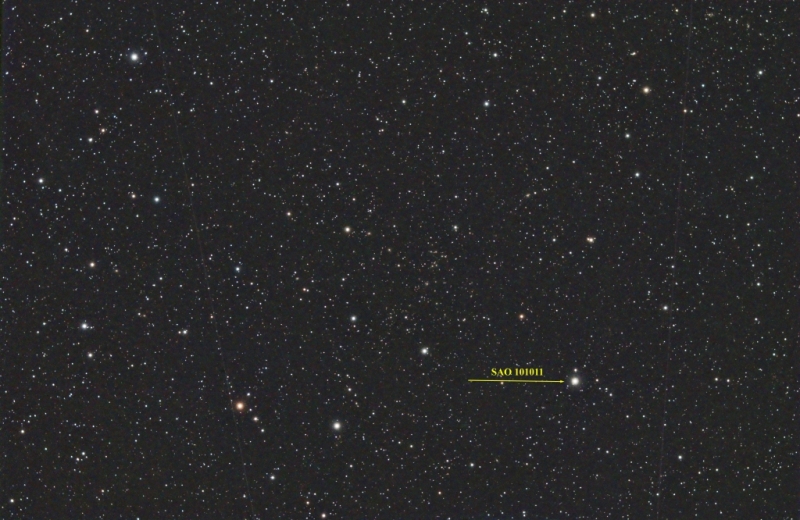
This is last night’s data taken between 11 p.m. and 12:30 a.m. on the Sky 90 array. 18 x 10-minute subs, and a star has been labelled for reference. One bright asteroid in the FOV only clear in the averaged data.
Thank you Tom How of the Curdridge observatory for identifying the mystery asteroid at far right-centre as 729 Watsonia.
Another clear night last night, so I moved a bit downwards in the Virgo cluster to get the M87 region. No sign of the jet as far as I can see with 14 x 5-minute subs.
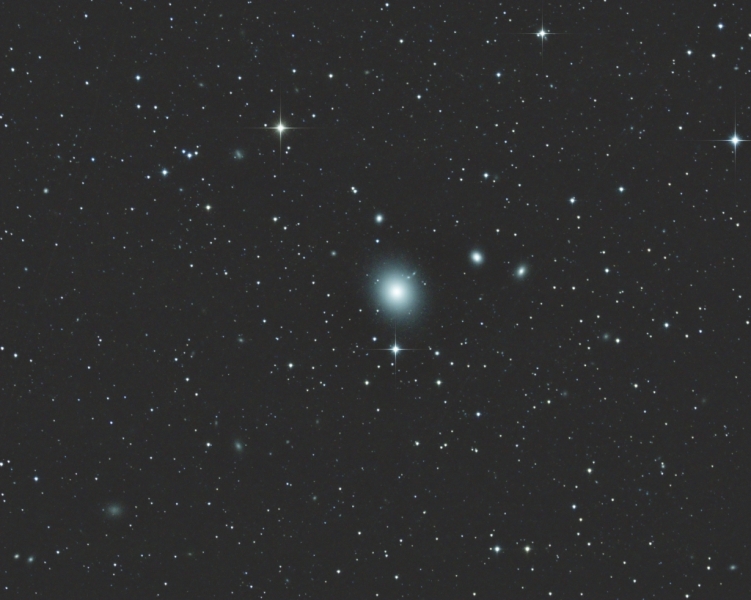
Beautiful clear night last night, and a non-intrusive Moon for imaging in the Leo region. 12 x 5-minutes subs on the M100 region and the speed of the Hyperstar really shows through. Need more data on this for a quality image, but this result is pretty acceptable for just one hour’s worth of imaging.