New Prime(s) found at the New Forest Observatory MegaNode computing facility

Yesterday – 2nd May 2017 – the DELL Quad Node number cruncher came up with a new Prime(s).  Don’t know how many digits or how many Primes yet until my “checker” reports in.  However a kind Admin ran the number through his machine and confirmed I had found my first new Prime Number.  MEGA!!

Posted in News | Leave a comment

Stereo View of Asteroid 2014 JO25

Is today’s EPOD – http://epod.usra.edu/blog/

Thank you Jim at EPOD for continuing to publish my work, and Dr. Brian May for creating the stereograph.


Posted in EPOD | Leave a comment

A rather pathetic attempt to re-write the history of astronomy.

I don’t know who kicked this meme off, but some dipstick Journalist ignorant in the history of astronomy started it a couple of years back, and successive dipstick Journalists have carried on being lazy and simply copying this crap.

What has annoyed me this time?  Vera Rubin DID NOT “discover” Dark Matter in the 1970s by observing anomalous star movements in galaxies.

The person who DID first discover Dark Matter by applying the virial theorem  to star motions in galaxies was in fact Fritz Zwicky who did this work way back in 1933.  He even called the unseen matter in the Coma galaxy cluster – dunkle Materie – Dark Matter.

I was incensed to see the BBC propagating this Vera Rubin myth in the recent 60th Anniversary Sky at Night, and they actually got back to me with an answer as to why they did this.

They kindly brought it to my attention that as this was a look over the last 60 years of astronomy, and as Vera Rubin was working in the 70s, then that’s why Zwicky didn’t get a mention.

What?  So if they knew that Zwicky was the real discoverer in 1933, why mention Vera Rubin at all?  What did she actually bring that was new to the party?

I’ll let you come to your own conclusions on that one.


Posted in News | Leave a comment

Asteroid JO25 2014 captured on the miniWASP 200mm Canon prime lenses

As well as capturing asteroid JO25 2014 on the single Sky 90/M26C – I also managed to grab 16 subs on the two 200mm lenses with the Trius M26Cs.

Sub number 12 (counting down from the top) is missing as I had cloud over the region during that 5-minutes.

As I couldn’t properly process this data myself, I sent it over to Noel Carboni in Florida USA who did the most superb job as you can see below.  Thank you Noel!!

Posted in Canon 200mm prime lens, mini-WASP Array | Leave a comment

Asteroid JO25 2014 annotated version

Posted in Sky 90 and SXVF-M26C | Leave a comment

Asteroid JO25 2014

I think somebody up there knew it was my Birthday today and kept a clear pocket of sky over the New Forest Observatory last night when the rest of the UK was under cloud cover.

Here are 9 x 5-minute subs taken on a single Sky 90 with a 1-minute gap between subs.  The asteroid was moving in the constellation Canes Venatici and the bright star in the centre is SAO 63515 for reference.

I have a whole bunch of subs taken on the two 200mm lenses from last night and haven’t even had a chance to look at them yet.  More goodies to come.

Posted in mini-WASP Array, Sky 90 and SXVF-M26C | Leave a comment

Courses & Image Purchases

If you would like to discuss courses, either existing or one tailor made for you, or you would like to discuss image purchasing, then please contact me on:

                                                                                                greg@newforestobservatory.com 


Posted in News | Leave a comment

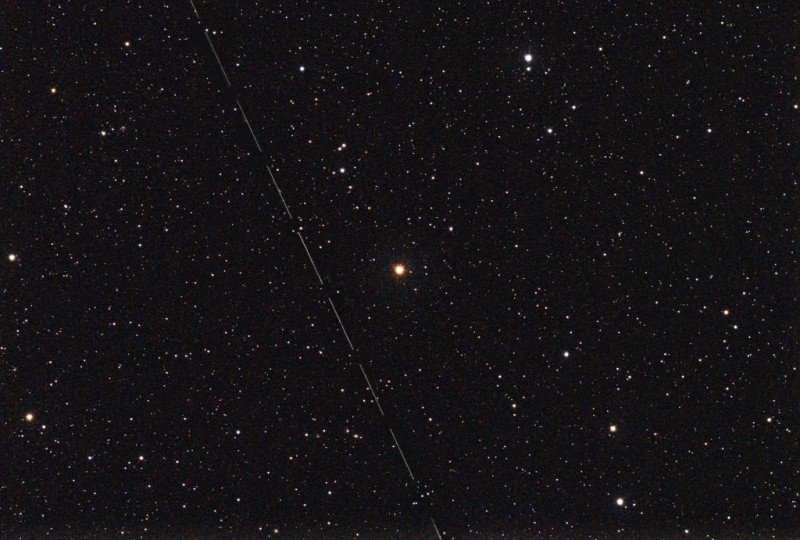
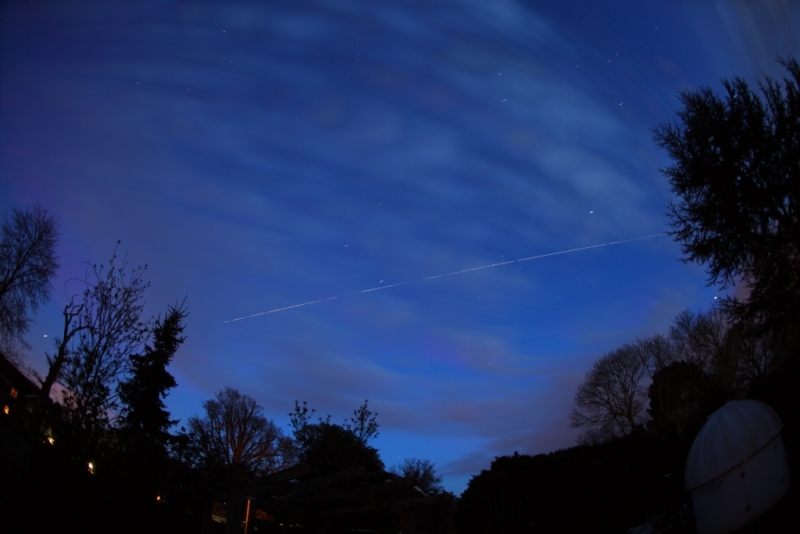
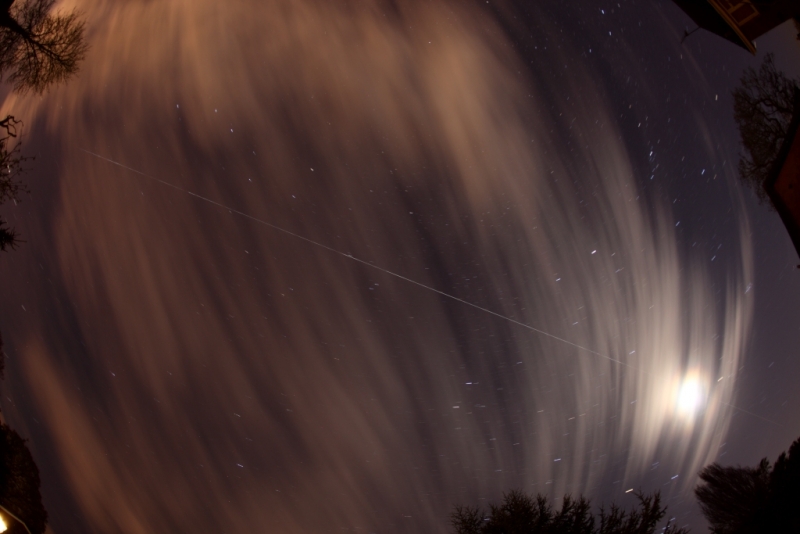
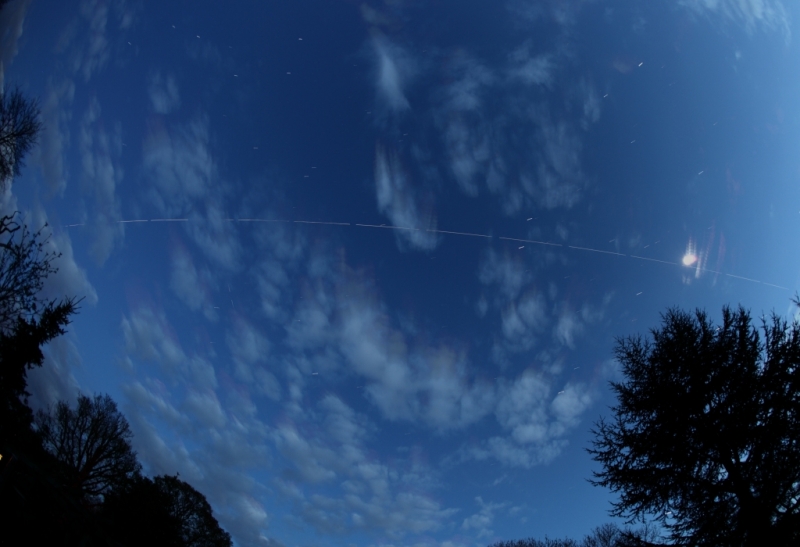
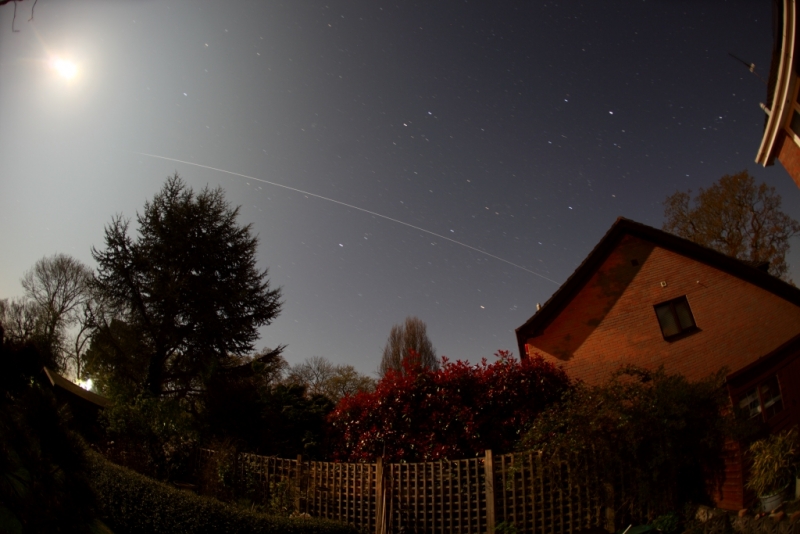
A few ISS transits over the last week or so

Posted in News | Leave a comment

Today’s Earth Science Picture of the Day (EPOD)

We are entering galaxy season and Leo is well placed for imaging.

I took a very deep image of the Regulus region wanting to pick up the Leo I dwarf galaxy – and caught something else at the same time.

You can see the capture on today’s EPOD.

Thank you Jim at EPOD for continuing to publish my work.

Posted in EPOD | Leave a comment

Asteroids in Leo from last night

I saw on the Sky 6 that there were 3 bright asteroids in Leo, namely 16 Psyche, 29 Amphitrite and 62 Erato.  So when I processed the data this morning and only saw 2 I wondered what was wrong.  Checked on Guide 9 and there was no sign of Erato in the FOV, so the Sky 6 got it wrong for me.  Thanks a lot.

Posted in mini-WASP Array, Sky 90 and SXVF-M26C | Leave a comment