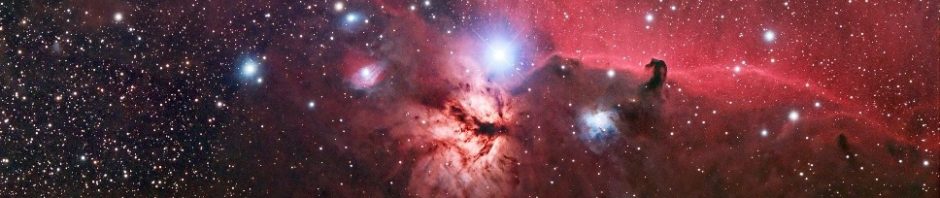
Today’s Earth Science Picture of the Day is my 2-frame narrowband + RGB image of the Veil nebula in Cygnus.
Thank you Jim at EPOD for continuing to publish my work 🙂
Today’s Earth Science Picture of the Day is my 2-frame narrowband + RGB image of the Veil nebula in Cygnus.
Thank you Jim at EPOD for continuing to publish my work 🙂
First clear night in 2 months last night – so I quickly grabbed this 2-framer of Aldebaran with the Sky 90 array. 2-minute subs and 1-hour per frame.

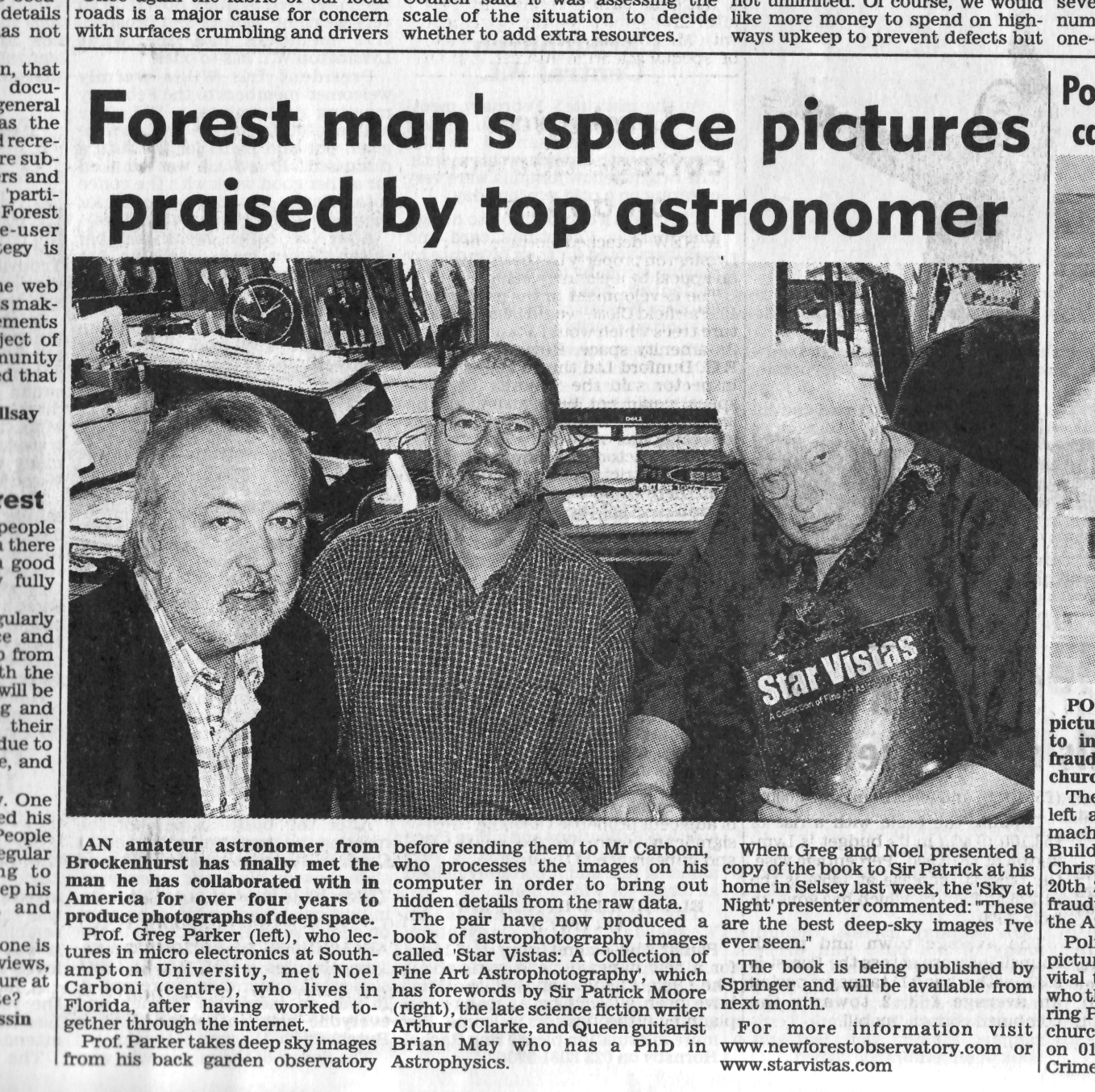
How extraordinary!! I just got an e-mail from a book publisher friend who had just received a nasty e-mail from a Photo Library wanting payment for an image of the Pleiades shown on the cover of one of his books. Now as I had provided the publisher with the Pleiades image I must admit was a bit taken aback by this. However – looking very closely at the Photo Library image – it was clear to me that it wasn’t even my image!!! So I logged on to the Photo Library’s site to have a closer look at their image – and – it is in fact a Robert Gendler image of the Pleiades!!! So this Photo Library just tried to extort £496 out of a totally innocent publisher who had done everything by the book!! I told him to sue the bastards – I really hope he does 🙂
Got today’s EPOD with the inverse nova R Coronae Borealis 🙂
See the animation here.
Many thanks Jim at EPOD for continuing to publish my work.
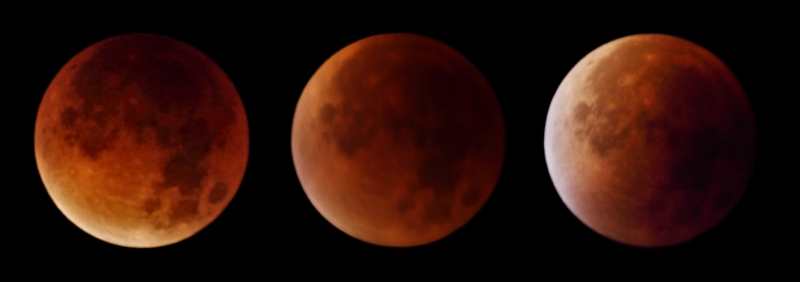
Going back to 28th September we had the most amazing total Lunar eclipse, this image captured using a Canon 5D MkII on a TS80 triplet at f#6 all sitting on a tripod, shows pre-totality, totality, and post totality. And yes it really was VERY red 🙂
As there has only been one imaging night for the whole of October 2015 I have had to look for other things to get on with.
I took a Sky 90 image of the R Coronae Borealis (RCrB) region in August 2013 and again with the Canon EF 200mm DSLR lens in May 2015. In August 2013 RCrB was at its minimum around mag 14 or 15, and in May 2015 it was around mag 7 to 8. I put the two images together in an animation that you can see running here.
I used Registar to put together all the best images I had of Kemble’s Cascade – and this is the result 🙂
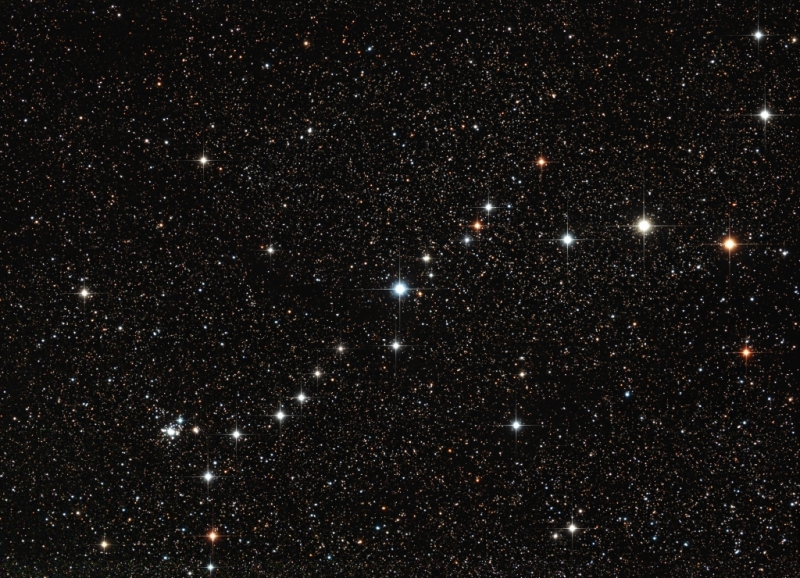
Got today’s EPOD with “Primary, Secondary and Supernumerary Rainbows”.
Thank you Jim at EPOD for continuing to publish my work 🙂
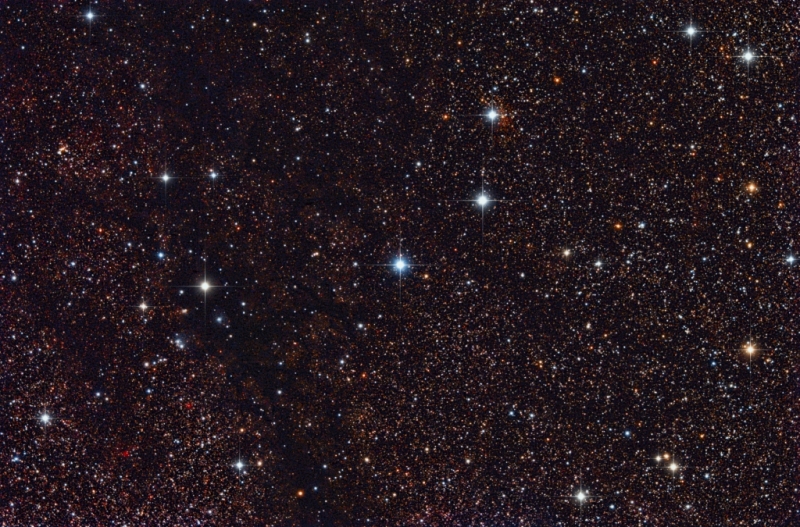
This is a 2-frame mosaic using the Canon 200mm lenses and M26C OSC CCDs of the two brightest stars in lower central Lyra. Just got to get the two upper frames for a complete central Lyra mosaic.
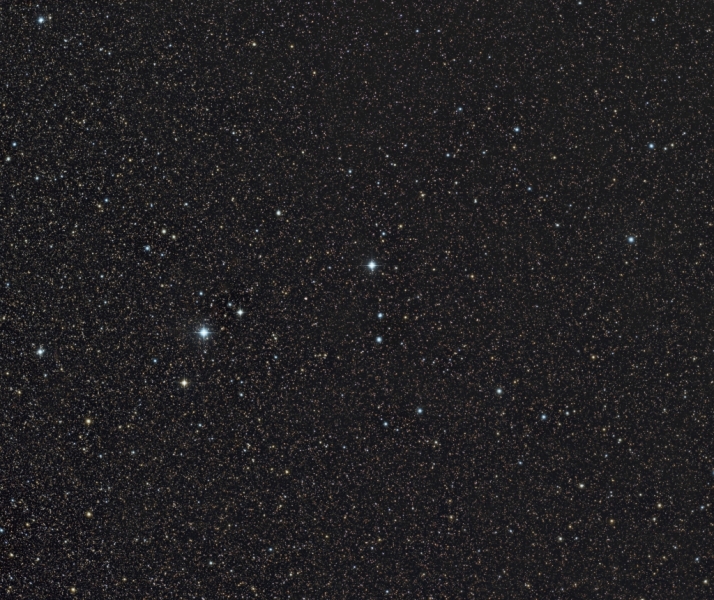
Once again, before the Moon came up I went for the V1331 Cygni region with the Sky 90 array, this time using 15-minute subs. Got a total of 14 x 15-minute subs which were added to the earlier 15 x 10-minute subs, and this was the result 🙂