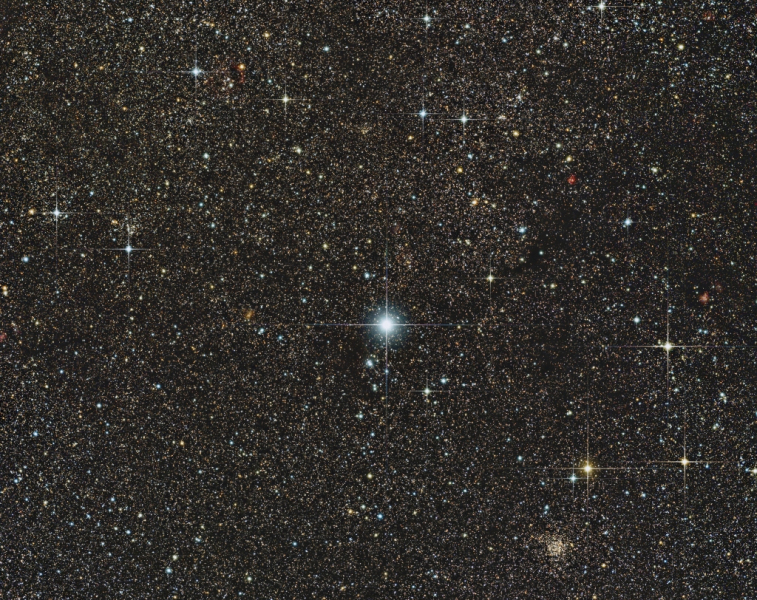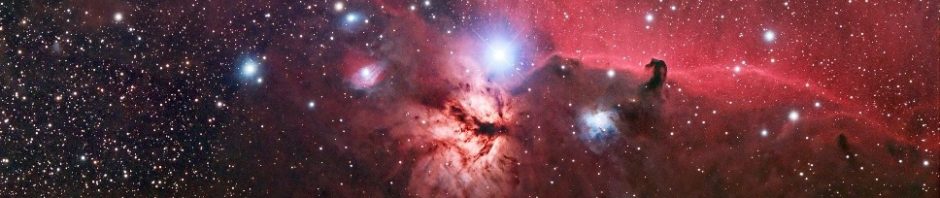
Got today’s EPOD with a winter-to-summer solstice solargraph using a 4-inch diameter drainpipe and a piece of A4 size photopaper 🙂
Thank you Jim at EPOD for continuing to publish my work.
Got today’s EPOD with a winter-to-summer solstice solargraph using a 4-inch diameter drainpipe and a piece of A4 size photopaper 🙂
Thank you Jim at EPOD for continuing to publish my work.
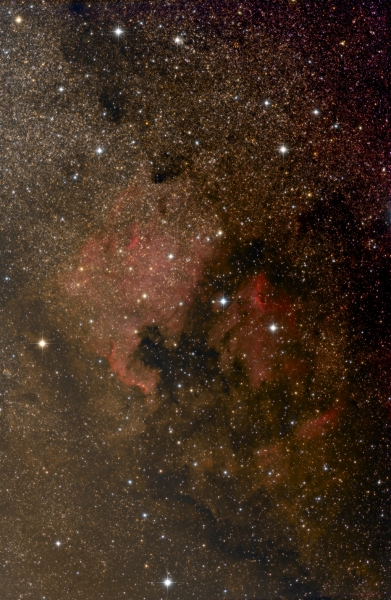
Clear Moonless night last night and good seeing – BUT – only 3 days before the summer solstice meant that the sky never really got dark and it was perhaps a bit stupid to image a nebula rather than a star field. Never mind – live and learn – I have never taken an image this close to summer solstice before so didn’t realise it was a bit of a pointless exercise with an OSC. Using both Canon 200mm lenses and both M26C OSC CCDs I managed to grab 20 x 15-minute subs on this one, so if the sky had only been dark this would have turned out pretty nice – 5-hours worth of 15-minute subs is nothing to be sniffed at. So I will wait for darker nights before having another go at this one, but looking at this result, it’s got to be worth another try under better conditions. In the meantime – if I get any more clear Moonless nights I think I will continue with the Lyra 4-framer, of which I currently have one frame.
Just a reminder that you can see most of my Astronomical images on Flickr.
If you need to hire high-power high-speed Xenon flashguns for your next photo-assignment then check Xenon Flash out 🙂
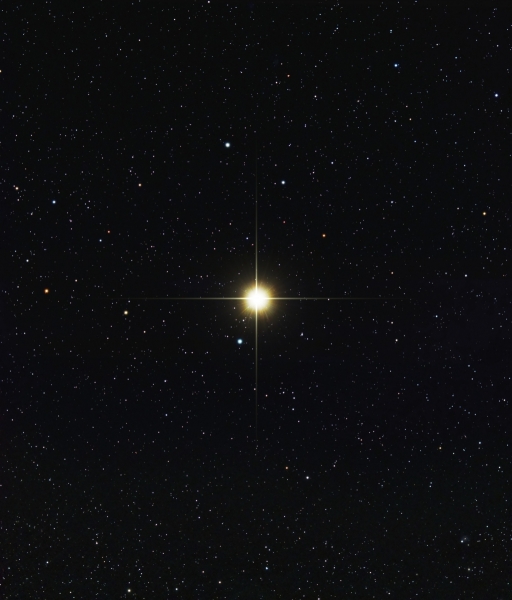
A couple of nights ago with a full Moon I took some Arcturus data with the 3 x Sky 90s.
I combined the recent data with some taken a while back and came up with this result 🙂
I don’t have enough spare time to replicate posts on Astronomy forums and on my New Forest Observatory web site.
So, if you want to see the latest images or the latest developments at the New Forest Observatory, from today onwards you will only see these on this site.
I can prove that we live in a Matrix Universe. Trouble is – if I explain my proof the program will terminate.
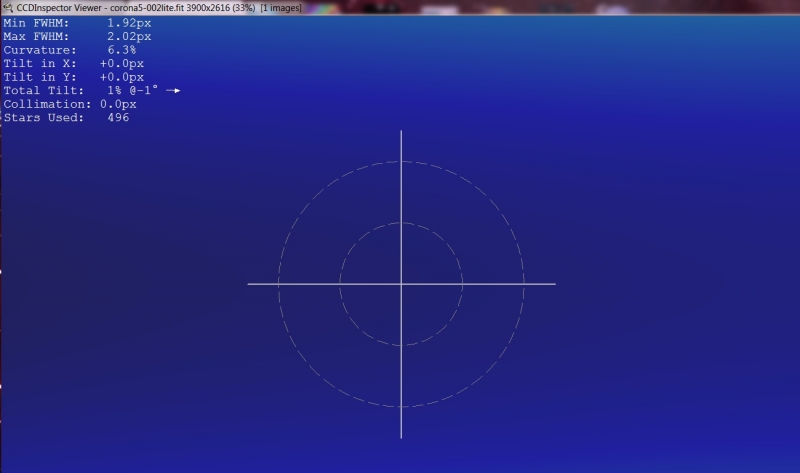
Here is a CCDInspector result from one of the 200mm lenses with an M26C Trius OSC CCD from last night:
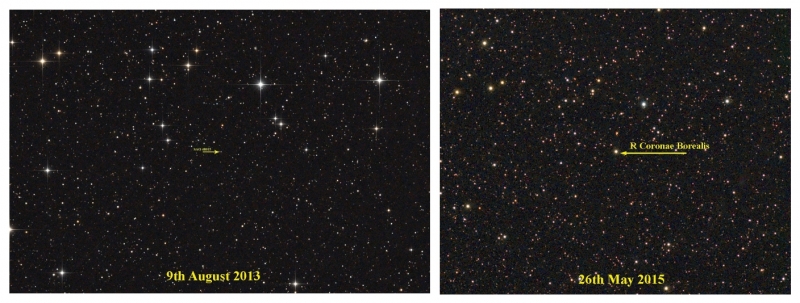
Last night I used the two Canon 200mm lenses and M26C Trius OSC CCDs to image the left hand half of Corona Borealis – the idea eventually to make a 2-frame mosaic showing the whole of the constellation. When I processed the image this morning I was very surprised to see that R Coronae Borealis was blazing away (relatively speaking) at magnitude 8. Why was this such a surprise? Because when I imaged the same star in August 2013 with the 3 x Sky 90s for quite some time I was really disappointed to find that I could hardly see the thing. Looking it up on Wikipedia I saw that it was not only at its minimum, but it had also been down there for the longest period in its (recorded) history. So at that point I forgot all about R Coronae Borealis – until this morning 🙂
The New Forest Observatory is run by Prof. Greg Parker from Brockenhurst in Hampshire. Do not be misled or confused by others using a similar name.