Today’s EPOD – Comet Garradd in 3-D – together with Dr. Brian May :)

This is turning out to be quite an eventful day.

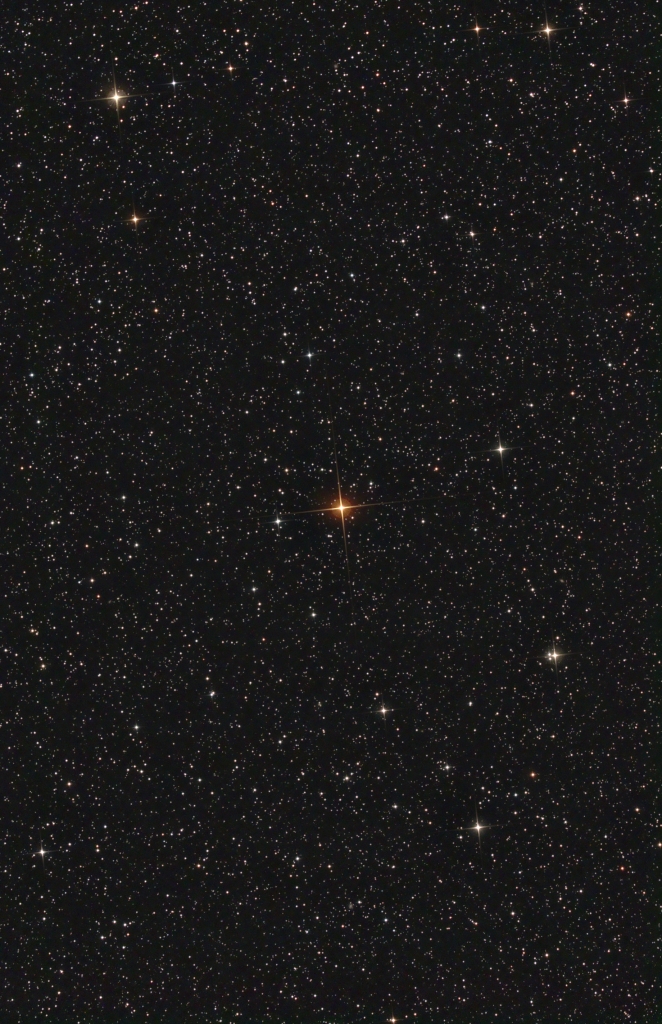
The Carbon star image (below) will be on tonight’s late Meridian Weather forecast after the 10:00 p.m. news.

As I left the observatory this morning after picking up last night’s data I heard my first Cuckoo of the year.

Finally – when I logged on this morning I was surprised to find I had today’s Earth Science Picture of the Day (EPOD) – a collaborative piece of work with Dr. Brian May.  Brian is not only an expert on the Zodiacal dust, he’s also a bit of a wizard when it comes to 3-D images.  Brian converted my recent comet Garrad (2-D) data into a sterescopic image which you can see on the EPOD site.

Let’s hope the good news continues through the rest of today 🙂
Posted in EPOD, Hyperstar and SXVF-M25C | Leave a comment

UU Aurigae – a Carbon star in the constellation Auriga – SAO 59280

Moon blazing away overhead last night, but it was nice and clear up to around 11:00 p.m.  So what to image?  How about a nice Carbon star?  This little beauty is UU Aurigae in the constellation Auriga (SAO 59280) and makes a fine centrepiece to this image.  There are a couple of faint fuzzies to be found in the background as well, an unexpected bonus.  34 subs at 3-minutes per sub, dithered, taken using the Hyperstar III on the Celestron Nexstar GPS C11 with the M25C one-shot colour CCD.

Posted in Hyperstar and SXVF-M25C | Leave a comment

The Matrix explained

I have discussed (in my Inaugural lecture and Matrix articles) why the Universe seems to be mathematically based, but Max Tegmark explains it all a little better.  Definitely worth a long wander around his fascinating web site.

Posted in News | Leave a comment

IOM April 2012 – The Pinwheel galaxy M101

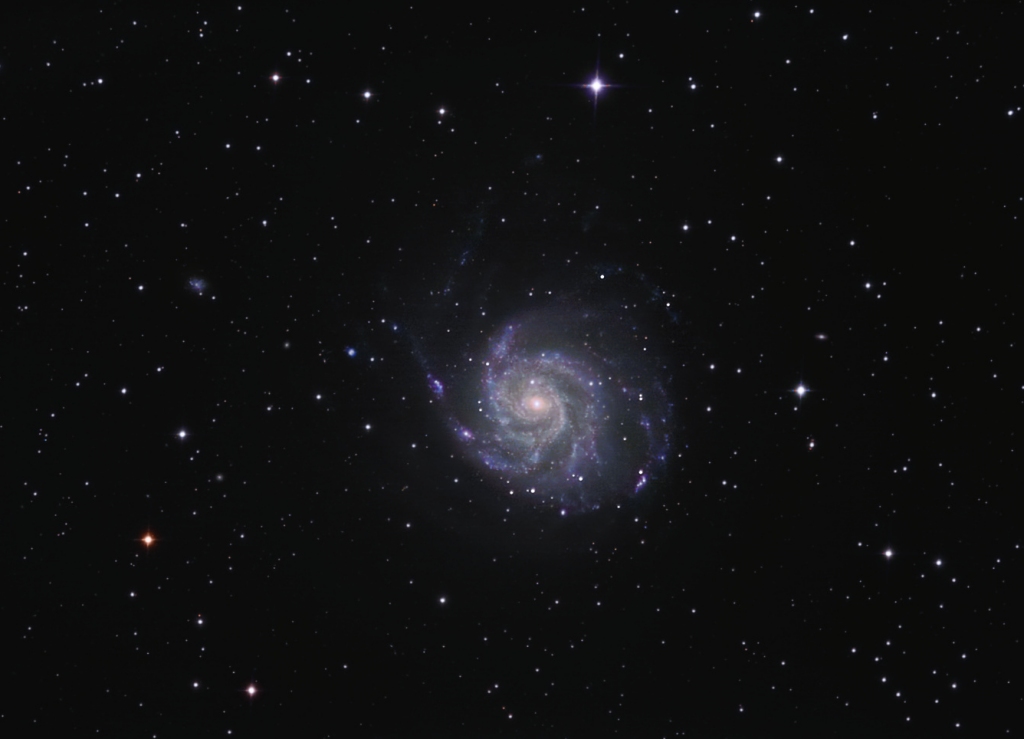
We are still in galaxy season 🙂  So I have chosen another galaxy for this month’s “Image of the Month”.  This time, what I consider to be the most beautiful face-on spiral galaxy in the northern hemisphere – Messier 101 (NGC5457, Arp26, UGC8981, PGC50063) also called the Pinwheel galaxy (bit confusing as M33 is also called the Pinwheel galaxy).  Although this is relatively bright at magnitude 8.3 (O’Meara says 7.9) and it always seems to be nice and bright on the monitor as the subs come down, the end result after stacking is often pretty disappointing as the surface brightness of this object is pretty low.  This of course means you need to take both long subs and as many of them as you can get.  If you are working at f#4.5 with a 90mm refractor the minimum sub length you want to go for is around 10-minutes, and you will want around 50 of these to play with so we are talking in excess of 8-hours for a decent M101 image – but it’s got to be worth it.  A lovely Arp spiral with a whole bunch of galaxies lying nearby in this region of Ursa Major.  At a distance of 17.5 million light-years M101 is quite large with dimensions of 28.8 x 26.9 minutes of arc.  Whether you work at long focal length, or take a wide field image of this region to capture all the close-lying faint fuzzies, M101 and its surroundings are well worth your valuable imaging time as a record of this busy area of sky.

Until next month – clear skies!!

Posted in IOM | Leave a comment

Phase 1 of the Virgo/Coma galaxies mega-mosaic now completed

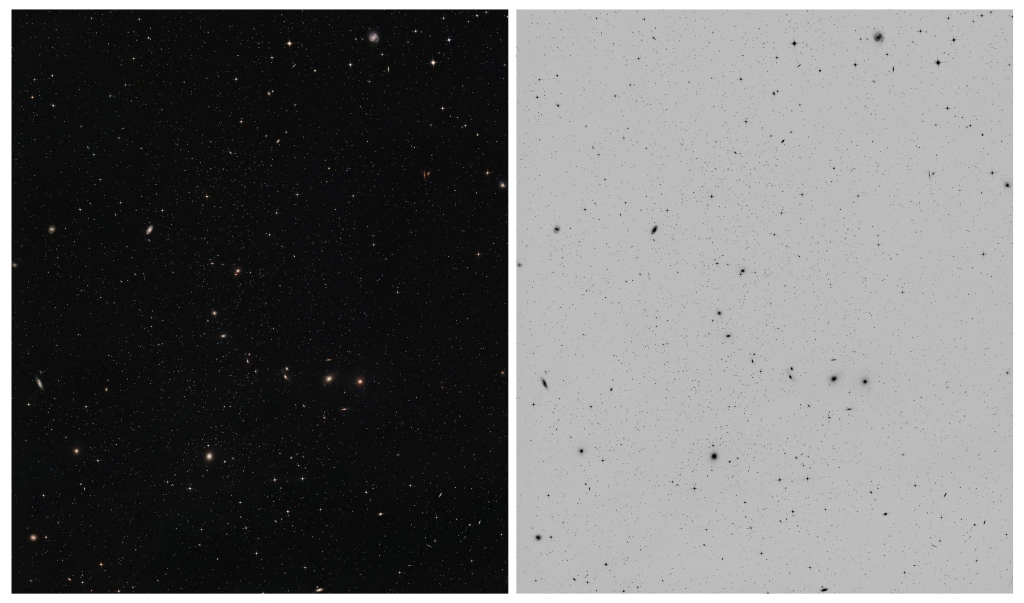
Here is a colour and negative B&W version of the on-going Virgo/Coma galaxies mega-mosaic.  Over 4 years in the making so far, this image stretches from M58 in the bottom left hand corner right up to M100 in the top right.  Each image measures 4.42 x 5.16 degrees where the diameter of a full Moon is just half a degree (like the Sun).  The image comprises over 10 individual frames and a total imaging time well in excess of 40-hours.  I will not be taking such large fields of view with the Hyperstar III in future, that’s the whole purpose of putting the mini-WASP array together.  However it is very satisfying to see such a big field of view at the relatively high resolution of 2.85 arc seconds per pixel.

Posted in Hyperstar and SXVF-M25C | Leave a comment

It’s done!

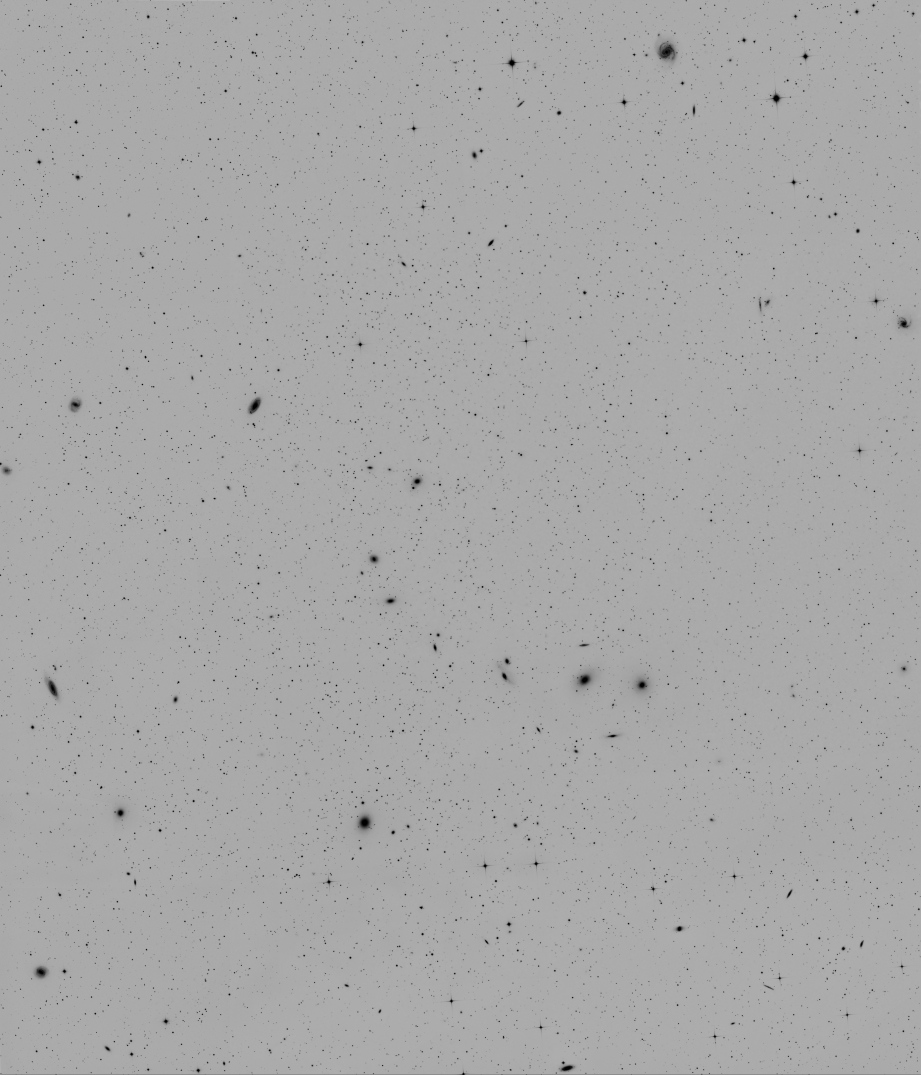
The Virgo/Coma galaxies mega-mosaic went together a lot easier than I was expecting.  A few tiny bits of extra processing to be done on this one, but here is the negative B&W version so you can scroll around all those galaxies.  Enjoy 🙂

Posted in Hyperstar and SXVF-M25C | Leave a comment

Phase 1 of the Markarian Chain mega-mosaic completed!

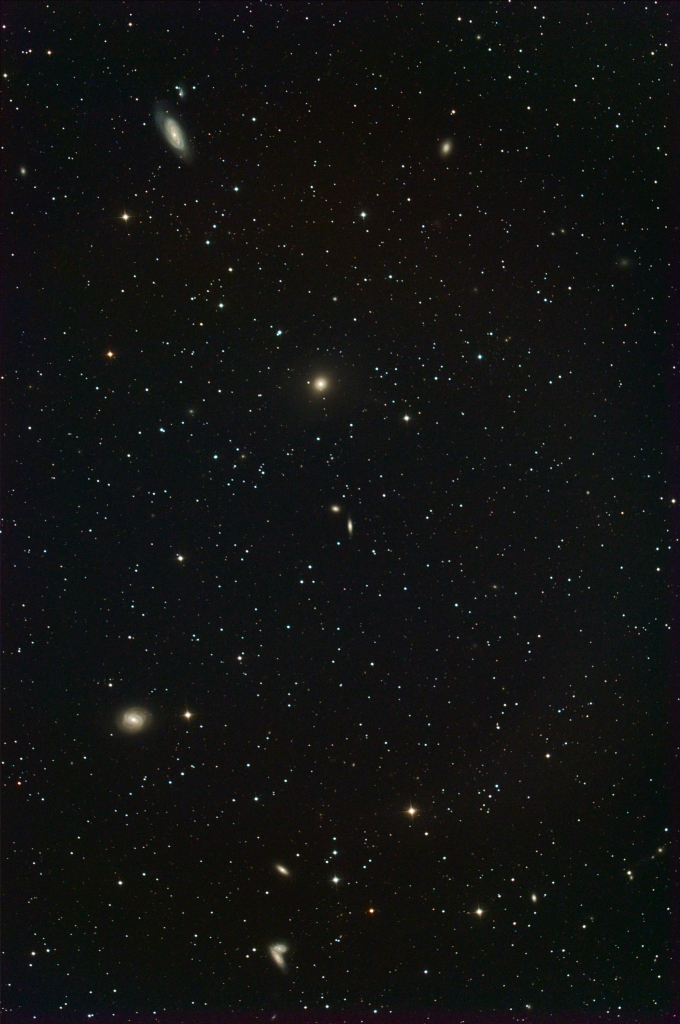
I managed to get enough decent data last night, despite the sky being full of water vapour and a very intrusive Moon, to fill in the annoying “notch” on the Markarian Chain mega-mosaic.  I have just bolted the last three frames to the main mosaic to check that everything fits together and haven’t bothered with any blending yet.  So there it is – and there it will stay for a while too, I think I’ve just about had enough with this one.  It’s a nice day so I’m going out to cut the grass 🙂


Posted in Hyperstar and SXVF-M25C | Leave a comment

Another frame for the Virgo/Coma galaxies mega-mosaic

Here is the lower-left hand panel for the on-going Virgo/Coma galaxies mega-mosaic image.  Want to hear some pain?  The Siamese-Twins at the bottom of the image fall off the bottom of the rest of the mosaic by a fraction 🙁 🙁  I don’t think this mosaic will ever come to an end.  Maybe it’s just the beginning of the full Northern Hemisphere sky survey with the Hyperstar III?  I think it might be.

Posted in Hyperstar and SXVF-M25C | Leave a comment

Comet Garradd animation 2

This is my second attempt at a comet Garradd animation – this time without dithering between subs 🙂  The “jumps” in comet motion are due to lost subs.

Posted in Hyperstar and SXVF-M25C | Leave a comment

Flaming Star nebula – composite image

This is last night’s Sky-Watcher data (2-hours) composited with the earlier Sky 90 data (11 and a half hours) – so 13 and a half hours total into this one so far 🙂


Posted in mini-WASP Array, Sky 90 and SXVF-M25C | 2 Comments