The ED-100 quintuplet refractor does the Flaming Star nebula in Auriga

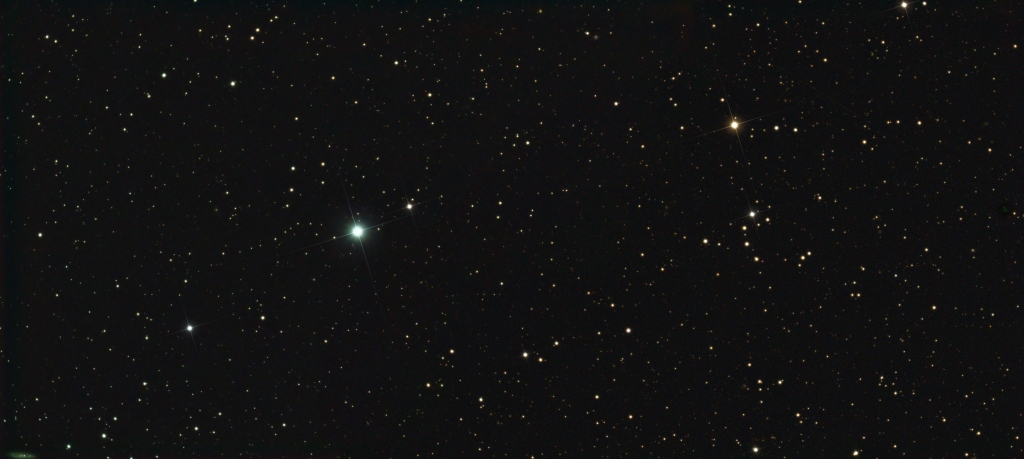
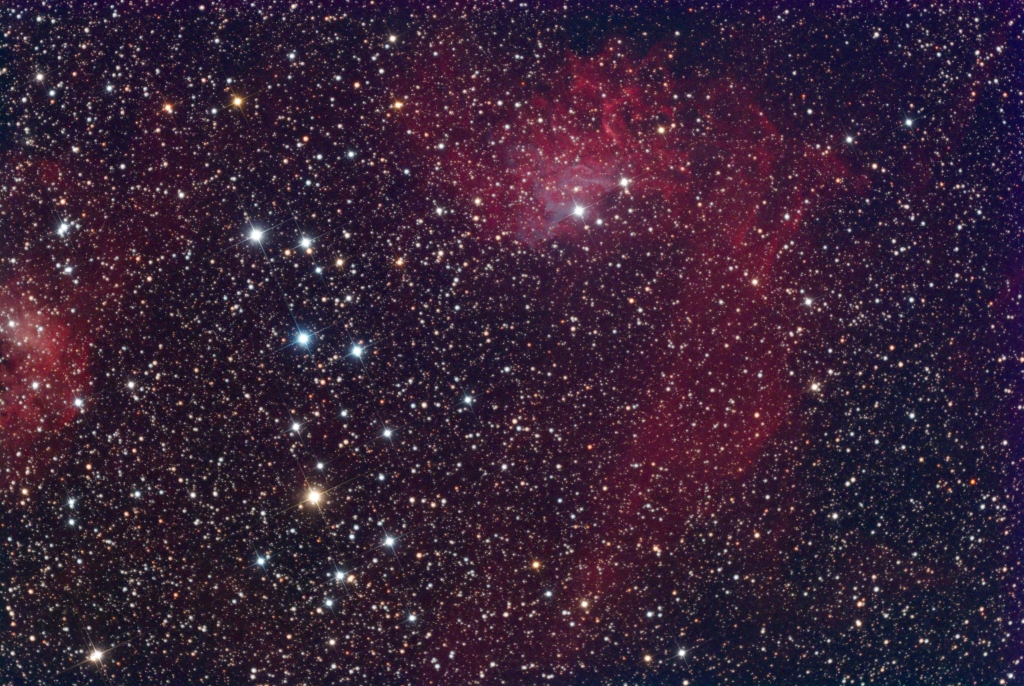
I managed to get 2-hours on the Flaming Star nebula in Auriga with the Sky-Watcher Esprit ED-100 quintuplet refractor last night.  Once again, not long enough for a pretty picture, but long enough to check out its performance.  This image comprises 6 x 20-minute subs, I was on sub 8 when the “lost guide star” alarm bells went off as the fog had come down in a big way.  On checking through the subs, sub 7 was already in the fog 🙁  Still – 2-hours of data on a new system is very useful.  Good star colour in the coloured stars, and more to the point – the correct colour.  Good star shapes across the chip, possibly a touch “eggy” in the corners and I expect that is due to poorish Polar Alignment which I am sure is now off quite a bit with all the mucking around with the mount.  The image was taken with the IDAS filter in-line which meant retraining the Robofocus before imaging using Capella as the focus star.  When I had achieved focus I ran CCDInspector and got +0.1″ +0.1″ for the chip flatness in X and Y (which is pretty excellent so I didn’t adjust the camera at all) and when I looked at the collimation it was the magic 0.0″ – perfect collimation – something I had never achieved using the Sky 90s!  The Flaming Star nebula came out well and the reflection region in the centre of the head is pretty clear too.  Not as good an image as in “Star Vistas” taken with the Sky 90 – but then again – the book image was 5 hours and 37 minutes of RGB together with 6-hours of H-alpha so that’s not too surprising.  If I had managed to get 11 and a half hours of good quality data on the Flaming Star nebula with the ED-100 quintuplet I would have ended up with a pretty spectacular image that’s for sure.

Posted in mini-WASP Array, News | Leave a comment

First Light for the Sky-Watcher Esprit ED-100 quintuplet refractor

Very lucky to have some clear skies again last night 🙂  Managed to get some imaging done on the Merak region with the new Esprit ED-100 quintuplet refractor.  Two frames here, only half an hour per frame using 3-minute subs, so nowhere near enough subs for a pretty picture, but plenty enough to test out the refractor.

I didn’t spend long enough to get good chip flatness or good collimation, but it was well within the limits I usually pick for imaging.  Stars are a little soft because I didn’t have the IDAS filter in-line, I have only just sorted out the optical train to do that around 5-minutes ago.  Three positives come out of this exercise.  One – no vignetting with their camera adapter!  Good shaped stars corner to corner across an APS size chip.  No lens flare from Merak despite all that glass in the objective.  So they did do their sums right – well done Sky-Watcher!!

I now need to fit the IDAS filter into the train (this might introduce some vignetting due to the way I have to do this) and then I need to image an extended object with some longer subs, hopefully I’ll still be able to see the Flaming Star nebula next outing.

However – so far, so good.

Posted in mini-WASP Array, News | Leave a comment

The Sky-Watcher Esprit ED-100 quintuplet is loaded and ready to go!

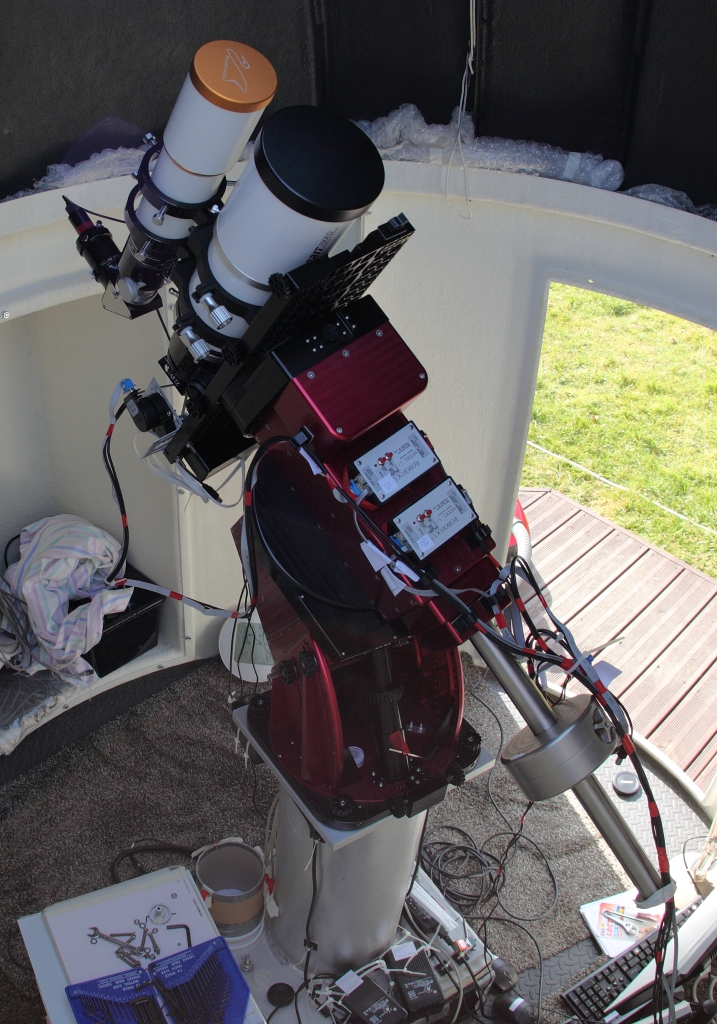
The utterly superb Sky-Watcher Esprit ED-100 quintuplet refractor is now mounted on the Paramount with the Megrez 80 guide scope piggy-backed above.  I have a Robofocus connected to the ED-100 fine focus knob via a tiny timing belt and actually managed to get the ED-100 focus trained last night before the cloud came in.  For the moment I am imaging through a diagonal (for a number of reasons, including ease of setup).  A 48mm IDAS filter fits to the the 2″ end of the diagonal (the end that goes into the scope, not the camera).  Looking down the business end I think it looks pretty good and I’m expecting any vignetting to be pretty small – but hopefully, we’ll soon see 🙂


Posted in mini-WASP Array | Leave a comment

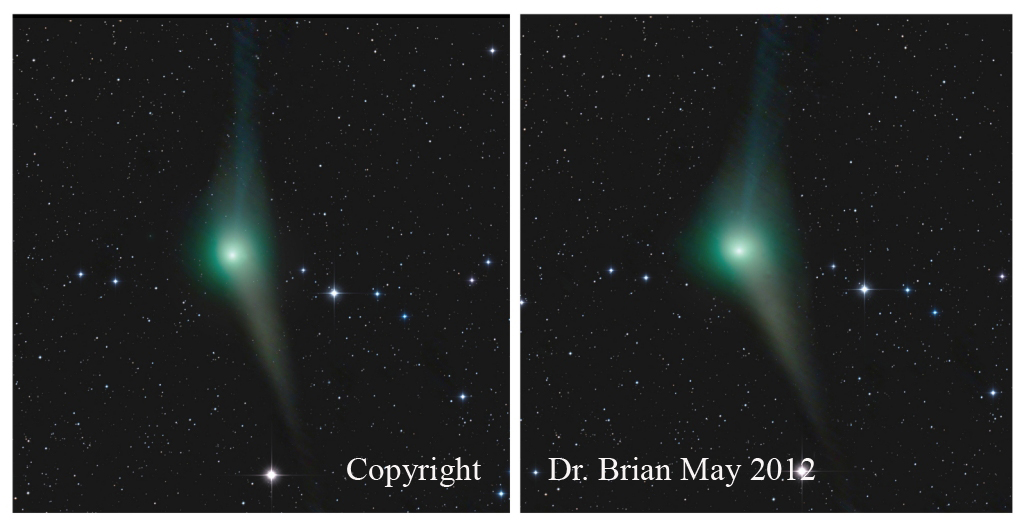
Stereo image of comet Garradd courtesy Dr. Brian May

When I take a set of sub-exposures of something moving or changing in time I think of creating an animation.  When Dr. Brian May (yes the Queen guitarist) sees a set of sub-exposures with a moving comet and a stationary starry background he thinks of stereograms 🙂  Brian created this totally amazing stereo photograph of comet Garradd using a couple of my time-separated sub-exposures taken recently.  A beautiful piece of work Brian!  Print out the stereogram and view through Brian’s OWL viewer (or an old Weetabix viewer if you have one) or you could even use the “free-view”, or cross-eye technique.  I have spent most of this afternoon just staring at this image with an OWL!


Posted in News | Leave a comment

The Sky-Watcher Esprit-ED100 quintuplet refractor – a real cat amongst the pigeons!


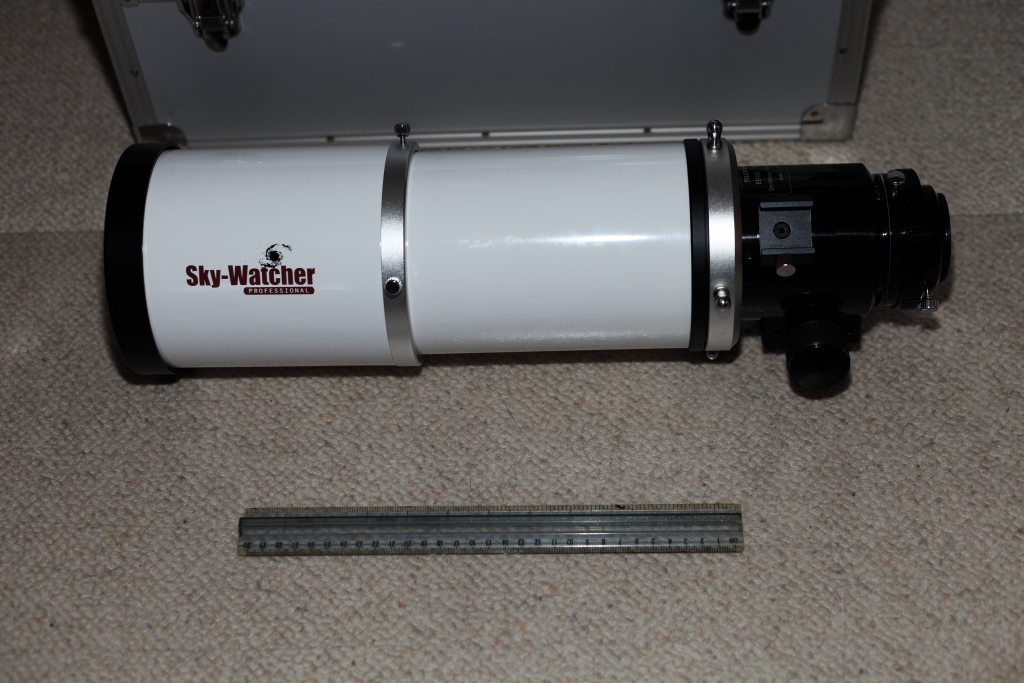
At the New Forest Observatory I have the most stunning refractor to review for Kieron at SCS Astro.  I have not been very happy with the Takahashi Sky 90s, mainly the difficulty in collimating them, and then the not too good performance even when collimated.  Specifically, even when collimated there is typically coma in the far corners of an APS size chip which is more than a bit annoying when the spec says that the imaging circle is a full 45mm with the reducer/flattner meaning it should actually fill a full-frame chip no problem.  My dissatisfaction with the Sky 90s, and hence my lack of progress with the mini-WASP array project has been extremely frustrating and led me to look for alternatives to the Sky 90 to populate the mini-WASP array.  Now having done my homework a couple of years back I was pretty much aware that there was nothing in the market refractor-wise that would help me out here.  However, not expecting any joy whatsoever, I asked Kieron at SCS Astro whether there was anything new on the market that could possibly suit my application.  Unbelievably a new scope from Sky-Watcher had appeared on the scene just a week earlier!  This looked like a very exciting new product indeed and Kieron has very kindly shipped me the brand new Sky-Watcher Esprit-100ED quintuplet refractor to review – wowser 🙂

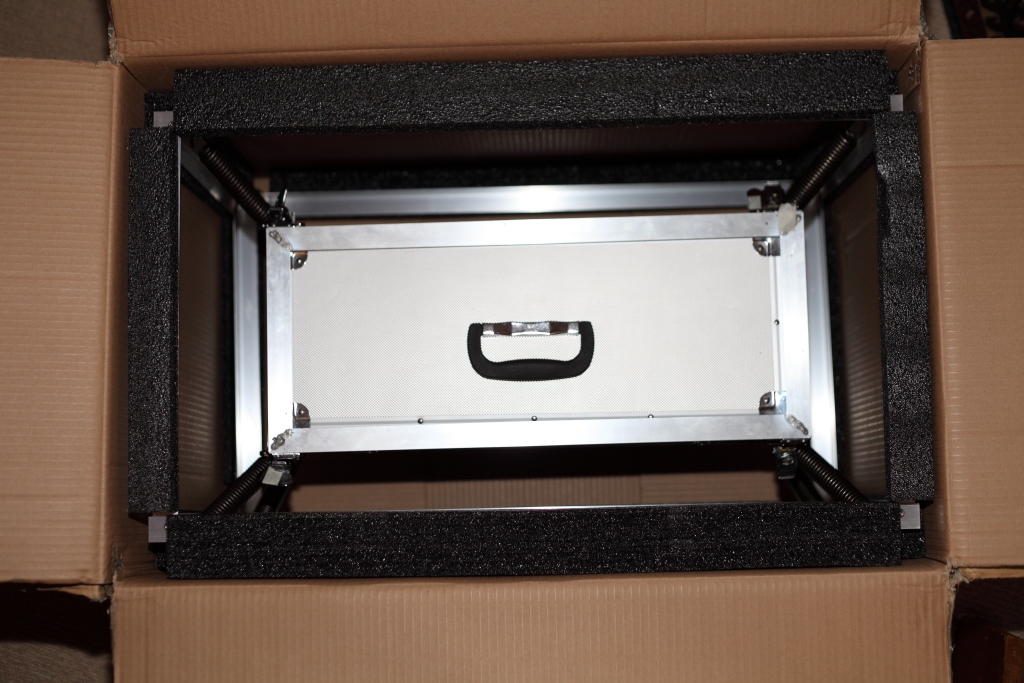
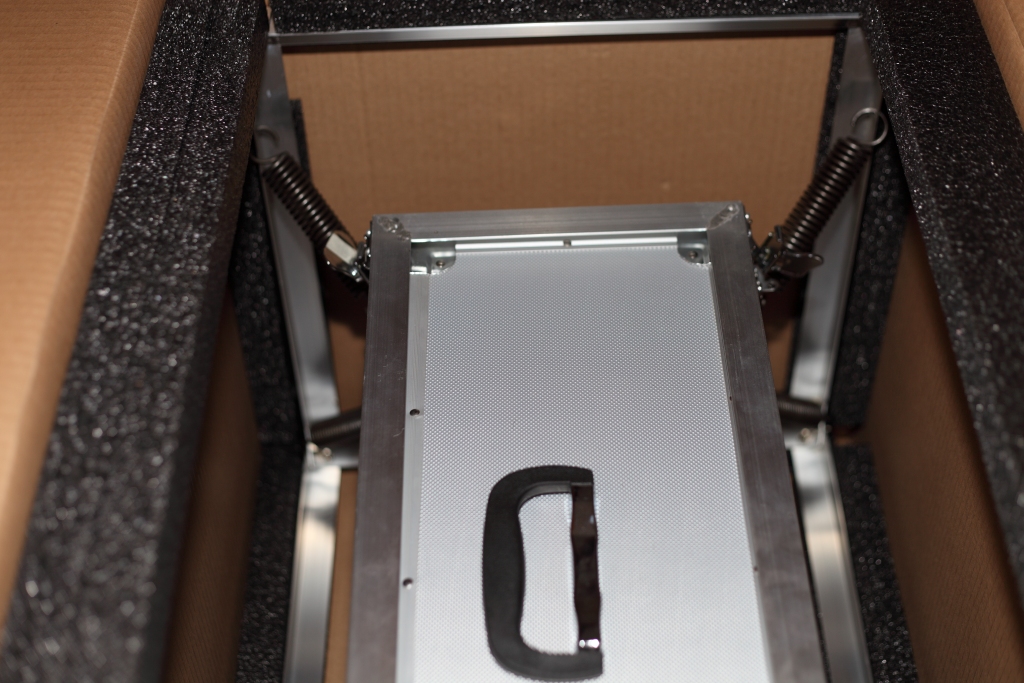
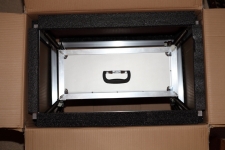
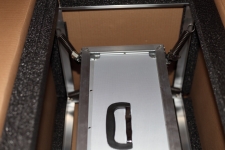
The real joy and appreciation of a job really well done started as soon as I had opened the cardboard box – seriously.  Take a look at the first photo – there’s the Aluminium padded case holding its precious cargo – nothing new or novel in that – but now look closer.  The Aluminium case is suspended from an outer metal framework by 8 powerful springs!!  Oh yes – these guys know what they’re doing alright and they’ll be no cries of “it must have lost collimation in the shipping” with the care that Sky-Watcher have taking in packing their precious goods.  Well done guys, there are a  number of telescope manufacturers out there who could really take a leaf out of your book.  I am highly impressed.

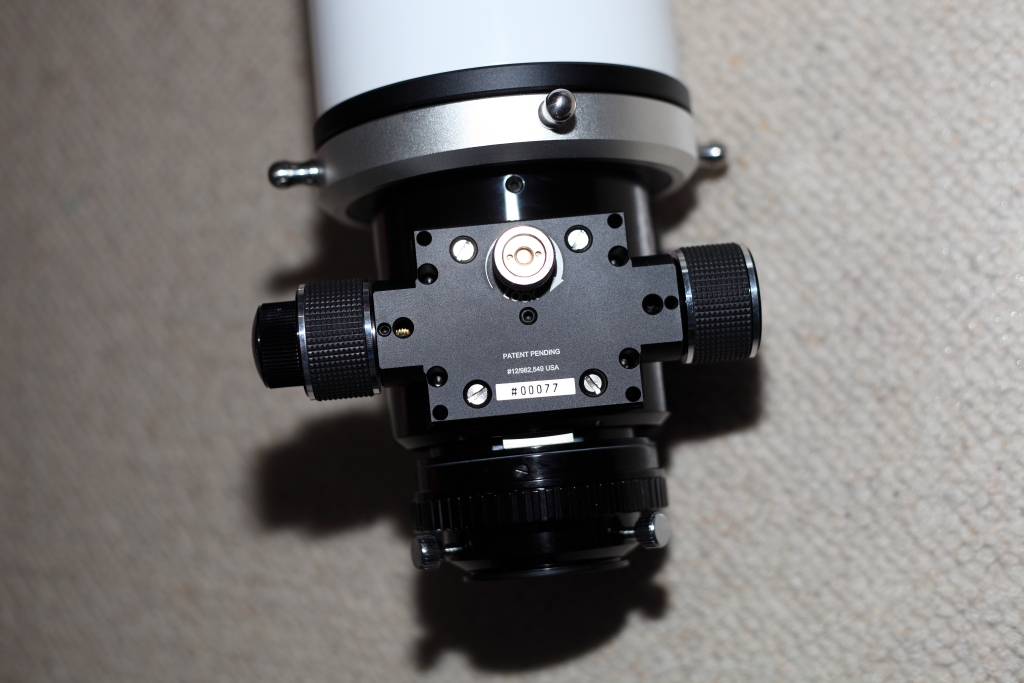
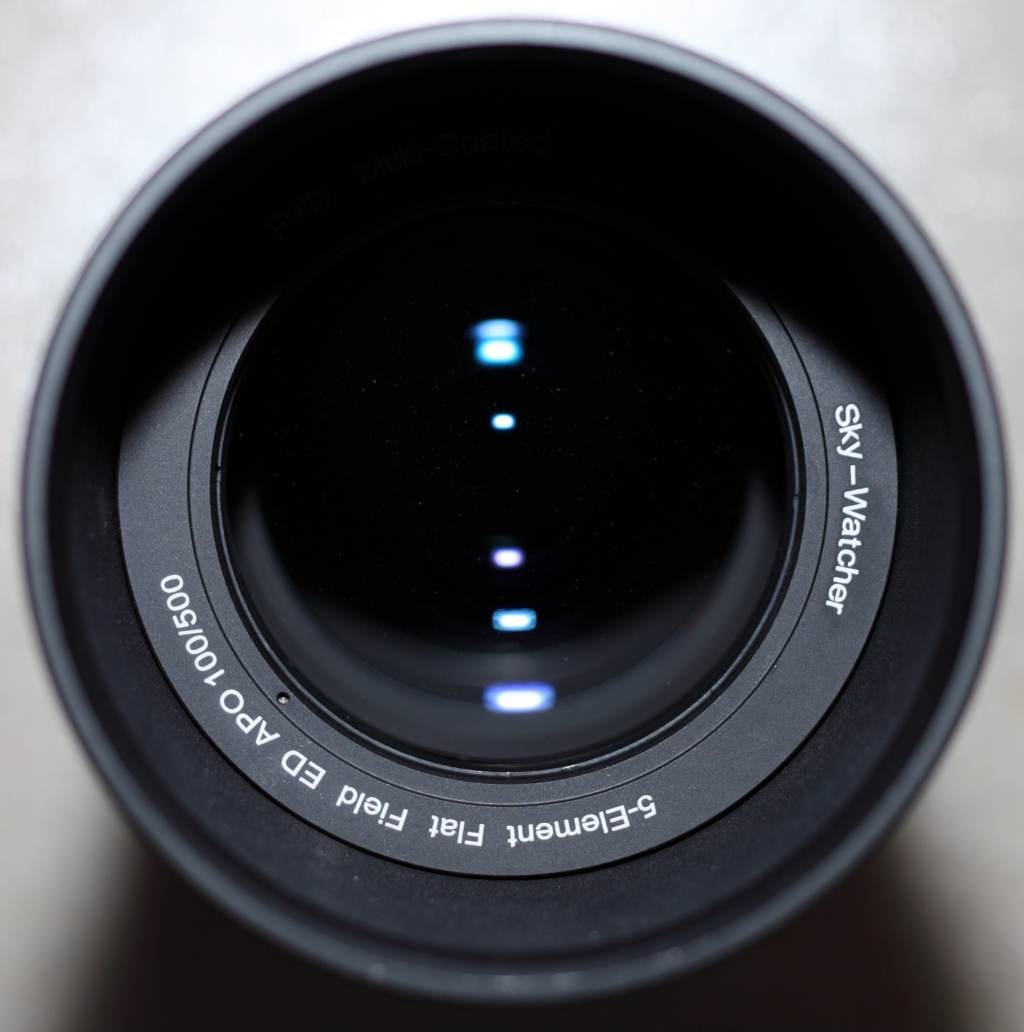
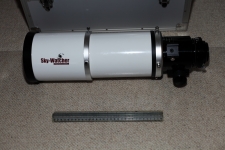
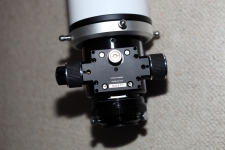
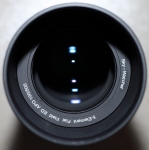
Be careful removing the refractor from its case – it is heavy.  The bare OTA with no accessories at all weighed in at 6.3kg on the bathroom scales, but this is not “wasted” weight, this is precision-engineered sturdiness.  That 11:1 focus controller is silky smooth and there is absolutely no slack or slop in the drawtube assembly which feels like it could support a tank.  Looking down the business end of the scope is like looking into a black hole – absolutely no sign of reflection or light scatter from the inside of the OTA at all – even the flash used to take the photo got swallowed up in there.  The baffling looks superb.

Well, those are my immediate thoughts on taking this amazing piece of glass out of its box and any further discussion of its performance will now have to wait until I have completed the optical tests.  We have a 5-element objective here (hence the quintuplet) that is claimed to give zero detectable colour fringing.  The scope itself is f#5 giving a focal length of 500mm with the 100mm aperture – absolutely perfect for my applications and my M26C one-shot colour 10-Megapixel CCD.

O.K. let’s not beat around the bush any longer, what have we got here?  We have an FSQ-106 equivalent spec refractor (well 6mm off the aperture is neither here nor there) at less than half the price of the Japanese offering.  If Sky-Watcher (Chinese) have got the optical design right (and I have absolutely no reason to doubt that they have) then they have a potential “Tak-killer” on their books – and jolly good luck to them.  My main worry before trying the scope out for real is the possibility of lens flare from very bright stars due to all that glass – but I am pretty sure these guys have already thought of that and have that covered, but we’ll soon see anyway.

Keep watching the NFO site to see the next exciting installment on the Sky-Watcher Esprit-100ED quintuplet refractor review 🙂 🙂
 

Posted in News | 6 Comments

It was not the hard drive!

In a post below you will see that I was in the process of burning Blu-Rays for backup as I thought one of the (relatively new) hard drives was on the way out.  I had a thought that it might be something else so I changed the connection to the HDD dock from e-SATA to USB2.0 – and it ran with no problems!  I had bought an e-SATA II adapter that fits in a PCIe slot in the main computer to drive the HDD dock (for speed of data transfer).  Unfortunately the only vacant slot was sandwiched between the two (high power) graphics cards – which run very hot.  I was a bit bothered about doing this, but having no choice I fitted the card and ran the HDD dock – up until recently.  Looks like the graphics cards finally cooked the little SATA II card and this led to the problem.  Annoying, but the USB2.0 port seems plenty fast enough for my backup storage application, so I needn’t have gone down the SATA II route at all.


Posted in News | Leave a comment

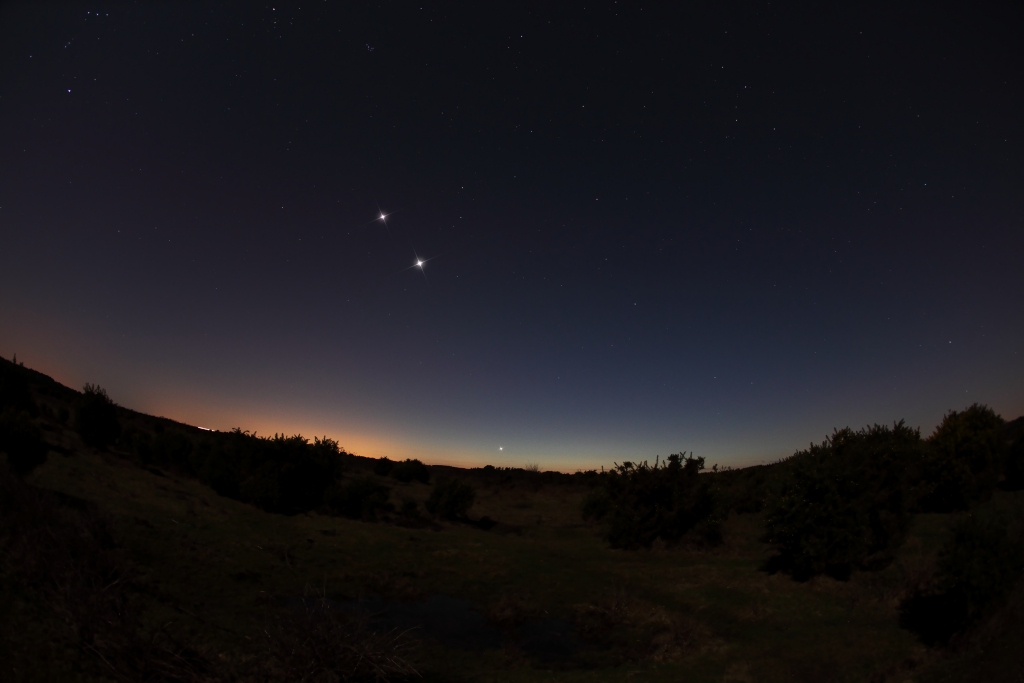
Jupiter, Venus and Mercury in the West – image taken over the New Forest

Moon blazing away overhead, so not a great night for deep-sky imaging – BUT – a great night for the planets.  We not only have Jupiter and Venus competing with the Moon as brightest objects in the sky, but also low down on the western horizon we can see the other red planet – little Mercury 🙂  Superb night and I was a bit of a twit only taking a few “stills” – this was a perfect evening to have a go at an animation of the setting Mercury, but I only thought of that once I got back home 🙁  One day I WILL get my act together!

Posted in News | Leave a comment

Sky-Watcher ED100 f#5.0 quintuplet – Holy Smoke!!!

This afternoon I received the most amazing piece of glass to review – it is simply beautiful.  The Sky-Watcher ED100 f#5.0 quintuplet refractor.  Now I have yet to put this beast through its paces, but if its performance comes anywhere near close to its looks then Sky-Watcher have got themselves a “Tak-killer” on their hands.  This is going to be an equipment review I am REALLY going to enjoy doing 🙂  Not been this excited about a piece of hardware for a VERY long time.  Photos to follow.


Posted in News | Leave a comment

Massive Blu-Ray burning session underway

I have 4 (relatively new!) 2Tb hard drives in an “Icy Dock” station for data storage/backup of all the astronomy data and the main computer.  Now last night one of these drives decides to play stupid 🙁  O.K. I have been caught out really badly before now, so now there’s only one thing for it – a job I have put off for months – time to start getting all your valuable deep-sky data burned on to Blu-Ray discs.  So I’m making a start on what will be a marathon data transfer session.  So far I’ve burned 4 x 25Gb Blu-Ray discs, at least another 20 to go I reckon.

Posted in News | 2 Comments

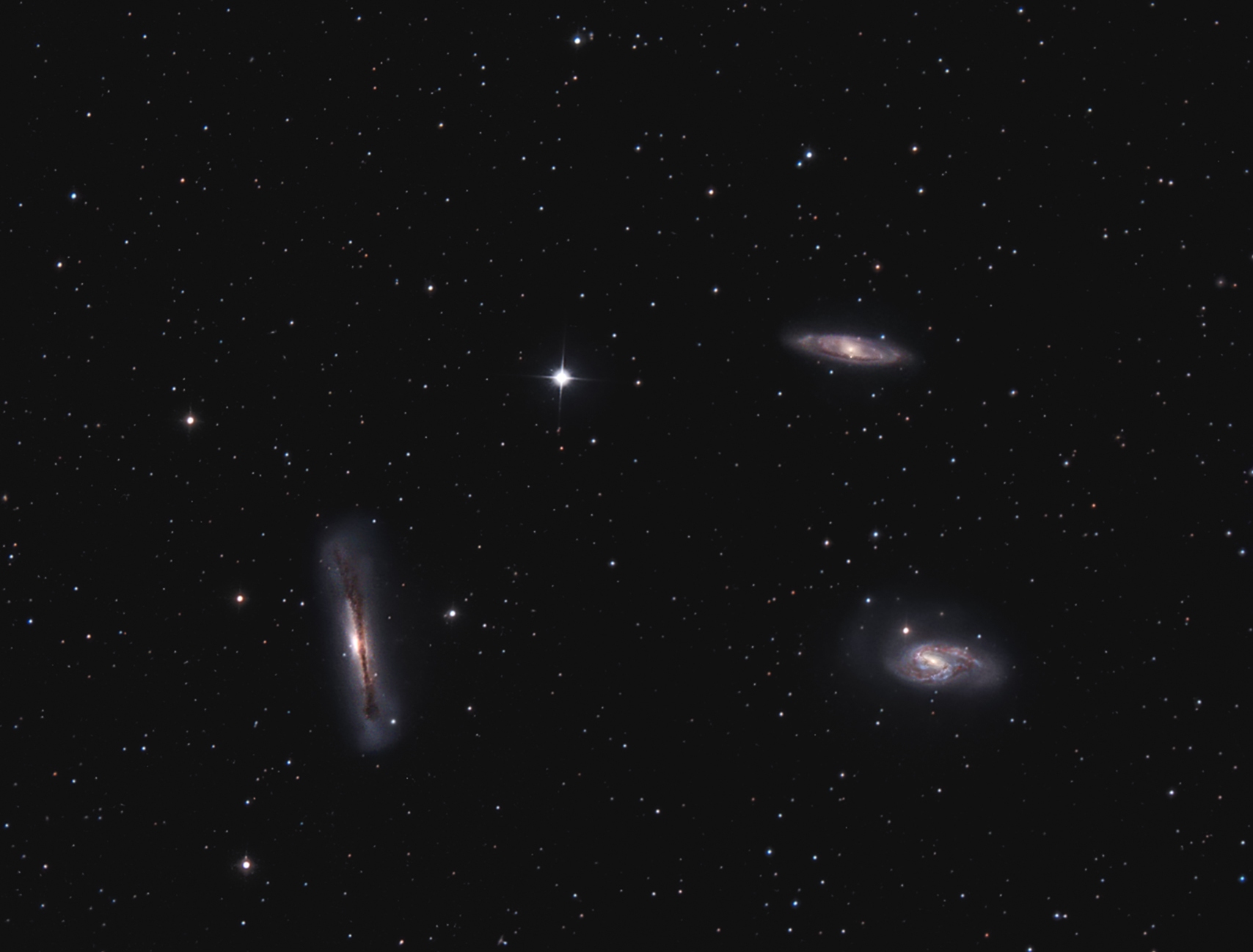
IOM March 2012 – the Leo Trio

Yipppeeeeeeeeeeeeeeee – it’s Galaxy season once again – I love Galaxy season.  Although I am working on a mega-sized mosaic of the Virgo/Coma region, the image I have chosen for this month is the well-known Leo Trio of Galaxies in the constellation Leo.

In this original Hyperstar 2-frame image using the little H9C camera I have north to the left and the northern most galaxy (the Hamburger galaxy) is NGC3628 almost exactly edge-on to us with a very remarkable dust lane as you can see.  Moving to the right (south) we then come across a most useful guide star – SAO 99552 or HIP 55262 – blazing away at magnitude 7.12 and certainly the brightest star in the area.  Continuing south we then arrive at the Messier pair, M65 on the top and M66 underneath – two very nice examples of spiral galaxies with nice colours and very clear dust lanes.  This image is a 2-framer as the tiny H9C camera only gave me a small field of view, and at this time I was only using short subs with the original Hyperstar, in this case just 2-minutes per sub.  Each frame was a total of 4-hours imaging time and I can still recall how very lucky I was when I took these frames in that I had two clear nights in a row so I was able to get this particular job done and dusted very quickly, in the same year (very often my 2-framer efforts over run into the following year which is very frustrating).  NGC3628 is worth your special attention as coming out underneath the centre of the galaxy there is a long string of quasars which you can just barely make out in this image.

The Leo Trio is exceptional in that there are 3 such bright, large galaxies, all lying close together for a perfect framing composition – and a bright guide star is thrown in for good measure too.  What more can you ask for? 🙂

Until next month – clears skies to you all!

Posted in IOM | Leave a comment