The Parker/Carboni coffee-table book “Star Vistas” has been accepted for publication by a major publisher.
We are currently discussing the contractual Agreement and hope we can make an announcement within the week! Watch this space
The Parker/Carboni coffee-table book “Star Vistas” has been accepted for publication by a major publisher.
We are currently discussing the contractual Agreement and hope we can make an announcement within the week! Watch this space
In the December 2007 issue of Practical Astronomer the Editor (Eddie Guscott) interviews Greg Parker about his imaging from the New Forest Observatory and his collaboration with Noel Carboni via the Internet.
This is a 6-page interview and makes the magazine worth purchasing 🙂
Our thanks to Eddie and the rest of the team at Practical Astronomer for taking the time to interview us, it was a great experience.
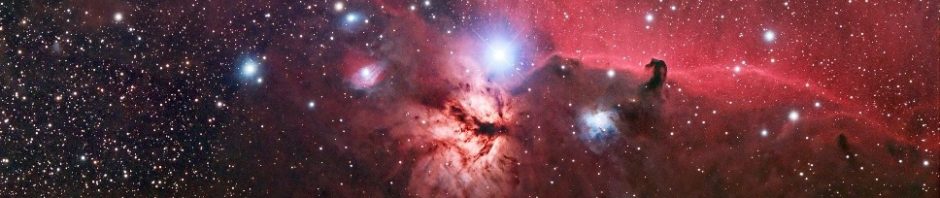
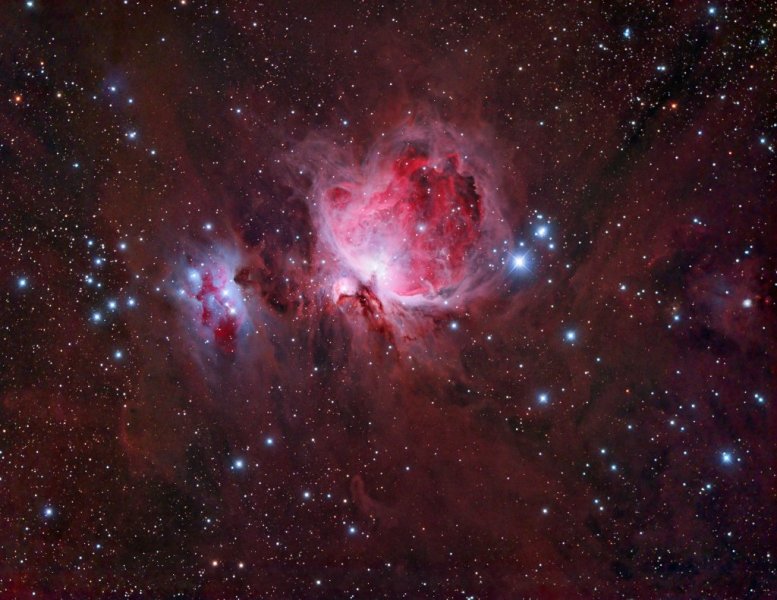
The images below are the same as some of those in the article

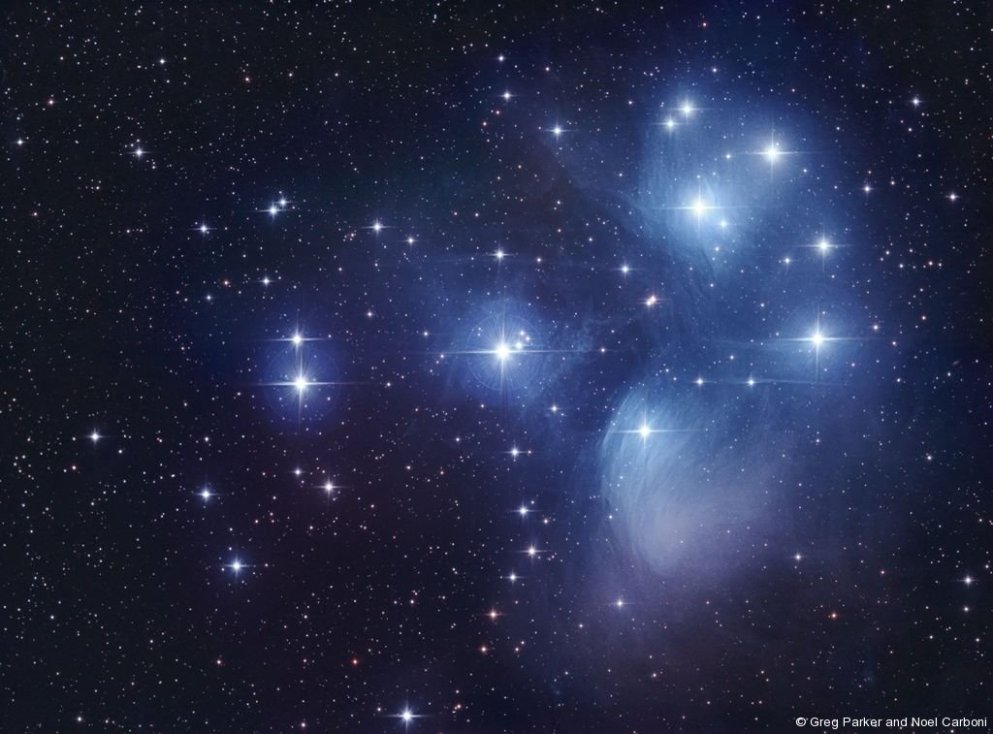
At 8.00 a.m. this morning an upgrade to Photoshop CS3 arrived. Within half an hour I was creating mosaics from frames that Photoshop CS2 simply couldn’t handle.
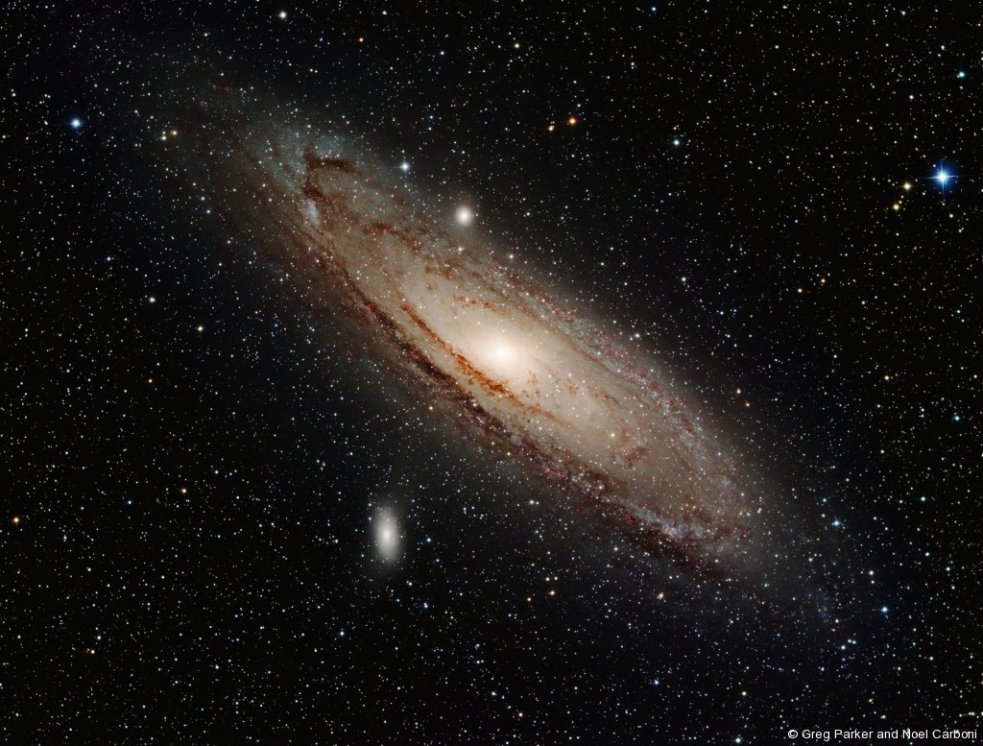
The image below is a 15-framer, stitched together perfectly by CS3.
This upgrade to Photoshop is going to be a great help in stitching together deep-sky images, and high resolution Moon shots! If you produce mosaic images and you use Photoshop, you really should consider this upgrade.
Dick Miller, who took many of the images in the “Arp Atlas of Peculiar Galaxies” book, visited the New Forest Observatory towards the end of Summer [September 2007] and wrote this report (warning: it is a 2MB PDF file) for the November issue of the Johnson Space Centre Astronomical Society magazine.
It certainly was a pleasure to meet Dick and I promise to consider his invitation 🙂
Springer New York sold the complete U.S.A. stock (pre-publication) to a book club and are now awaiting the second print run due January 2008.
There is apparently a shipment of books on its way to Germany for the European market – but Springer U.S.A. have asked for some of these back as they currently have no stock!
So for the book signing – it is a case of watch this space, but November 2007 now seems unlikely 🙁
We have a new image for you to enjoy!
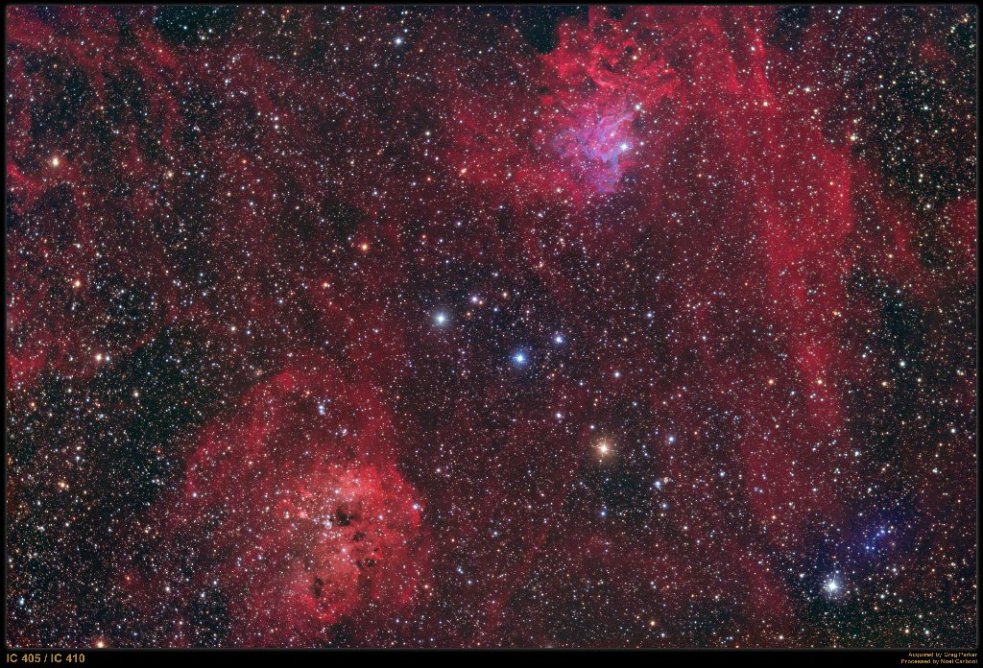
This is the IC410/405 region in Auriga – the Flaming Star Nebula and Companion.
To produce this image took around 16.5 hours:
Great News! I’m giving a talk at the 3rd Appleton Space Conference which is being held at the Rutherford Appleton Lab on the 6th December 2007.
My subject is “Astronomy from Home”. Unfortunately, the conference isn’t open to the public but at least I’ll be able to talk about the work that we (the entire “amateur” asto-photograhic community) are all doing. Continue reading
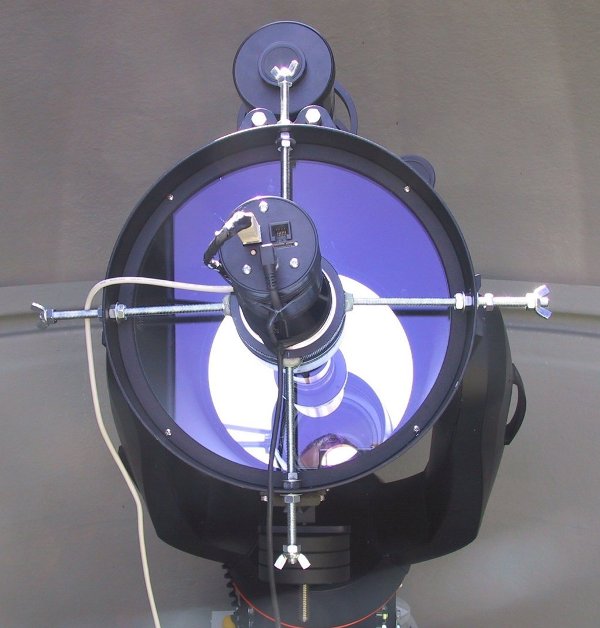
The Hyperstar is in my opinion a totally brilliant Celestron concept and an extremely brave move on their part as they would have known about the considerable problems with properly aligning the lens assembly, and the potential customer dissatisfaction with the product.
The Hyperstar is basically a 1x field-flattener lens assembly that takes the place of the secondary mirror in a standard Schmidt-Cassegrain telescope. Your CCD imager sits on the end of the Hyperstar and this creates a very strange looking beast indeed. I must admit, I fell in love with this thing before I even started Hyperstar imaging; this looked so extreme and really piqued my curiosity.
Since you now have your imager at the secondary mirror position, it is clear that the focal length you are working at is very much reduced, the light does not now go all the way up to the secondary mirror, and then all the way back down the telescope again to come out at the normal eyepiece position. So the Hyperstar basically turns a very slow f#10 optical system into an unbelievably fast f#1.85 astrograph – an incredibly good idea. Continue reading
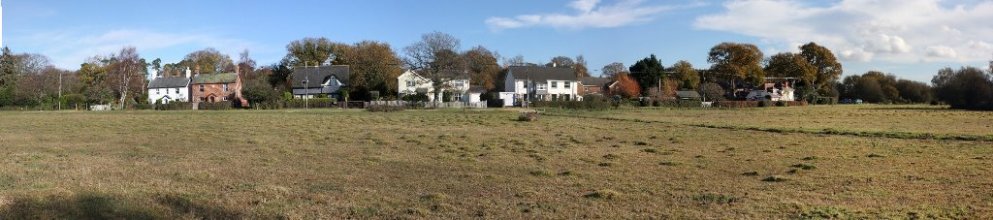
I thought I’d talk about techniques and show how some of the techniques used to create our deep-sky astroimages can be used in terrestrial photography as well.
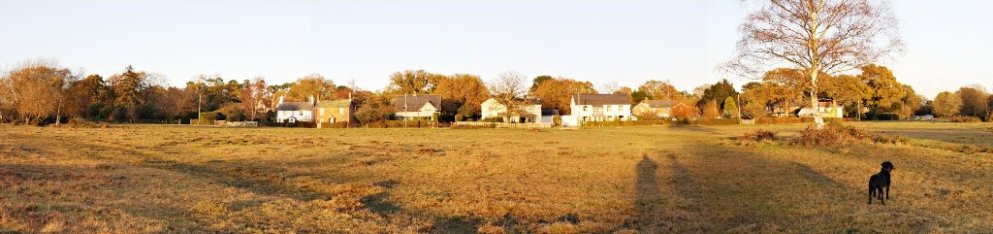
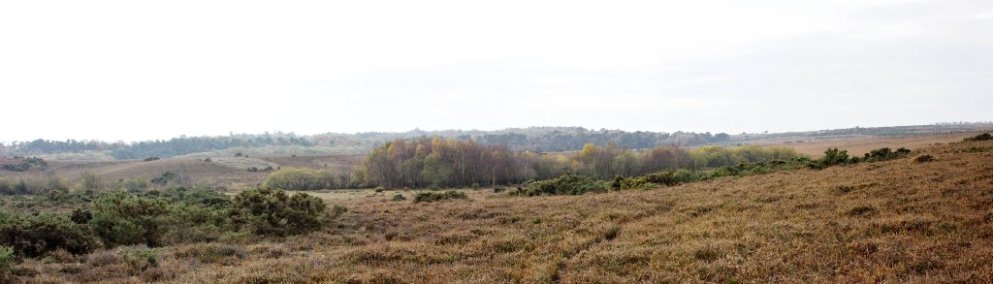
For example, the two images of North Weirs in the New Forest (just 3 minutes walk from NFO) are 4-frame mosaics.
|
|
The four frames were taken manually (no tripod) and stitched together in exactly the same way the Hyperstar and Sky 90 mosaics are created. Also, some curves were used to brighten up a rather cool image taken with a very low Autumn Sun.
The row of houses are on North Weirs road, and the open forest landscape is the view from these houses.
As you can imagine, this is a nice dark site and much better than the NFO location. 🙁
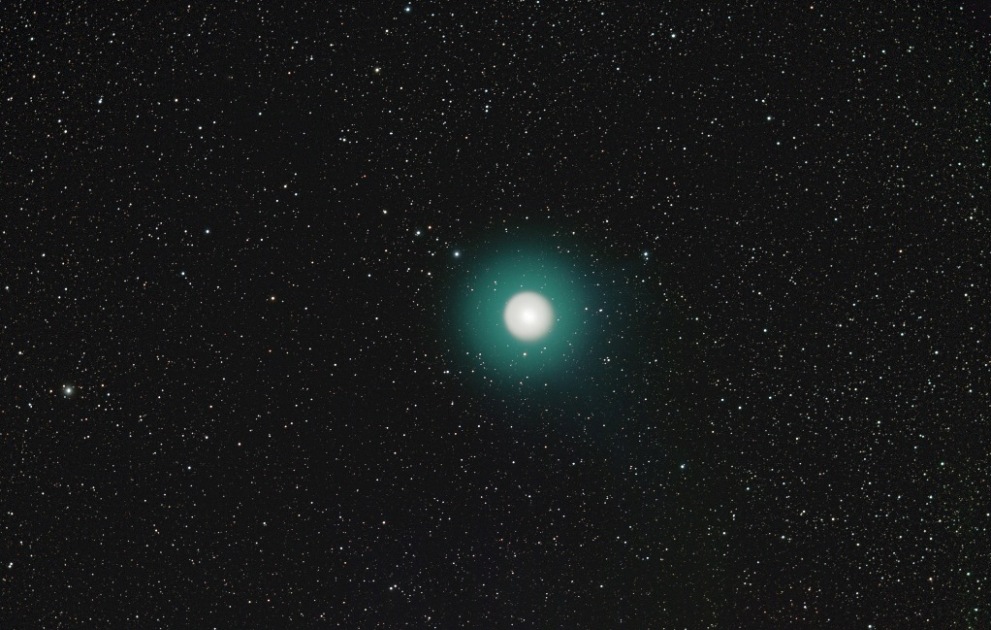
Wow! We have had our image of the Holmes Comet selected for the Earth Science Picture of the Day (EPOD)! Here is what they say about the image:
The photo above shows an emerald glow surrounding the nucleus of Comet Homes, as photographed on October 30 in the constellation of Perseus. It was taken from the New Forest Observatory in England. This peculiar comet suddenly increased in brightness from a magnitude 12 (telescopic target only) to a magnitude of almost 2 (easily visible with the unaided eye, even in urban areas). Astronomers believe it exploded as it moved away from the Sun, but if so, it’s not known exactly what triggered the explosion. At its brightest, Comet Holmes was almost as bright as the brightest stars in Perseus
We’ve posted about this before but I’ll repost the imaging data because Noel has produced a great result with this image:
The Sky 90 at f#4.5 with the SXVF-M25C one-shot colour camera was used to capture 130 subs at 1-minute per sub. But the data was stacked in two different ways!
Because the comet moves at a slightly different rate to the stars, one data set was stacked with the comet as the reference point (giving a stationary comet and trailing stars) and the other data set was stacked with reference to the stars (giving stationary stars and a blurred comet).
The two data sets were then combined to give the stationary comet sitting in a stationary star field.