Got today’s EPOD with “Precious Wentletrap Shells”.
Thank you Jim for continuing to publish my work 🙂
Got today’s EPOD with “Precious Wentletrap Shells”.
Thank you Jim for continuing to publish my work 🙂
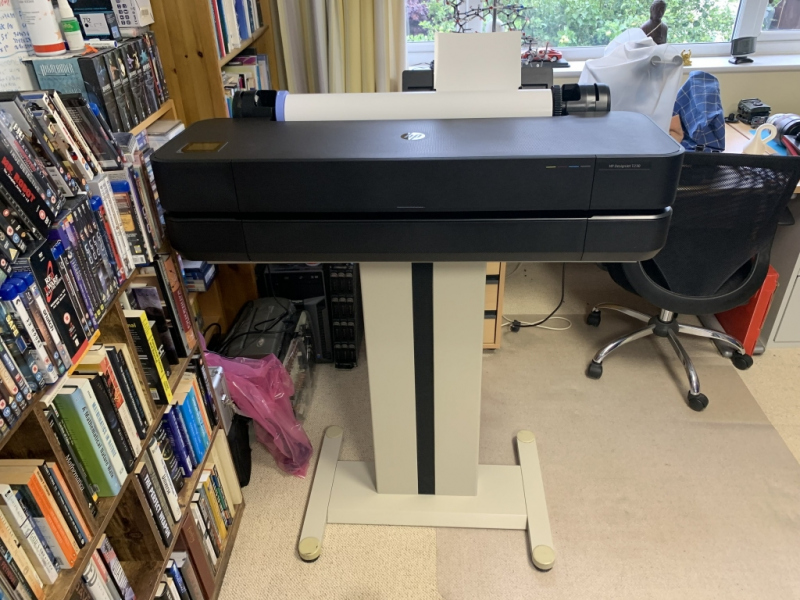
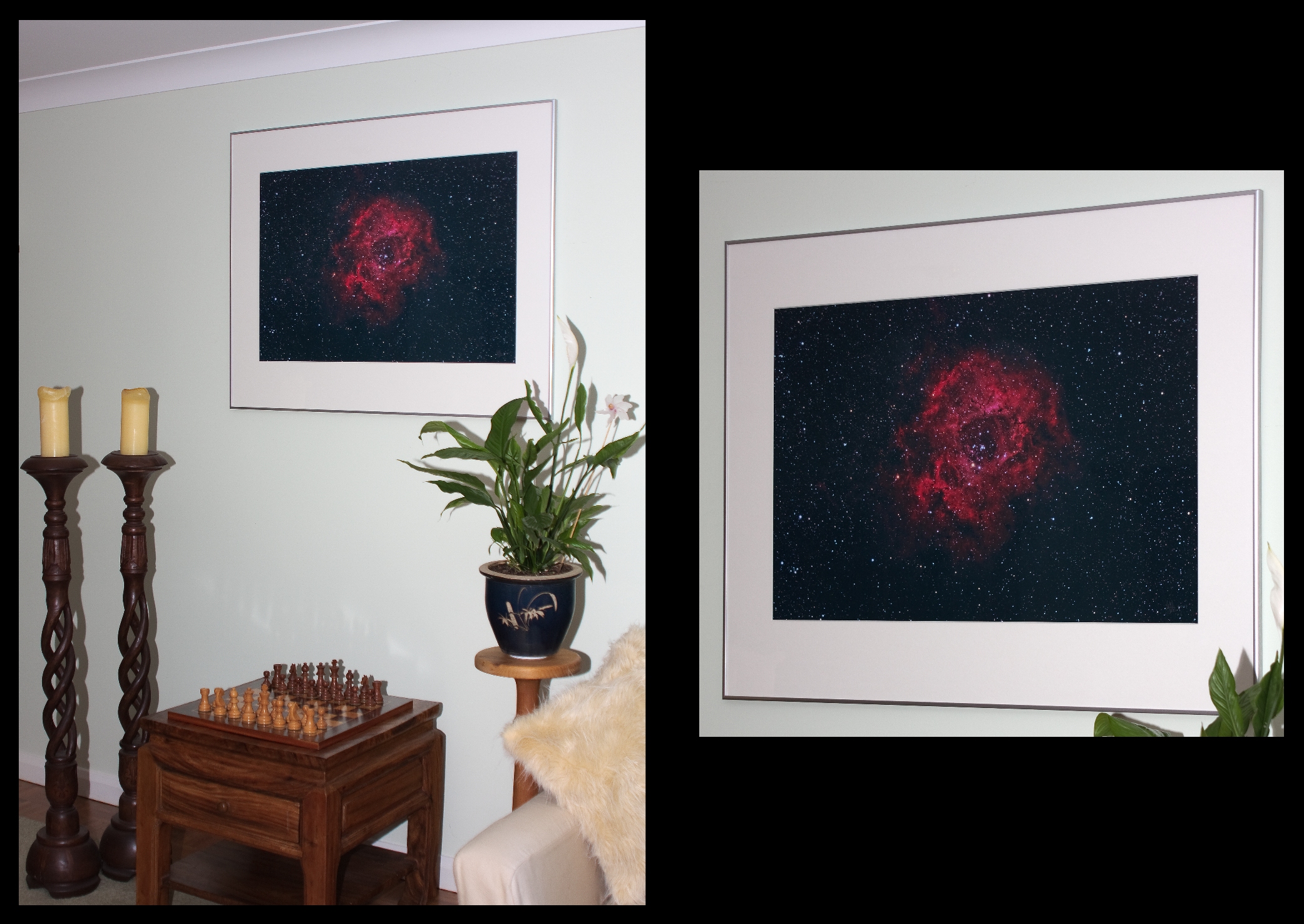
I have suffered deep-sky large-format printing withdrawal symptoms for far too long now, and gave in yesterday to purchase a new large-format printer. So yesterday I ordered up an HP T230 A1 printer with a ton of accessories from Graphic Design Supplies Ltd. (Horsham) and everything arrived the following day with absolutely no hiccups. Superb service and highly recommended.
So once again I am able to offer A1/A2/A3 or A4 size high-resolution prints of ANY image you want on the NFO website. If you would like to order an image then leave your details in the “Comment” section at the bottom of the image (I will not publish any order details) and I will get back to you with a price which will include p&P for the U.K.
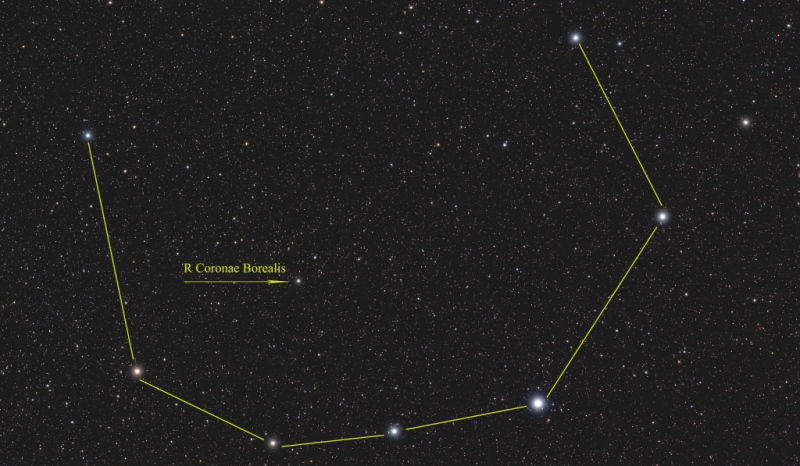
As promised on 24th June 2024 – here is an image that took me 10-years in the making. This is the whole of Corona Borealis, with the inverse-nova Carbon star R Coronae Borealis putting in a VERY bright appearance. Imaging at this time of year means imaging in astronomical twilight as we have no hours of darkness, and this brings its own problems. However, in the early hours of 24th June 2024 I managed to get the 3rd and final frame of this 3-frame mosaic. Each frame was 20 x 10-minute subs meaning this was a 10-hour image in total. Imaging carried out with the 2 x Canon 200mm prime lenses (Canon don’t make this lens anymore!) and the 2 x ASI 2600MC Pro CMOS cameras with UV/IR cut filters.
So pleased this project has finally come to an end, and very pleased with the final result as well.
I can now concentrate on getting the other small constellations I want to capture with the 200mm lenses.
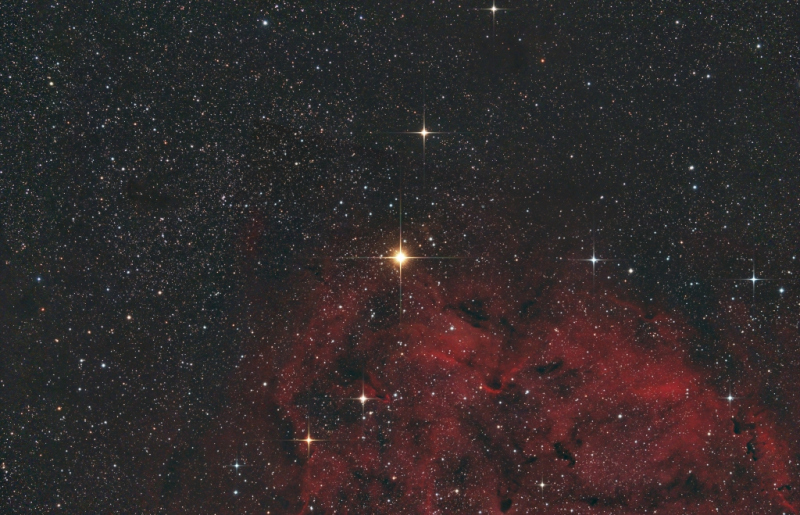
A reprocess of a Sky90/M26C OSC CCD composite image of the Garnet star in the IC1396 nebula.
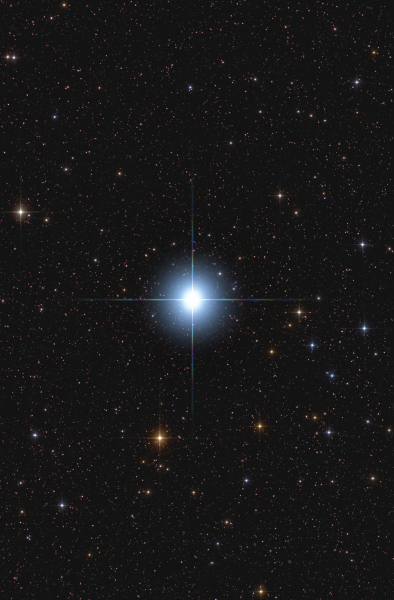
This week it is one of my “single star” images, where the main subject is a bright star in the centre of the frame. This is a recently taken image, but I like it so much it is Picture of the Week, even though it is only 12 x 5-minute subs! Taken with the Canon 200mm prime lenses and ASI 2600MC Pro OSC CMOS cameras, Spica is the brightest, bluest, star in the sky – a true celestial sapphire.

Once you bring Russ Croman’s Star XTerminator into your processing – there’s about a million different ways you can go forward. Here’s yet another way.
This was stuck in drafts, can’t remember writing this, so I’ll just post it now.
Last night (staying up until 3 a.m.) I was able to get the 3rd and final frame of this 3-frame mosaic of the whole of Corona Borealis. I first had the idea to capture this one a decade ago, but as this image was taken totally during astronomical twilight (as we have no hours of darkness at the moment) you can possibly see why it took me so long to get my act together.
Each frame is 20 x 10-minute subs, so 10-hours of data in all, taken with the 2 x 200mm Canon prime lenses and 2 x ASI 2600MC Pro CMOS cameras on the MiniWASP array.
I am so pleased, and so relieved to finally get this one, that I will put this up as a future Picture of the Week sometime soon.
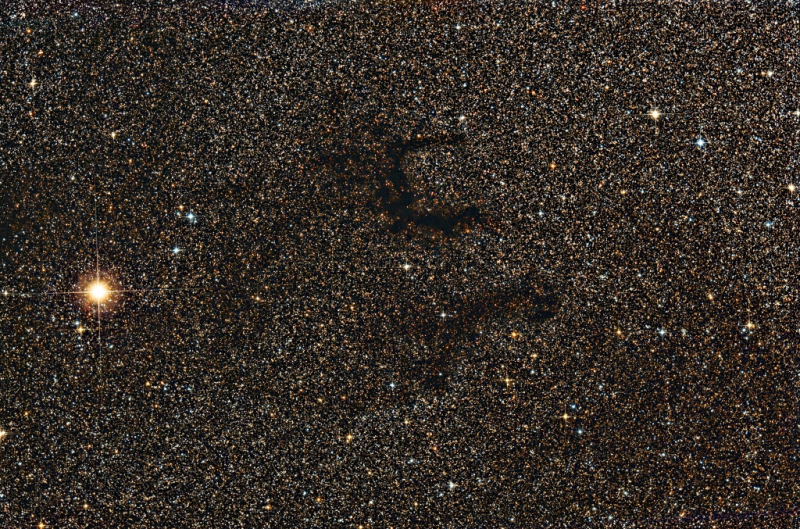
This week we feature the beautiful star Tarazed and the accompanying dark nebula known as Barnard’s “E”.
This is MANY hours of 10 and 15-minute subs taken with the Sky90 array and M26C OSC CCDs on the MiniWASP array. This is most definitely in the region of diminishing returns and won’t be revisited.
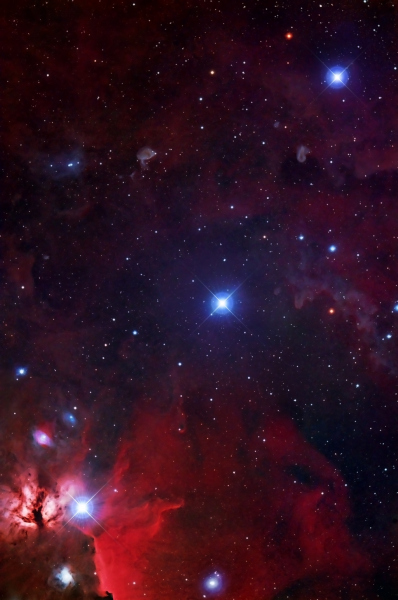
The Belt Stars of Orion is this week’s Picture of the Week. Untold hours (in excess of 8 for sure) went into this one using a single Sky90 refractor and M25C OSC CCD. Alnitak (bottom left), Alnilam (centre) and Mintaka (top right) form the famous 3 “Belt Stars” asterism in Orion.
Although I don’t think I can improve much on this image at this resolution, I do want to get a bigger field of view of this region with the 200mm lenses, the ASI 2600MC Pro OSC CMOS cameras, and the Optolong L-Enhance filters. Yet again this was an object I was hoping to get last season, and yes, the weather had other ideas. This is a thankless hobby for sure.
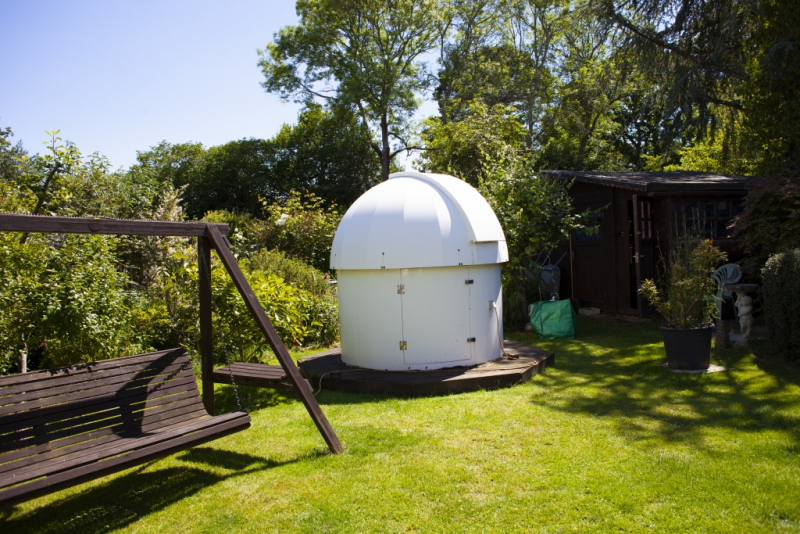
On this beautiful Summer Solstice day – here’s the South Dome (Hyperstar + 2600MC Pro CMOS) done and dusted. De-pollinated (thick layer of yellow pollen removed) and vacuumed out. Just the decking to repaint. But that will wait until after the North Dome has been through its yearly pamper.