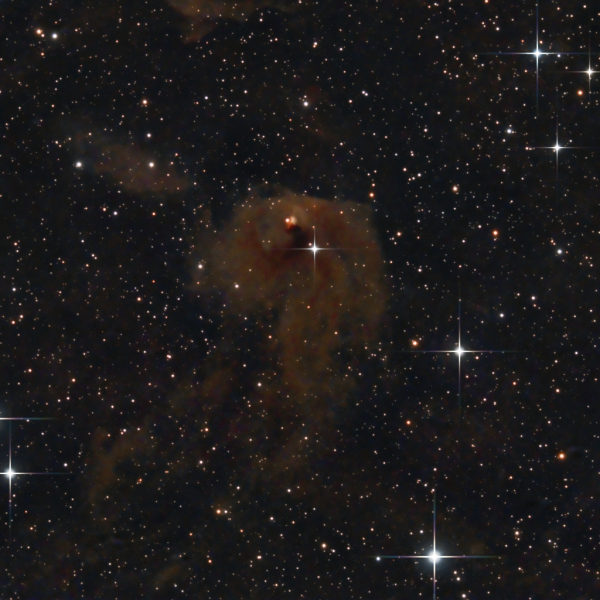
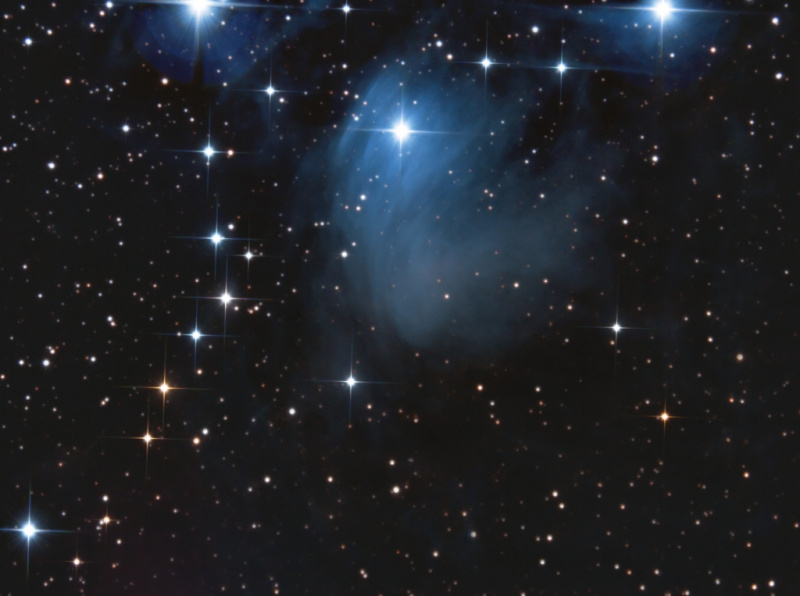
A reprocess of Hind’s Variable nebula in the constellation Taurus. Taken on the Sky90 array with M26C OSC CCDs and UV/IR cut filters. This image comprises 65 x 20-minute subs (or almost 22-hours of exposure time).
A reprocess of Hind’s Variable nebula in the constellation Taurus. Taken on the Sky90 array with M26C OSC CCDs and UV/IR cut filters. This image comprises 65 x 20-minute subs (or almost 22-hours of exposure time).
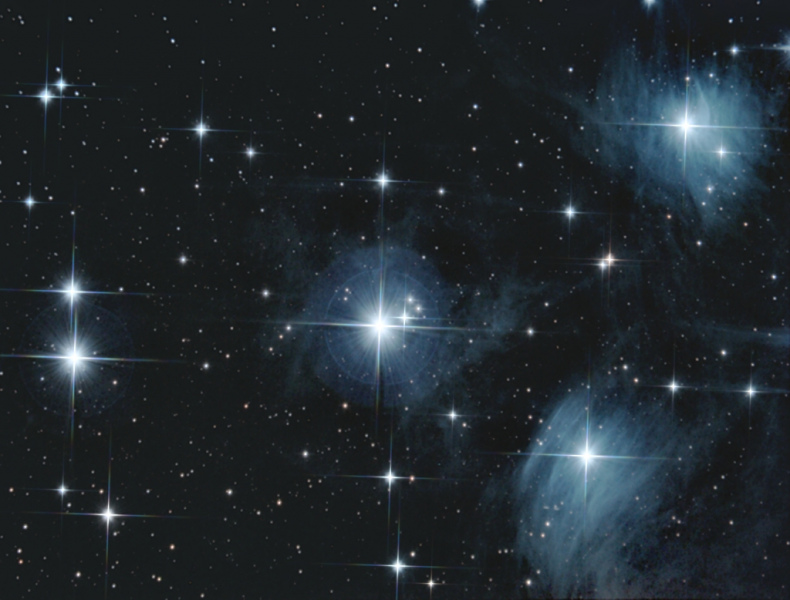
This is the second (and final) bit of ancient history that I’ll be looking at today. This time it is Merope (and Ally’s braid) again in the Pleiades, this time from 25/12/2005 (so it looks like I was out imaging on Christmas evening that year). This is also taken on the original Hyperstar (no collimation or rotation adjustment) on a Celestron Nexstar 11 GPS, with the tiny little SXVH9C OSC CCD (1.4Mp). This was (only) 95 subs at 55-seconds per sub, and again we see a glassy smooth (noise free) image, with very little depth.
Sometimes it is good to delve into a bit of ancient history to see how things have developed (or not). This image of Alcyone (in the Pleiades) is from 20/11/2005. It was taken using an original Hyperstar (no collimation or rotation adjustment) on a Celestron Nexstar C11 with a tiny little SXVH9C OSC CCD (1.4 megapixels from memory). This is a massive 312 subs but with only 20-seconds per sub! What do you notice about the image? Well it is glassy smooth and noise-free due to the 312 subs – BUT – it is not very deep, due to the very short 20-second exposures. Win some, lose some I guess.
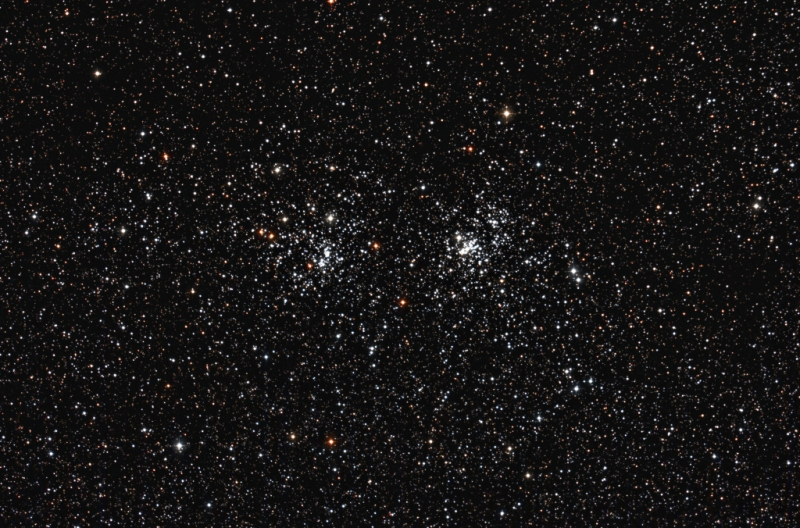
The famous Double Cluster in Perseus. This is taken with a Hyperstar III on a Celestron Nexstar 11 GPS with an SX M25C OSC CCD. The image comprises 57 x 2-minute subs.
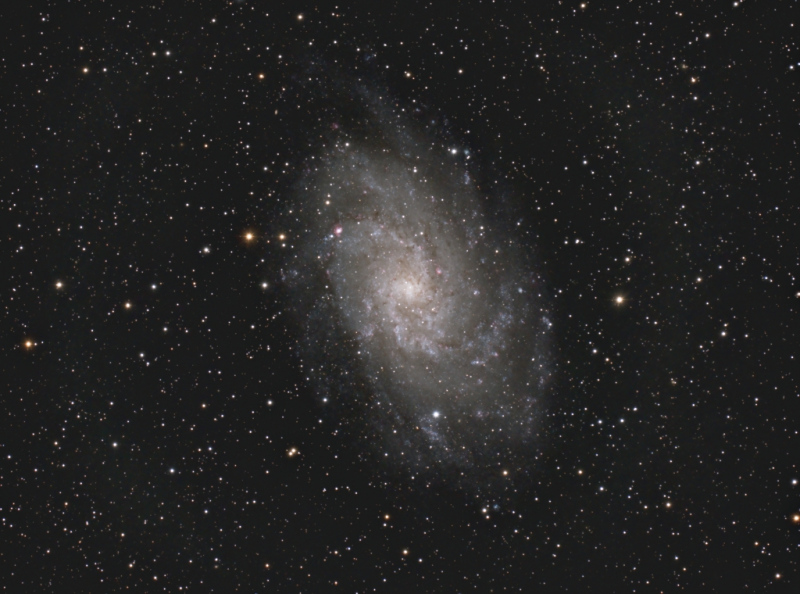
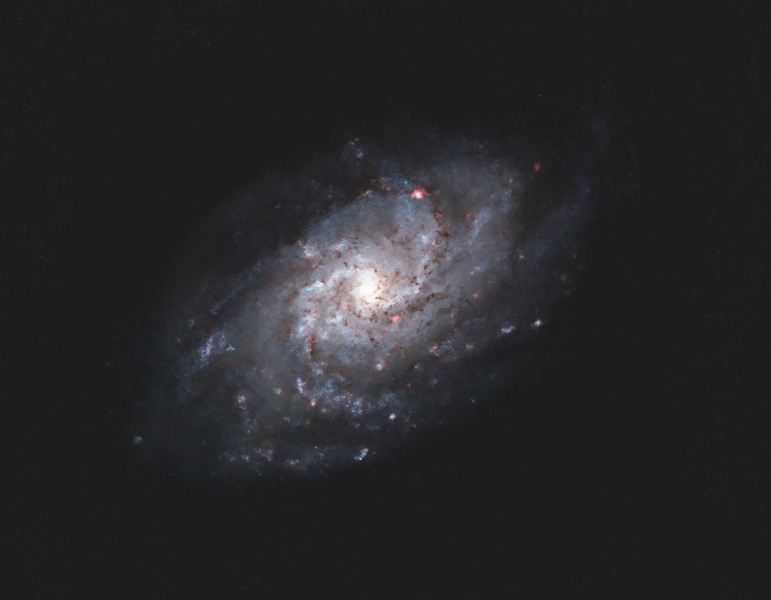
M33 – The Triangulum galaxy. Only 38 x 4-minute subs on the Hyperstar 4 on a Celestron Nexstar 11 GPS with an ASI 2600MC Pro CMOS camera.
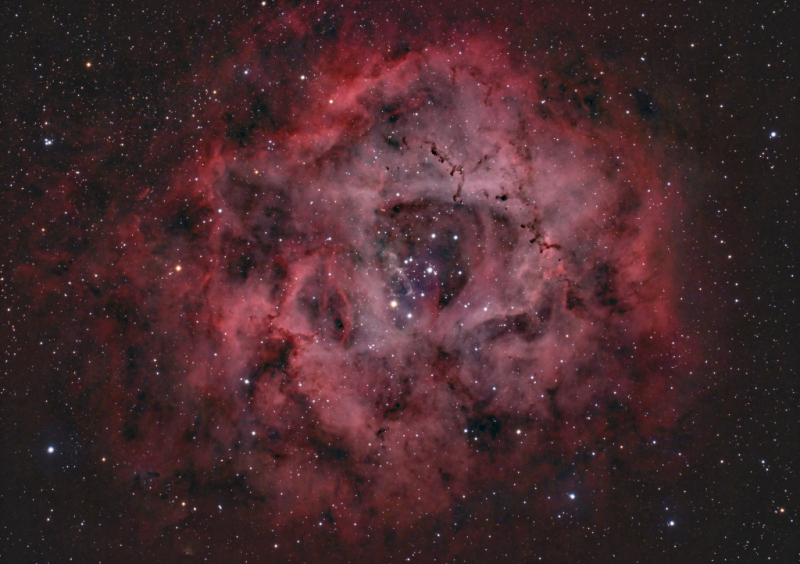
This is only 39 x 4-minute subs taken using the Hyperstar 4 on the Celestron Nexstar 11 GPS SCT with an ASI 2600MC Pro CMOS camera.
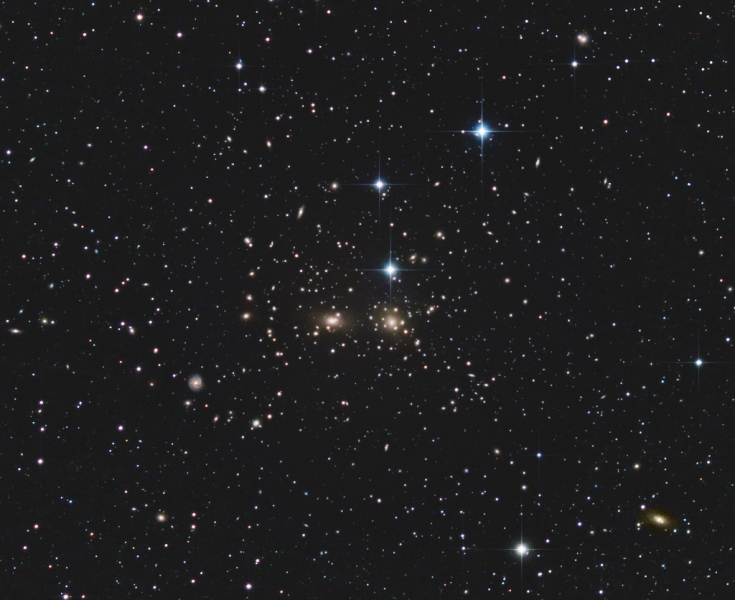
The famous Coma Cluster of galaxies, where in 1933 Fritz Zwicky first proposed the existence of Dark Matter.
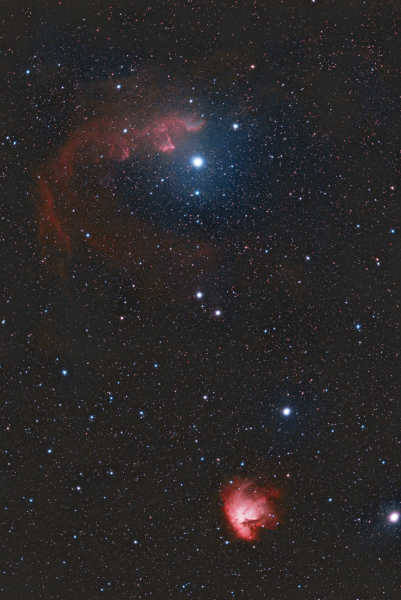
I put the 200mm lenses (and Optolong L-enhance filters with the 2600MC Pro CMOS cameras) onto the Gamma Cassiopei nebula last night. Because of gremlins I only managed to get 10 x 20-minute subs when I should have had 42 x 20-minute subs. Still, the result was way better than I was expecting and I’m beginning to see what Tom O’Donoghue and Ollie Penrice managed to capture years ago. A few more clear Moonless nights on this one and I should finally be there.
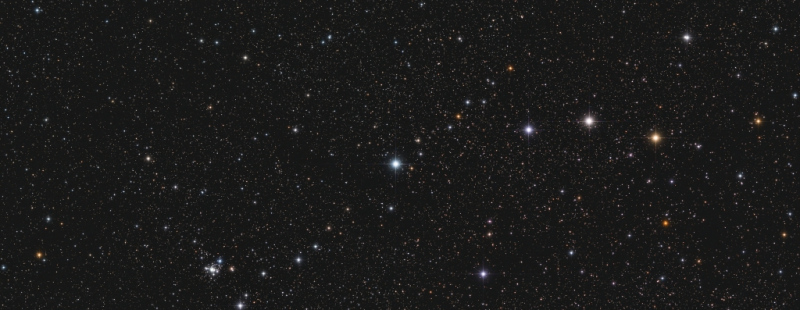
This is a 4-frame mosaic taken using the Sky90s and M26C OSC CCDs on the MiniWASP array. The image comprises 18 x 10-minute subs per frame.