The mini-WASP imager is now fully operational

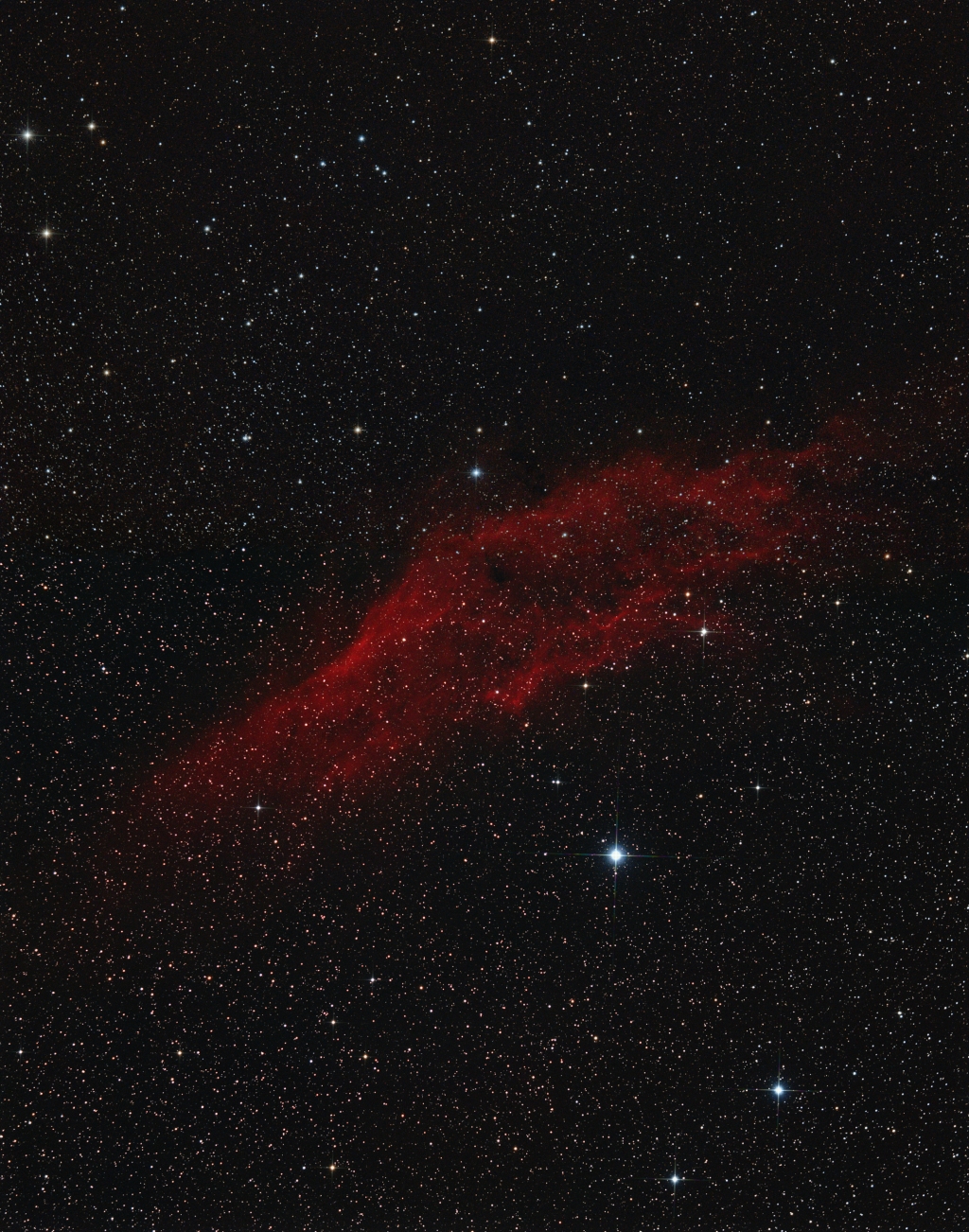
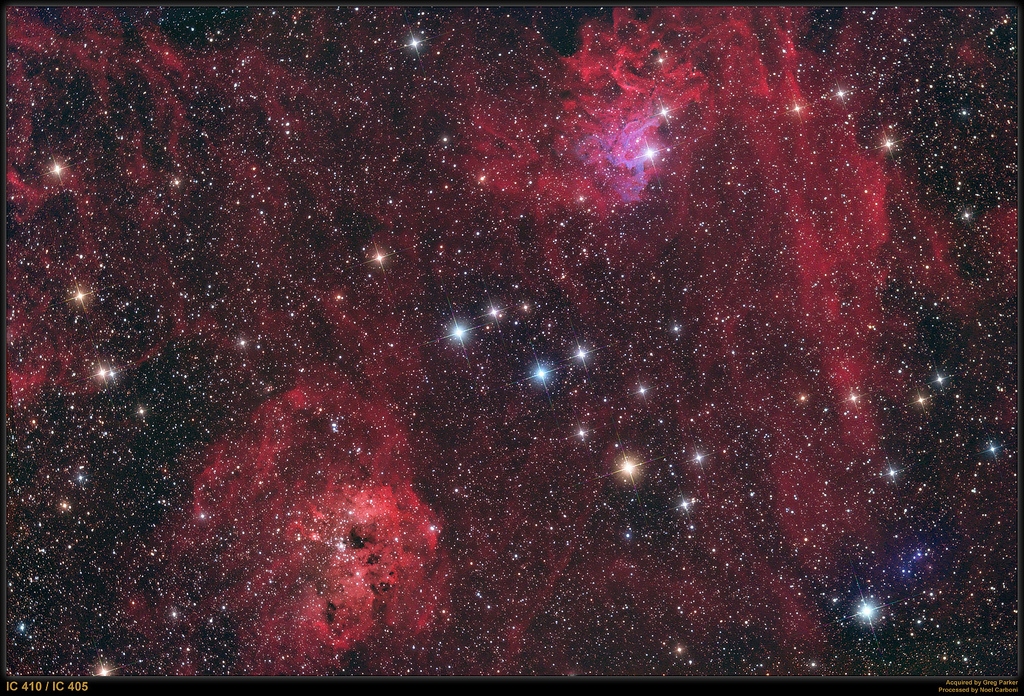
It was a clear night last night (although the seeing was very poor) and it allowed me to iron out the last few bugs that were plaguing me with the mini-WASP array.  Only got some short exposure times, but now that everything seems to be working I can now start concentrating on getting good data from deep-sky objects.  This image of the California nebula is only 9 subs at 10-minutes per sub, so a measly hour and a half when I normally take around 8-hours of data for a Sky 90 with an APS sized one-shot colour CCD.  Still – an hour and a half shows the potential of the mini-WASP array, and gives a good idea of what we might expect with a full 8-hours on the object.

Once I am happy at letting the mini-WASP run itself (auto dome rotator and camera synch software running) then I will get the C11/Hyperstar III up and running to really up the anti on getting the data down in short order.  As per usual – all I need now is for the weather to start cooperating!

Posted in mini-WASP Array | Leave a comment

Another Boxing Day revelation :)

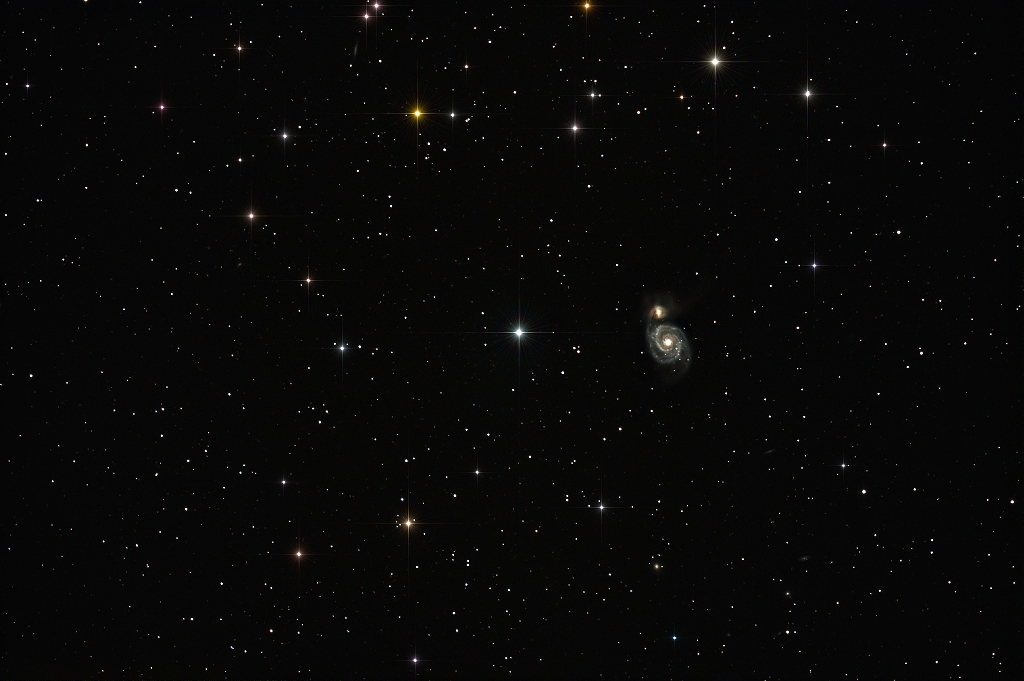
As it has not been imaging weather recently I have had a lot of time to both look over old images in more detail and to process a few old images that never got looked at in the first place.  Whilst looking at some old data which I thought was worthless (it was Hyperstar III/M25C data taken in the wrong region) I found something very interesting!  The image should have been NGC1333 in Perseus, but the finder scope hadn’t been put back into its proper place after doing a bit of DSLR piggy-back photography, so I didn’t get NGC1333.  However, I was still in Perseus, and I got 48 subs at 6-minutes per sub of a fairly uninteresting Perseus star field under almost perfect imaging conditions.  I remember being extremely annoyed at the time that I had wasted nearly 5-hours of great imaging time imaging in the wrong place – but now looking at the image again I can see it wasn’t such a waste of time.  I am clearly picking up the swathes of dust in the region, something that I have only recently been aware of due to Rogelio’s superb work.  WOW – that is a bit impressive from street light polluted Brockenhurst, and it brought back home to me the extreme photon grabbing power of the Hyperstar III on the C11 – something the mini-WASP array simply cannot match (even though it has 4x the field of view of the Hyperstar/C11).  I took the Hyperstar III off a couple of months back and set up to do f#10 imaging which was certainly challenging and great fun.  BUT – I simply had not appreciated that the Hyperstar III wasn’t redundant with the commissioning of the mini-WASP – on the contrary, it might be very useful to have the Hyperstar also contribute data to that acquired by the mini-WASP, especially for the really faint stuff!!  So what’s the revelation?  Obviously the Hyperstar III is going straight back onto the C11 first thing tomorrow – and this time it is staying on – for good 🙂  O.K. so I get a bit frustrated when I fire up for an evening’s imaging and find that the collimation has shifted (because the mirror has shifted) – but I think that is a frustration I am simply going to have to deal with – the Hyperstar III/C11 is simply far too powerful an imaging setup not to have there ready to image at a moment’s notice.  The Hyperstar is back yet again 🙂 🙂
 

Posted in News | Leave a comment

WOWSER – New Forest Observatory reaches 250,000 “hits” today!

I saw the “hits” counter was approaching the 250,000 mark a couple of days ago – and there, this morning it had just surpassed the magic quarter of a million 🙂

Please keep regularly visiting the New Forest Observatory site – with the commissioning of the mini-WASP array, 2012 promises to be an exceptional year for deep-sky imaging.


Posted in News | Leave a comment

Deep-Sky Image of the Week – Astrophotographer Carole Pope

Fellow PAIG forumite Carole Pope provided our first “Deep-Sky Image of the Week” back on October 3rd 2011 – and she see’s out 2011 with another fine image taken from Bromley (which is no mean achivement in itself 🙂

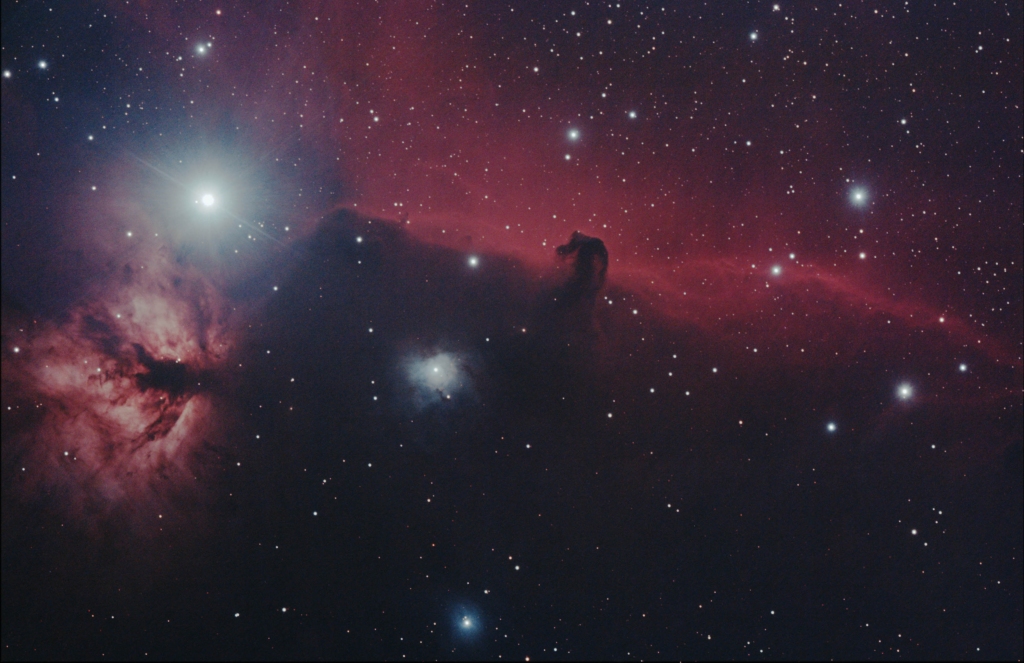
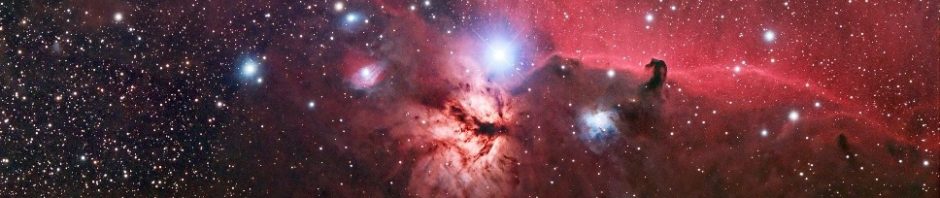
Carole captured this fine image of the Horsehead nebula over two evenings starting on the 27th November 2011 with 29 subs captured in Canon utility with PHD guiding, followed by another outing on the 29th November 2011 capturing 20 subs using APT with PHD dithered guiding, giving a total of 49 x 5 minutes (just over 4 hours) from Bromley.  Thank  you for sharing this one with us Carole and a Happy New Year to all imagers Worldwide.

Posted in Uncategorized | Leave a comment

NGC7788 and NGC7790 in Cassiopeia

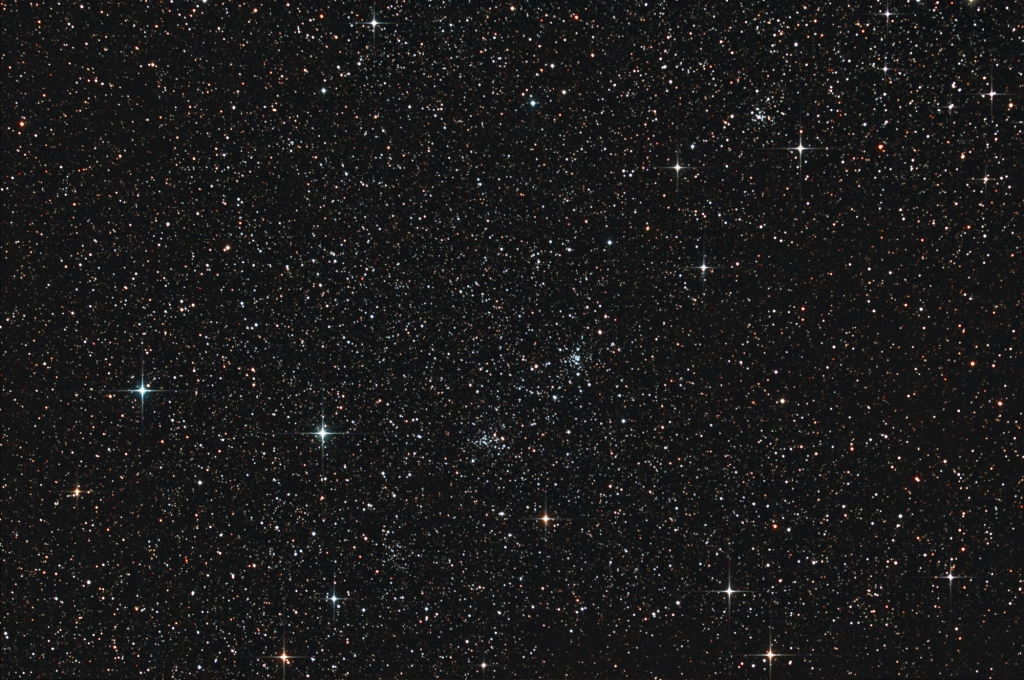
Found some old data from 3rd October 2008 that had not been processed and just processed it on Christmas Day 🙂  59 subs at 110 seconds per sub using the M25C and HyperstarIII.

Posted in Hyperstar and SXVF-M25C | Leave a comment

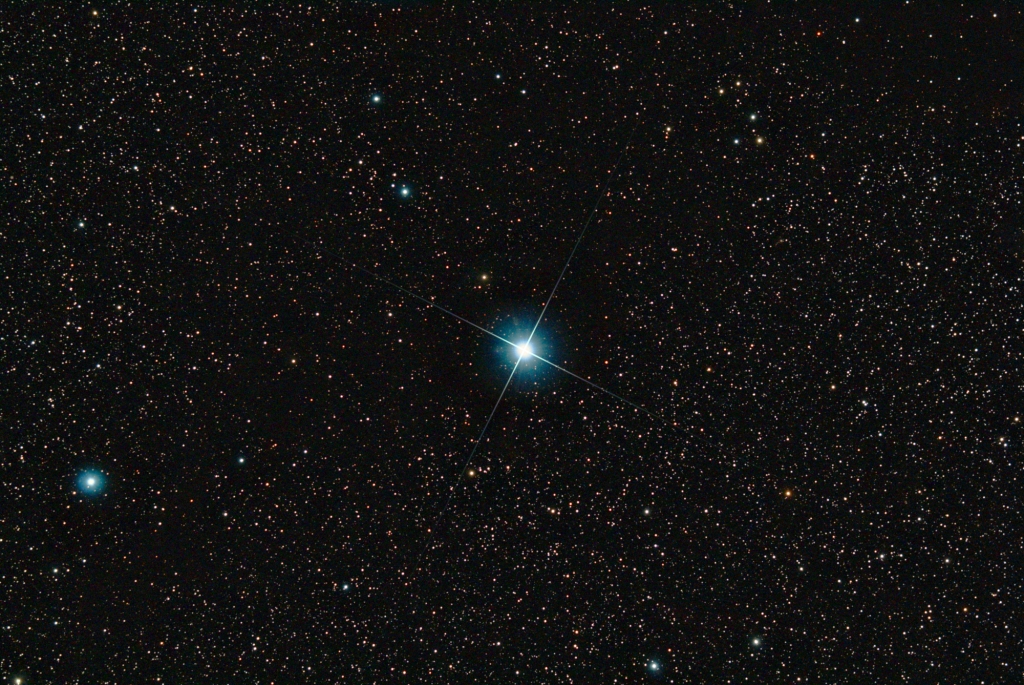
Pollux

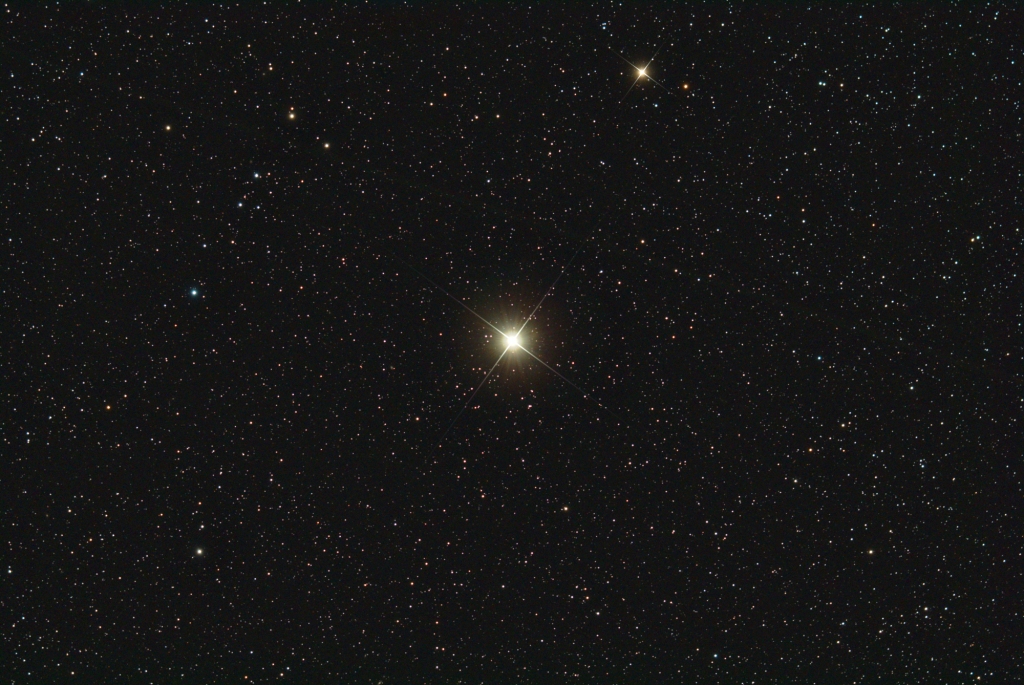
The final single star image from last night, 16 subs at 5-minutes per sub using the M26C/Sky90 on Pollox, Castor’s twin.  A bit of colour in Pollux (unlike Castor) so I went for this one first.

Posted in mini-WASP Array | Leave a comment

Polaris

Another one from last night – this time Polaris using 19 subs at 5-minutes per sub on the M26C/Sky 90.  A few faint fuzzies in the background, but annoyingly just missed Polarissima Borealis.  North is up and note that we are now in portrait mode.  Why is that?  Well you know I am no fan of this GEM and this just makes things even worse.  If I image in the South, the stupid mount is cantilevered right over and the cameras point at the sky in Landscape mode.  Image to the North and the mount axis is straight up down (or almost) and the cameras now point at the sky in portrait mode.  Now what the hell is the use of that?  With my alt-az on a wedge if I set the camera up in Portrait (or Landscape) mode, that’s how it was set no matter where it pointed in the sky – as it should be.  I dunno, variable Portrait/Landscape modes, Meridian flips, what a load of rubbish!!

Posted in mini-WASP Array | 4 Comments

Bellatrix

After the most abysmal day and plenty of rain it cleared to give the most beautiful evening of the year so far for imaging.  I wanted to make the most of the good imaging conditions so went for quantity rather than quality and decided on doing a bunch of single star shots.  Here is the first one – Bellatrix (top right hand corner) in Orion.

Posted in mini-WASP Array | Leave a comment

Getting there – very, very slowly!

Here is a two-camera two-scope mini-WASP image taken a few nights ago.  It is fairly poor overall mainly because this was only 4 sub-exposures (they were however 1,000 second subs).  I can make a vast improvement to this image with more imaging time, but the main thing is that the image gives me a good idea of my new FOV using the mini-WASP array.  I have always been a little cheesed off with the earlier image I took of this region with the M25C and Sky 90 (RGB plus H-alpha data, and quite a few hours of it!) as it didn’t quite get both nebulae in the FOV with the framing I chose (I should have rotated the camera a touch).  As you can see, the two camera (M26C) two scope (Sky 90) mini-WASP FOV more than adequately covers the region 🙂  So, we wait for the next clear evening and try again.

Posted in mini-WASP Array | Leave a comment

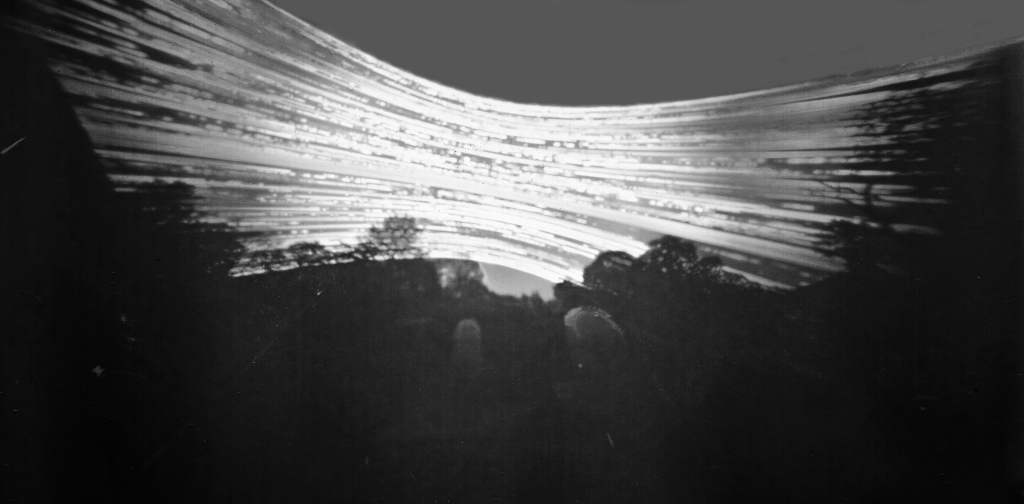
Another 6-month exposure using a pinhole camera looking to the southern horizon at the NFO

Opened up the pinhole camera today (the day before the Winter Solstice) after another 6-month exposure imaging the Sun crossing my southern horizon.  This time I used a FLAT film in the camera (which was an old tea caddy) rather than the usual beer can pinhole camera which gives a more distorted image as the film is curled around the inside of a beer can.  The straight line edge to the left is the roof of the house over the road.  You can see plenty of trees along the sky line – and you might just be able see two light dome-shaped structures which are the New Forest observatories.  Opened up the camera on 18th June 2011 3 days before the Summer Solstice.

Posted in News, Projects | Leave a comment